Road tax is one of the most important
statutory payments every vehicle owner must make before using a vehicle on
public roads in Rajasthan. Whether you own a two-wheeler, a private car, or a
commercial vehicle, paying road tax is not optional—it is a legal requirement
under the Motor Vehicles Act and the applicable Rajasthan motor vehicle
taxation laws.
However, many vehicle owners delay or forget to
pay road tax due to lack of awareness, ownership transfers, relocation, or
financial reasons. While postponing the payment may seem harmless, it can lead
to penalties, legal complications, and financial losses in the future.
In this guide, you'll learn what happens if you don't pay road tax in Rajasthan, the possible penalties, legal implications, how overdue tax is recovered, and practical tips to remain compliant.
What Is Road Tax?
Road tax is a government levy
collected from vehicle owners for the construction, maintenance, and
improvement of roads and transport infrastructure. Every registered vehicle
must pay road tax before it is legally permitted to operate on public roads.
The amount payable depends on
factors such as:
- Vehicle type
- Vehicle age
- Engine capacity
- Fuel type
- Vehicle cost
- Seating or carrying capacity (for commercial vehicles)
- Purpose of vehicle usage
Some vehicles require one-time
lifetime tax, while commercial vehicles may need periodic tax payments.
Is Road Tax Mandatory in Rajasthan?
Yes.
Every vehicle registered in
Rajasthan must comply with applicable road tax provisions. Driving a vehicle
without paying the required tax is considered a violation of transport
regulations and can invite enforcement action from the Regional Transport
Office (RTO).
Even if the vehicle is insured and
has a valid Registration Certificate (RC), unpaid road tax can still result in
penalties.
What Happens If You Don't Pay Road Tax in Rajasthan?
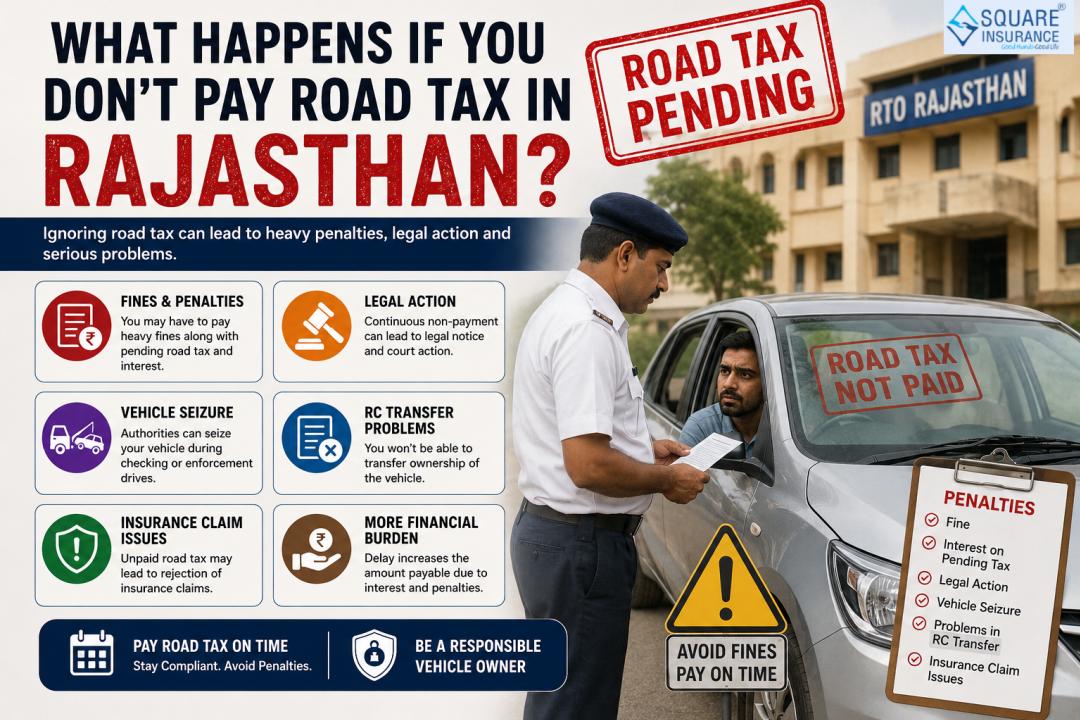
Failing to pay road tax can create
several legal and financial issues.
1.
Financial Penalties
One of the first consequences is the
imposition of penalties.
Authorities may charge:
- Late payment penalties
- Interest on unpaid tax
- Additional administrative charges where applicable
The longer the delay, the higher the
outstanding amount may become.
2.
Vehicle Inspection During Checking Drives
Transport authorities regularly
conduct vehicle verification drives.
If your vehicle is stopped and
officials discover unpaid road tax, they may:
- Verify vehicle documents
- Record the violation
- Initiate recovery proceedings
- Issue penalty notices
Repeated violations may attract
stricter action.
3.
Legal Action
Ignoring tax notices for an extended
period may lead to legal proceedings under applicable motor vehicle taxation
laws.
Depending on the nature and duration
of default, authorities may initiate recovery measures according to state
regulations.
4.
Difficulty During Vehicle Sale
When selling a vehicle, buyers
generally verify:
- Registration Certificate
- Insurance
- Pollution Certificate
- Road tax status
Outstanding road tax can delay or
even prevent ownership transfer until dues are cleared.
Many buyers avoid purchasing
vehicles with pending tax liabilities.
5.
Problems During RC-Related Services
Several RTO services may require
verification of tax payment, including:
- Ownership transfer
- Address change
- Duplicate RC
- Hypothecation removal
- NOC issuance
- Fitness certificate (where applicable)
Pending tax dues may delay these
processes.
6.
Increased Financial Burden
Delaying payment often means paying:
- Original road tax
- Interest
- Penalties
- Additional administrative expenses
Instead of saving money, postponing
tax payments usually increases the overall amount payable.
Can Authorities Seize Your Vehicle?
In certain situations involving
repeated non-compliance or serious violations of applicable transport
regulations, authorities may take enforcement measures permitted under law.
These actions depend on:
- Nature of violation
- Duration of tax default
- Applicable legal provisions
- Instructions issued by transport authorities
Vehicle owners should avoid allowing
unpaid taxes to accumulate for long periods.
Why Some People Forget to Pay Road Tax
Common reasons include:
- Purchasing a used vehicle
- Lack of awareness
- Relocation from another state
- Missing payment reminders
- Confusion about tax schedules
- Commercial vehicle operators overlooking periodic
payments
Understanding your payment
obligations helps prevent unnecessary penalties.
How to Check Whether Road Tax Is Paid
Vehicle owners can verify tax status
by checking vehicle records through transport department services or by
visiting the concerned Regional Transport Office.
Keep copies of:
- Tax receipt
- RC
- Insurance policy
- Payment acknowledgement
These documents may be required
during inspections.
What Should You Do If Road Tax Is Pending?
If you discover unpaid road tax, act
immediately.
Follow these steps:
Step
1: Calculate Outstanding Amount
Determine:
- Original tax
- Applicable interest
- Penalties (if any)
Step
2: Visit the Appropriate RTO or Online Portal
Depending on available services, tax
payments may be completed online or at the designated transport office.
Step
3: Submit Required Documents
You may need:
- Registration Certificate
- Vehicle details
- Identity proof
- Previous tax receipts (if available)
Step
4: Complete Payment
Pay all outstanding dues to regularize
your vehicle records.
Step
5: Preserve Payment Receipt
Always keep both digital and printed
copies of the receipt for future reference.
How to Avoid Road Tax Issues
Vehicle owners can stay compliant by
following a few simple practices.
Maintain
Payment Records
Store tax receipts safely.
Set
Renewal Reminders
Commercial vehicle owners should set
reminders before tax due dates.
Verify
Documents Before Buying a Used Vehicle
Before purchasing a second-hand
vehicle, confirm that:
- Road tax is cleared
- Insurance is active
- RC details are correct
- No dues are pending
Update
Ownership Records Promptly
Complete ownership transfer without
unnecessary delay to avoid future disputes over tax liability.
Monitor
Vehicle Documents Regularly
Review all vehicle-related documents
periodically to ensure compliance.
Importance of Paying Road Tax on Time
Timely payment offers several
advantages:
- Avoids penalties
- Prevents legal complications
- Simplifies vehicle transfers
- Enables smoother RTO services
- Maintains proper compliance records
- Reduces future financial burden
- Provides peace of mind during inspections
Conclusion
Ignoring road tax obligations in
Rajasthan can lead to unnecessary penalties, legal complications, delays in RTO
services, and increased financial costs. Whether you own a private vehicle or
manage a commercial fleet, paying road tax on time is one of the simplest ways
to stay compliant with transport regulations and avoid avoidable hassles.
Keeping track of due dates, preserving payment receipts, and promptly clearing
any outstanding dues can save both time and money.
If you're looking for reliable
assistance with motor insurance, policy renewals, or understanding vehicle-related
documentation, Square Insurance
can help you compare insurance plans, choose suitable coverage, and make
informed decisions for a hassle-free vehicle ownership experience.
Frequently Asked Questions
1.
Is paying road tax mandatory for every vehicle in Rajasthan?
Yes. Every eligible vehicle
registered in Rajasthan must pay the applicable road tax before being used on
public roads.
2.
What happens if I delay road tax payment?
Delayed payment may attract
interest, penalties, and other actions as per applicable transport regulations.
3.
Can I sell my vehicle if road tax is unpaid?
Outstanding road tax can delay the
ownership transfer process. It is advisable to clear all dues before selling
the vehicle.
4.
Does motor insurance include road tax?
No. Road tax and motor insurance are
separate legal requirements. Paying one does not replace the other.
5.
How can I check whether my road tax has been paid?
You can verify your vehicle's tax
status through the relevant transport authority's records or by visiting the
concerned RTO.
6.
Do commercial vehicles have different road tax rules?
Yes. Commercial vehicles often
follow different tax structures and payment schedules based on vehicle
category, usage, and carrying capacity.