Introduction
For many enterprises, the biggest challenge with artificial intelligence is no longer deciding whether to invest in AI it's deciding where to begin, what to prioritize, and how to scale successfully.
Business leaders often face difficult questions. Which AI use cases will generate the highest return on investment? Should they build custom AI solutions or integrate existing platforms? How can AI be deployed securely while complying with evolving regulations? And perhaps most importantly, how can AI initiatives deliver measurable business outcomes instead of becoming isolated technology experiments?
These questions explain the growing demand for AI advisory and consulting services. Rather than focusing solely on technology implementation, AI advisors help organizations create a practical strategy that connects AI investments with long-term business objectives. They identify opportunities, reduce implementation risks, establish governance, and guide enterprises through every stage of AI adoption.
This guide explores how AI advisory and consulting services help organizations transform AI from an emerging technology into a sustainable competitive advantage.
What Are AI Advisory and Consulting Services?
AI advisory and consulting services help organizations plan, design, implement, and optimize artificial intelligence initiatives that align with business goals.
Unlike traditional IT consulting, AI advisory focuses on both technology and business transformation. Consultants evaluate an organization's current capabilities, identify opportunities where AI can create value, define implementation roadmaps, recommend suitable technologies, establish governance frameworks, and support enterprise-wide adoption.
Instead of offering one-size-fits-all recommendations, experienced AI consultants develop strategies tailored to each organization's industry, operational challenges, data maturity, and growth objectives.
Why Businesses Need AI Advisory Before AI Development
Many AI projects fail not because the technology is inadequate but because organizations begin with solutions before identifying the right business problems.
An AI advisory engagement shifts the focus from technology-first thinking to business-first planning. Consultants help organizations prioritize high-impact opportunities, evaluate technical feasibility, estimate expected returns, and create realistic implementation timelines.
This structured approach reduces unnecessary investments while ensuring AI initiatives deliver measurable operational improvements, better customer experiences, and stronger business performance.
The Scope of AI Advisory and Consulting Services
Effective AI consulting extends far beyond selecting algorithms or software platforms. It supports the complete AI transformation journey.
AI Readiness Assessment
Consultants evaluate data quality, technology infrastructure, organizational capabilities, and operational maturity to determine how prepared the business is for AI adoption.
AI Strategy Development
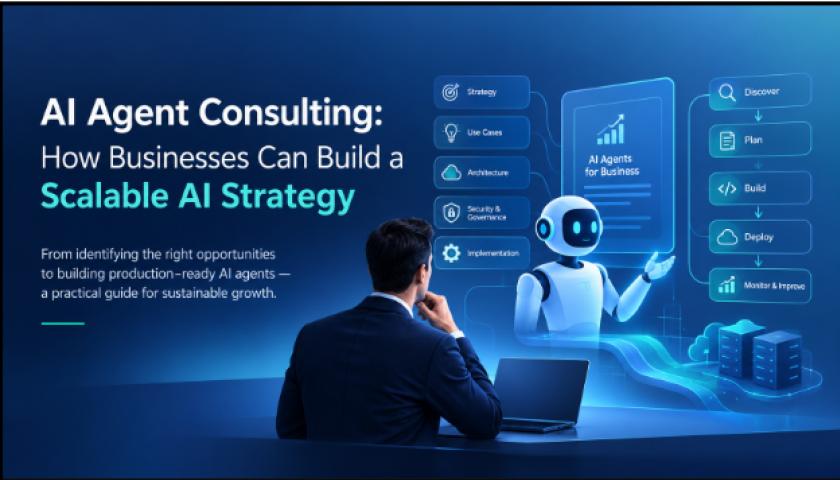
Working with executive leadership, consultants define clear business objectives, prioritize AI opportunities, and establish an enterprise-wide roadmap for implementation.
Use Case Identification
Rather than deploying AI everywhere, consultants identify initiatives with the highest strategic and financial impact, helping organizations focus resources where they generate the greatest value.
Technology and Platform Selection
Businesses receive guidance on choosing AI models, cloud platforms, enterprise tools, development frameworks, and integration strategies based on their technical and operational requirements.
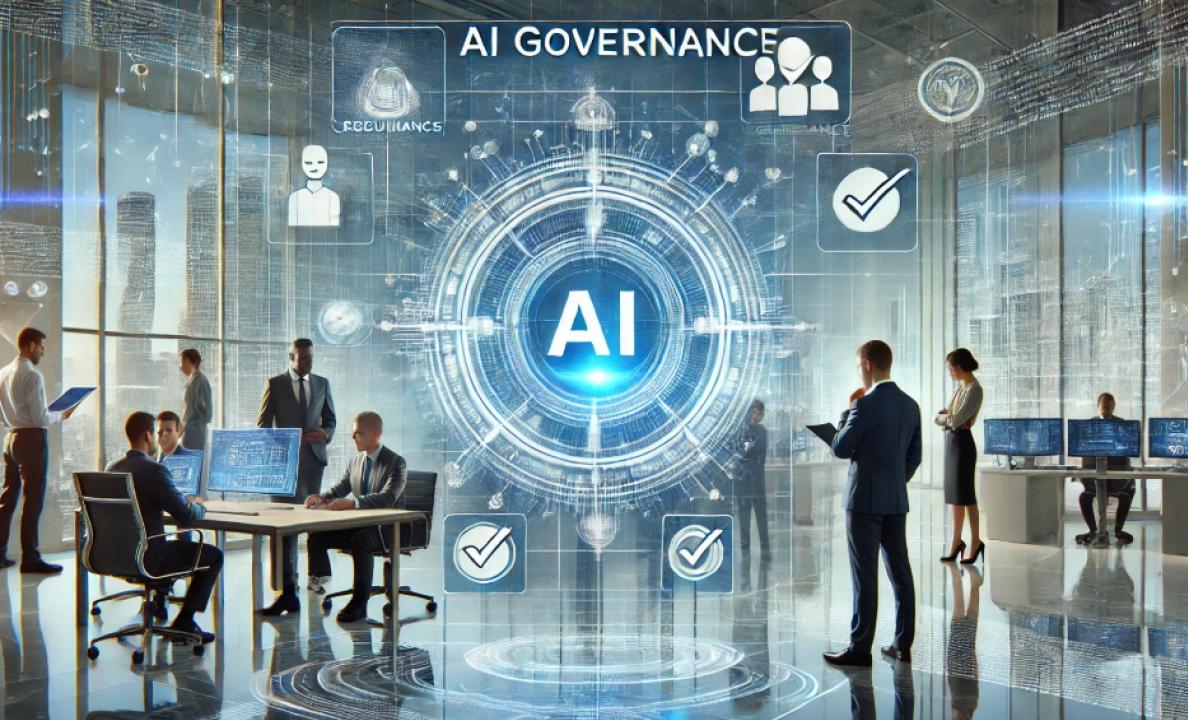
AI Governance and Risk Management
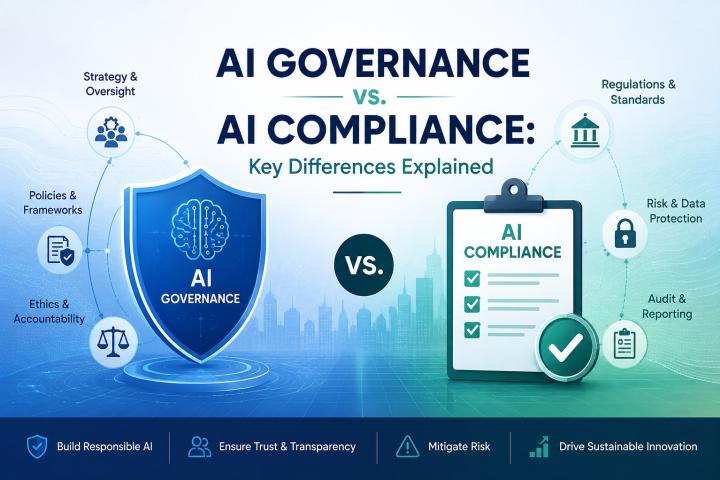
Governance frameworks establish policies for security, compliance, explainability, privacy, accountability, and responsible AI throughout the lifecycle of every AI initiative.
Change Management
Successful AI adoption requires more than deploying technology. Advisory services help organizations prepare employees, redesign workflows, and encourage enterprise-wide adoption through training and communication.
How AI Advisory Creates Long-Term Business Value
The value of AI consulting is measured by business outcomes rather than technical implementation alone.
Organizations gain greater clarity about where AI can improve efficiency, reduce costs, enhance customer experiences, and generate new revenue opportunities. Executive teams make more informed investment decisions because projects are supported by measurable business cases instead of assumptions.
A structured advisory approach also minimizes implementation risks, improves collaboration between business and technical teams, and creates governance processes that support responsible AI growth.
Rather than launching disconnected AI initiatives, organizations develop a coordinated transformation strategy that scales across departments.
Industries Benefiting from AI Advisory and Consulting Services
Healthcare
Healthcare organizations use AI advisory services to identify opportunities for clinical decision support, patient engagement, operational efficiency, and regulatory compliance while protecting sensitive medical information.
Banking and Financial Services
Financial institutions strengthen fraud detection, credit risk assessment, customer service automation, and regulatory compliance through strategic AI planning.
Manufacturing
Manufacturers optimize predictive maintenance, production planning, quality assurance, and supply chain visibility using AI strategies aligned with operational goals.
Retail and E-commerce
Retail businesses implement AI for demand forecasting, personalized recommendations, pricing optimization, inventory management, and customer experience improvements.
Insurance
Insurance providers leverage AI advisory to modernize underwriting, automate claims processing, improve risk assessment, and enhance customer engagement.
Characteristics of a Successful AI Advisory Partner
Selecting the right consulting partner is one of the most important decisions in an enterprise AI journey.
An effective AI advisor combines technical expertise with business strategy. They understand machine learning, generative AI, cloud technologies, and data architecture while also recognizing industry-specific challenges, regulatory requirements, and organizational priorities.
The strongest consulting partnerships emphasize measurable business value, practical implementation, and continuous improvement rather than recommending technology for its own sake.
Common Challenges Organizations Face Without AI Advisory
Organizations that begin AI initiatives without a clear strategy often encounter fragmented projects, unclear objectives, inconsistent governance, duplicated investments, and disappointing returns.
Many struggle with poor data quality, disconnected technology platforms, unrealistic expectations, and resistance to organizational change. Others deploy AI solutions that cannot scale because governance, integration, and operational processes were overlooked during planning.
Strategic advisory services address these issues early, reducing costly mistakes while creating a foundation for sustainable AI adoption.
Best Practices for Enterprise AI Success
Organizations achieve the best results when AI initiatives begin with clearly defined business objectives rather than technology selection. Executive sponsorship, cross-functional collaboration, high-quality data, responsible governance, and measurable performance indicators all contribute to long-term success.
Businesses should also treat AI as an ongoing transformation rather than a one-time implementation. Continuous monitoring, employee training, regular optimization, and evolving governance frameworks help ensure AI continues delivering value as organizational needs change.
The Future of AI Advisory and Consulting Services
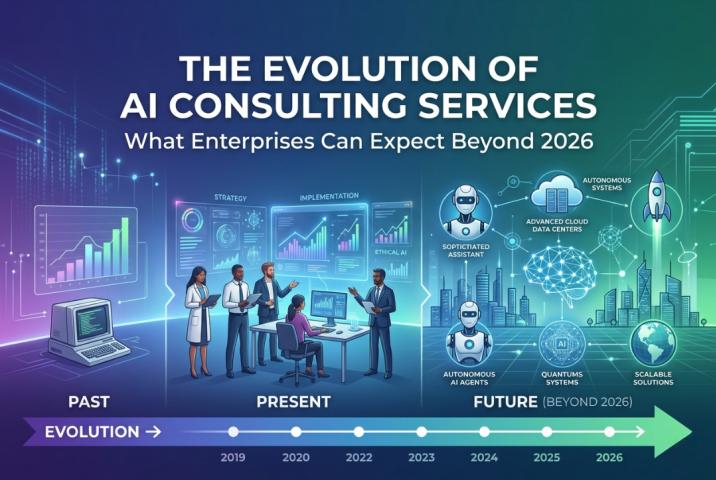
As AI becomes embedded across every business function, advisory services will increasingly focus on enterprise-wide transformation instead of individual projects.
Consultants will guide organizations through agentic AI adoption, AI governance, multimodal systems, intelligent automation, AI observability, and industry-specific innovation strategies. Rather than simply implementing new technologies, future advisory engagements will help enterprises create AI ecosystems that continuously learn, adapt, and support long-term business growth.
Organizations that invest in strategic AI guidance today will be better positioned to respond to changing market conditions and emerging technologies with confidence.
Conclusion
Artificial intelligence delivers its greatest value when it is guided by a clear business strategy. AI advisory and consulting services help organizations move beyond experimentation by identifying the right opportunities, establishing governance, reducing implementation risks, and creating scalable AI roadmaps aligned with business objectives.