Every successful business needs an
effective system to ensure that the daily operations of the organisation
function well. Coordinating the stock, financial, and staff management in
various regions requires a massive amount of teamwork. That is why contemporary
organisations use effective business software platforms for managing their
workflow.
Being a technology expert, I know the
challenges companies face in the absence of effective data integration. SAP is
the leading software platform that helps integrate all individual teams into a
single network. Future graduates need to have knowledge about this platform to
land the right job. Students start their careers through SAP Online Classes.
What Is SAP and How Does It Work?
SAP means "Systems, Applications and
Products in Data Processing." It is like a big digital filing cabinet
where several departments work to exchange information immediately
The moment an employee inputs new
information in one department, the software updates everything. This ensures
that there is no delay time and makes sure that all the company's files remain
up-to-date and accurate. As the amount of business information increases, the
need for a central platform prevents loss of important data.
Why Businesses Need a Centralised ERP System?
To understand the true value of SAP, we
must look at how old businesses ran. Past companies used split setups where
each team kept its own private list of facts.
|
Operational Feature |
Split Older Systems |
Central SAP System |
|
Data Storage |
Separate list for each team. |
One single list for everyone. |
|
Data Accuracy |
High risk of duplicate data. |
Real-time, accurate data updates. |
|
Communication |
Slow email or paper trails. |
Instant automated system updates. |
|
Decision Making |
Delayed due to old reports. |
Fast based on live metrics. |
|
System Maintenance |
High cost for multiple tools. |
Lower cost for a single platform. |
How SAP Connects Different Business Departments?
In a traditional disconnected system, sales
employees have no access to the inventory in the warehouse until they make
calls. The absence of visibility results in late delivery of customers’ orders
and poor performance on a daily basis.
SAP eliminates the barriers by creating
connections between purchasing, storing, financial, sales and personnel
departments. As soon as sales employees finalise a transaction, warehouse
employees know about the need for packaging.
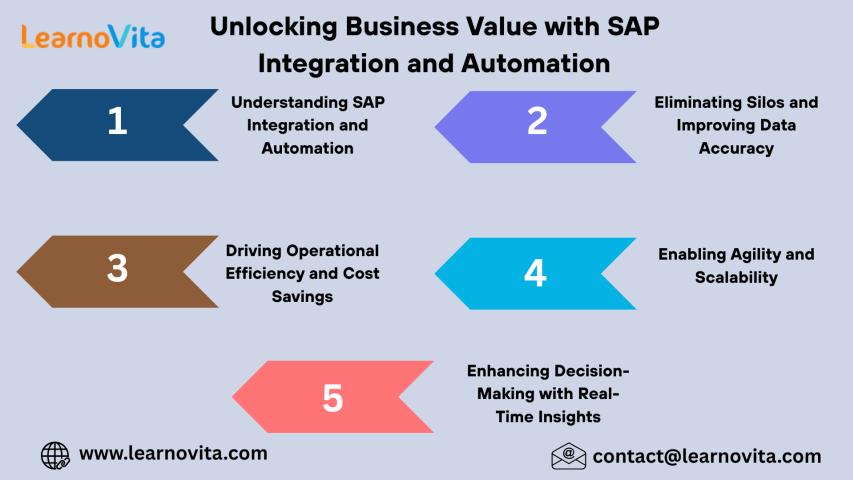
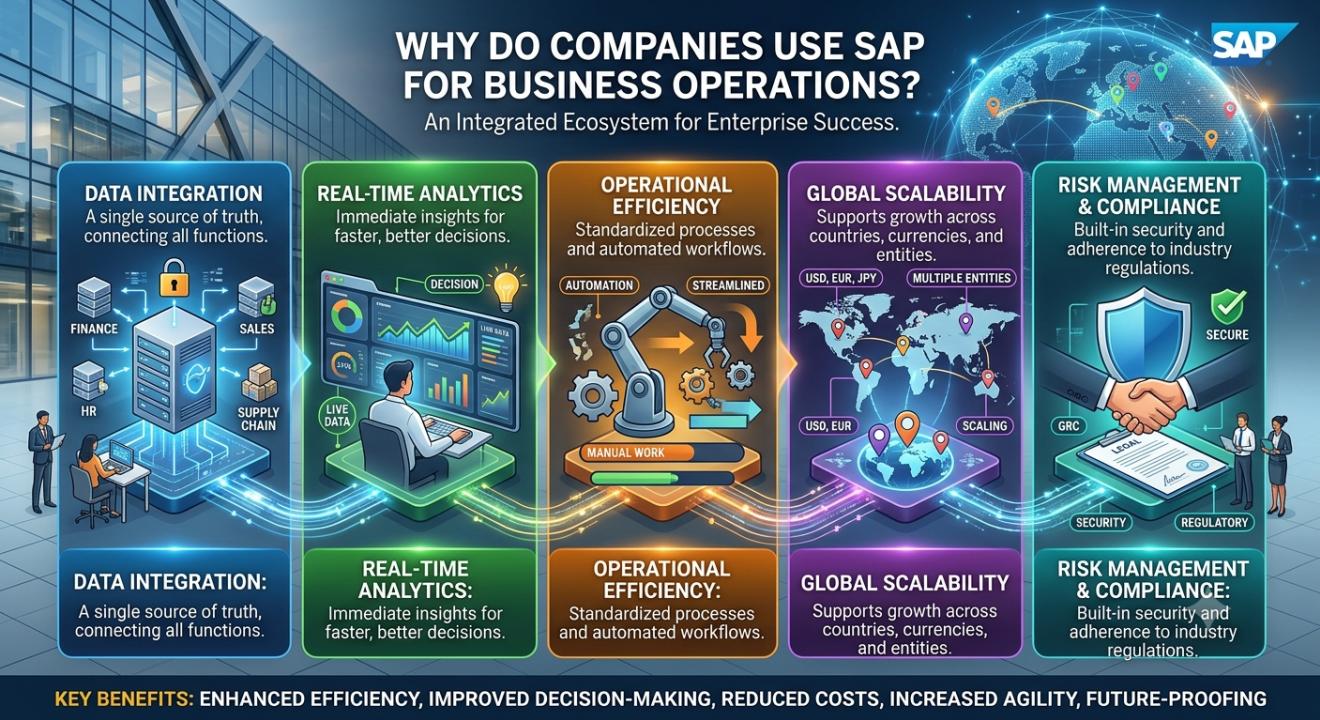
Why Companies Choose SAP for Daily Operations?
- Total
Department Integration
SAP removes all barriers between the
finance, human resources, logistics, and manufacturing departments.
- Real-Time
Data Processing
Management does not have to wait for the
end of the month to see the reports.
- Standardised
Business Workflows
The standardised business processes are
crucial for multinational companies.
- Data
Security and Compliance
Corporations must protect the financial
data of the company according to the law.
- Advanced
Resource Optimisation
The corporations cut back significantly on
unnecessary expenses by keeping track of their inventory in a meticulous way.
Real-World Example of SAP in Business Operations
Let's look at a clear example of a customer
buying a laptop online. This simple action starts an automatic chain reaction
across many different corporate rooms.
●
Step 1: Client makes an order through the main company website.
●
Step 2: SAP immediately checks the availability of the laptop in the
company warehouse.
●
Step 3: The system generates an automatic invoice for the cash management
team.
●
Step 4: The packing department receives a shipping notification on their
computer screen in the warehouse.
●
Step 5: Shipping information automatically sends an email to the buyer.
●
Step 6: The purchasing application places additional laptop orders when
inventory is low.
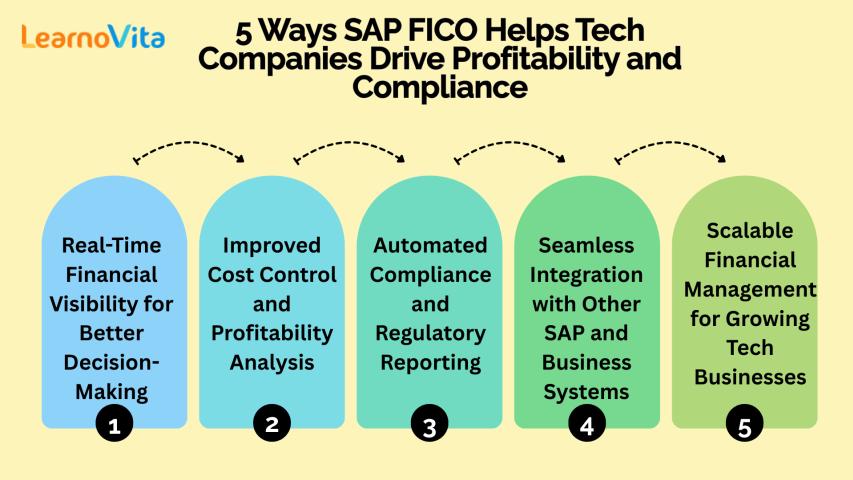
Key SAP Modules That Support Business Functions
The companies do not only purchase the
simple version of this business software. Rather, they set up different modules
based on their daily business activities. An understanding of these modules is
very helpful for students opting for an SAP Certificate Course.
●
SAP FI/CO: This controls the primary accounting database and cost control for
company management.
●
SAP MM: This manages procurement of raw materials and control of the total
inventory in the warehouse.
●
SAP SD: It deals with order management, distribution, and billing of the
products.
●
SAP HCM: This tracks employee salaries per month, appraisals annually, and
the job recruitment process.
●
SAP PP: It plans the production schedule according to buyers' demands
within limits.
Business Benefits of Using SAP
Manual entry of information slows down the
growth of a business while causing human errors. Centralised software enables
the organisation to grow much bigger without employing many data entry clerks.
By reducing the boring and repetitive
duties, employees get to focus on solving complex issues and creativity. Such
seamless functionality is the reason why millions of brands invest so much in
tech infrastructure. Automation reduces unnecessary office expenses and boosts
the profit margins of the growing brand names.
Why Businesses Continue Investing in SAP?
Today’s brands prefer such a system since
it scales well with the increasing size of the business. The system provides
executives with visibility of all the activities so that they can make
intelligent decisions. Many small businesses have their teams attend SAP Training in Bangalore for handling
such scaling technologies.
Moreover, integrated validation features
help to ensure that international shipping lines comply with international
laws. In the absence of a unified software approach, scaling automated tasks
becomes difficult. Security of the long-term software helps in maintaining the
performance of the business during rapid business growth.
Learning SAP for Modern Business Careers
As modern companies depend a lot on such
integrated processes, there is a huge global demand for professionals who are
experienced in working with such software. Knowledge of business applications
and their role in real-life operations gives an excellent head start to young
specialists.
Comprehension of the above-mentioned
processes enables one to communicate in the same language with giant
international companies. Such special training creates a solid connection
between theoretical knowledge obtained from academic books and practical skills
required by corporate technologies.
Conclusion
SAP transforms the confusing data of any
company into an efficient, well-oiled, and very profitable mechanism. It
eliminates isolation of teams and enables top management to make rational
decisions based on accurate data. Knowledge of such a software system gives an
extra competitive advantage in the modern job market.