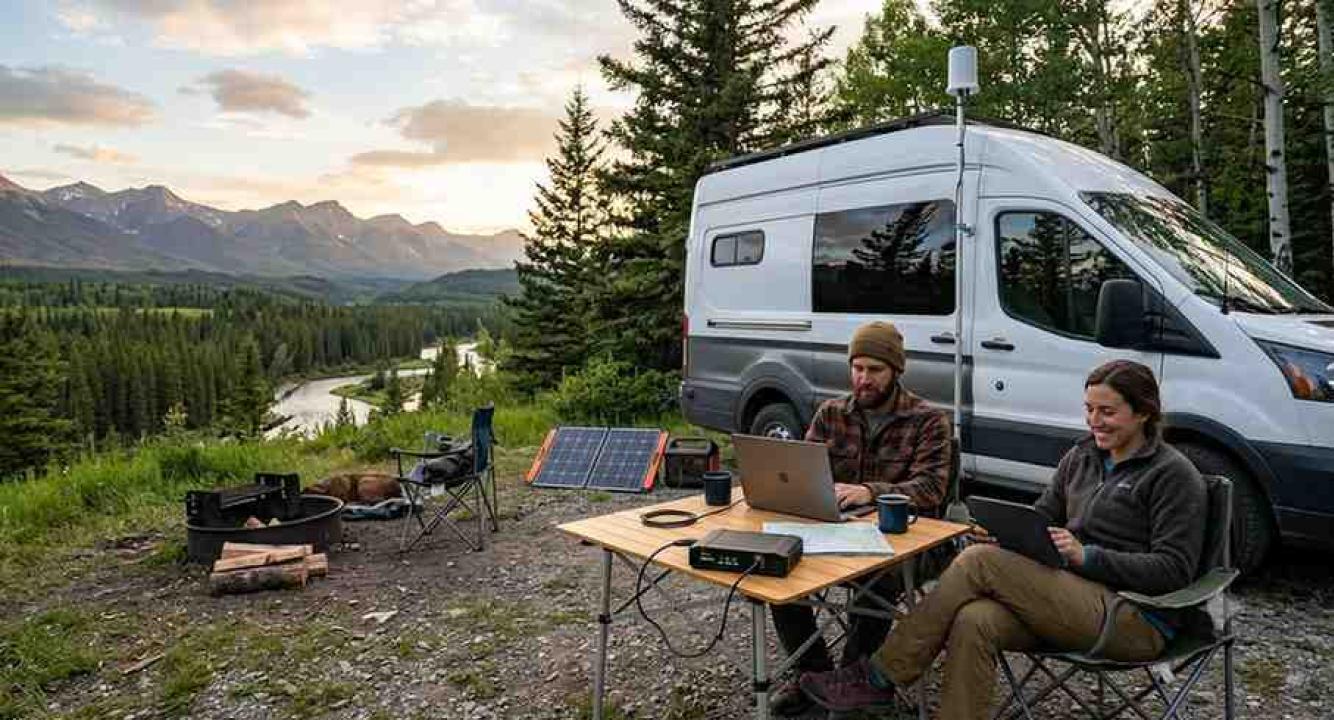
You’re out in nature, miles away from the nearest city, trying to join a quick Zoom call or upload a file. Suddenly, your connection drops or slows down. Does that sound familiar? For years, satellite internet for camping has been the main solution for staying connected off-grid. But if you’ve actually used it in real situations, you know the reality: high latency, inconsistent speeds, weather issues, and costly equipment make it far from perfect. The good news is that there are now smarter, faster, and more reliable options that fit how people really camp, travel, and work remotely today.
Why Satellite Internet for Camping Is Falling Behind
Satellite internet for camping was once viewed as a major advancement for staying connected in remote areas. It provided internet access in locations where cable and fiber could not reach. However, as technology has improved, so have user expectations. What once seemed innovative now has difficulty meeting the speed, reliability, and flexibility that people require today.
The biggest issue with satellite internet isn’t just speed; it’s latency. Data has to travel thousands of miles to orbiting satellites and back. This causes an unavoidable delay. As a result, real-time tasks like video calls, online gaming, or loading dynamic websites can be frustratingly slow.
Then there’s reliability. Weather conditions like rain, storms, or even heavy cloud cover can disrupt signals. For campers who depend on steady connectivity, that unpredictability becomes a significant downside.
Cost is another factor. Between pricey equipment and ongoing monthly plans, satellite setups often need a big investment that is not always justified by the performance you actually receive.
In short, while satellite internet still has a place, it no longer aligns with the needs of modern campers, van lifers, and remote workers.
What Modern Campers Actually Need from the Internet
Camping has changed. It’s no longer just about disconnecting for many; it’s about balancing nature with productivity and staying in touch.
Today’s users typically need:
Stable internet for video calls and remote work
Fast download speeds for streaming and uploads
Flexible, portable setups that move with them
Affordable plans without long-term contracts
Coverage that works in rural and semi-remote areas
Satellite internet often fails to meet several of these needs. Because of this, many people are looking for alternative solutions that focus on mobility and actual use.
Better Alternatives to Satellite Internet for Camping
1. LTE & 5G Mobile Internet Routers
One of the most practical options is to use LTE or 5G internet routers. These devices connect to cellular networks and work like a home Wi-Fi router, but they are made for mobility.
Unlike satellite internet, they offer:
Lower latency (better for video calls and real-time work)
Faster speeds in areas with decent cellular coverage
Plug-and-play setup with minimal technical effort
For campers traveling through rural towns, highways, or campgrounds with signal access, this option provides a far more reliable experience.
2. Mobile Hotspots (Phone-Based or Dedicated Devices)
Mobile hotspots are a popular option. Most smartphones now have hotspot features, enabling you to share your cellular data connection with other devices.
Pros include:
No extra hardware needed (for phone hotspots)
Easy setup and instant connectivity
Useful as a backup option
However, there’s a catch. Many hotspot plans have data limits or slow down speeds once usage goes beyond a certain point. This makes them more appropriate for light to moderate use instead of full-time remote work.
3. Signal Boosters for Weak Coverage Areas
If you’ve ever had one bar of signal and wished it could magically improve, signal boosters are worth considering.
These devices amplify weak cellular signals, helping you:
Improve connection stability in low-signal areas.
Increase data speeds slightly.
Maintain connectivity in rural locations.
They don’t create signal where none exists. However, they can greatly improve usability in areas with weak coverage. Satellite internet cannot adjust in the same way.
4. Public & Campground Wi-Fi (With Caution)
Campground Wi-Fi has gotten better in many places, especially in well-developed camping areas. Although it’s not always dependable, it can be a helpful addition.
Best practices include:
Using it for non-critical tasks
Avoiding sensitive transactions on unsecured networks
Pairing it with a backup connection
Think of it as a convenience, not a primary solution.
5. Hybrid Connectivity Setups
Experienced campers seldom depend on just one connection method now. They use various options to maintain reliable access.
A common setup might include:
A mobile router as the primary connection
A phone hotspot as a backup
A signal booster for weak areas
This layered approach provides flexibility and reduces the risk of complete disconnection, something satellite-only setups struggle with.
Key Advantages of Moving Beyond Satellite Internet
Switching away from satellite internet for camping isn’t just about better speeds; it’s about a better overall experience.
Here’s what improves:
Real-time usability: smoother video calls, faster browsing
Portability: easier to set up and move between locations
Cost efficiency: lower upfront and monthly costs
Flexibility: no dependency on a single connection type
Adaptability: works better in varied environments
Most importantly, these alternatives align with how people actually use the internet while camping today, not how they used it a decade ago.
When Satellite Internet Still Makes Sense
To be fair, satellite internet isn’t completely obsolete. It still has value in extremely remote areas where there is no cellular signal at all.
If you’re camping:
Deep in the wilderness
Far from any cellular towers
In regions with zero network coverage
Then the satellite may still be your only option. However, for most campers, especially those traveling through semi-rural or busy areas, it’s no longer the best choice.
Conclusion
Satellite internet for camping had its moment, but it’s no longer the best choice for most people. High latency, inconsistent reliability, and high costs make it less appealing in a world where faster, more flexible options are widely available.
Today’s campers need internet that moves with them, adjusts to different environments, and supports real-world use from remote work to streaming and staying connected. LTE and 5G routers, mobile hotspots, and hybrid setups offer just that.
If you’ve been frustrated with slow speeds or unreliable connections while camping, it might be time to rethink your setup. The right alternative does more than improve your internet; it changes how confidently you can live, work, and explore on the road.
Frequently Asked Questions
Is satellite internet good for camping in 2026?
Satellite internet still functions in very remote areas that lack cellular coverage. However, in most camping situations, it is viewed as outdated because of its high latency and inconsistent performance when compared to newer options.
What is the best alternative to satellite internet for camping?
LTE and 5G mobile internet routers are among the best alternatives, offering faster speeds, lower latency, and better real-world usability for campers and remote workers.
Can I rely on a phone hotspot for internet while camping?
A phone hotspot can work for light use, but many plans have data limits or throttling. It’s best used as a backup rather than a primary internet solution.
How do I get internet while camping in rural areas?
Using a combination of mobile routers, signal boosters, and hotspots is the most effective way to maintain reliable internet in rural and semi-remote camping locations.
Do I need multiple internet options while camping?
Yes, having a hybrid setup with at least one backup connection significantly improves reliability and ensures you stay connected even if one method fails.