
AI Overviews and answer engines now pull heavily from entity signals, not just backlink counts, changing what "authority" means off-page
Relevance-based backlink acquisition continues to outperform high-volume, low-quality outreach tactics
Unlinked brand mentions across authoritative sites contribute to topical authority even without a hyperlink
Citation consistency and review sentiment remain foundational ranking signals for local and multi-location businesses
Sudden link velocity spikes and over-optimized anchor text still draw algorithmic scrutiny in 2026
You've published quality content, gained some backlinks, and optimized every meta tag on the page. Yet, a competitor with less content continues to outrank you and gets mentioned in Google's AI Overviews. The issue is usually not with what’s on the page; it’s off-page. This refers to the signals that search engines and AI systems collect about a brand from other parts of the web. Off-page SEO in 2026 is different from the backlink-counting days of ten years ago. However, the strategies that can still improve rankings are easier to identify than most guides say.
Why Off-Page SEO Carries More Weight Now
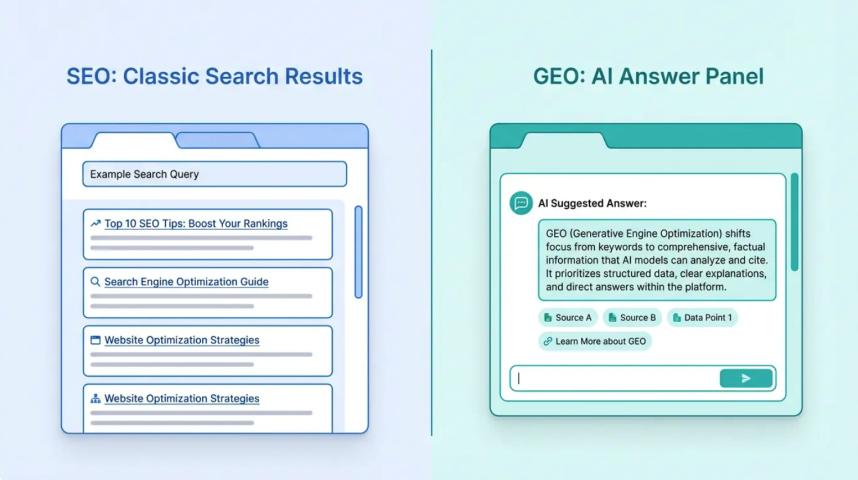
Search results increasingly blend traditional rankings with AI-generated summaries that synthesize information from multiple sources before a user ever clicks a link. That shift changes what "authority" means. Google's systems now weigh how consistently a brand, author, or entity is referenced across independent, credible sources — not just how many links point at a domain.
What counts as an off-page signal has also broadened:
Backlinks from topically relevant, editorially earned sources
Unlinked brand mentions across credible sites (co-citation signals)
Review sentiment and velocity on platforms like Google Business Profile
Citation consistency across directories and third-party listings
Structured data (sameAs markup) connecting a brand to verified profiles
This makes off-page work less about accumulating link counts and more about building a recognizable footprint: consistent entity signals, credible mentions, and third-party validation that both traditional algorithms and AI summarization models can verify against multiple sources. As that scope broadens beyond simple backlink counting, it's become increasingly common for businesses to hire SEO professional who can manage entity signals holistically rather than treating link acquisition as the only lever worth pulling.
Link Building in 2026: What Actually Earns Ranking Power
Effective link building today depends less on volume and more on topical relevance. An editorial mention from a niche industry publication typically carries more ranking weight than dozens of generic directory listings, because it signals genuine topical association rather than manufactured link equity.
A few technical factors still shape how much a link is actually worth:
Topical relevance: Editorial mentions from niche publications are more valuable than generic directory listings.
Anchor text distribution: anchors grouped heavily around a single exact-match keyword can attract algorithmic scrutiny, regardless of domain authority.
Link attribute: dofollow links pass PageRank and relevance signals. Nofollow or sponsored links tell search engines not to pass that value; Google treats these as suggestions, not strict rules.
Source quality: a backlink profile made entirely of nofollow links from low-authority forums and comment sections won't affect rankings, no matter how many there are.
This is why outreach that earns genuine editorial placements on relevant sites still outperforms scaled tactics like mass guest posting on unrelated blogs. Because that kind of structured outreach, guest contribution pitching, and relationship-based acquisition takes sustained effort, many organizations choose to hire an SEO professional specifically for this work rather than treating it as a side task for whoever has spare bandwidth. As that work scales across multiple product lines or regions, coordinating outreach, citation building, and content syndication in parallel becomes difficult for a single generalist to sustain, which is often when businesses evaluate enterprise SEO services to elevate digital presence across every market they compete in, since it requires established media relationships that take years to build.
Digital PR, Brand Mentions, and Entity Signals for AI Overviews
Digital PR, which involves pitching original data, research, or expert commentary to journalists and industry publications, remains one of the most effective off-page tactics. It generates earned mentions that are hard to replicate through automated outreach. Even when these mentions don’t have a hyperlink, they still serve as co-citation signals. This is the repeated connection of a brand name with specific topics across different sources.
Common digital PR opportunities to prioritize include:
Original data studies or survey research pitched directly to journalists
Expert commentary sourced through platforms like Qwoted or Connectively
Contributions to industry roundups and expert panel features
Podcast guest spots related to a specific area of expertise
This is particularly important in 2026. AI Overviews and similar answer engines rely on entity relationships stored in systems like Google’s Knowledge Graph, rather than just crawled link graphs. A brand that is consistently mentioned alongside its area of expertise creates the kind of entity consistency these systems depend on when choosing which sources to cite.
Local and Community Signals: Reviews and Citation Consistency
For location-based businesses, off-page authority relies on basic fundamentals:
NAP consistency: matching name, address, and phone number across all directory listings.
Review velocity and sentiment: ongoing, genuine reviews on Google Business Profile.
Community mentions: coverage or sponsorships from local publications and organizations.
Structured local listings: accurate categorization across niche and general directories.
Inconsistent citation data, such as a business listed under three slightly different name variations across directories, weakens the signals search engines use to verify legitimacy. Review sentiment is particularly important because it is one of the few off-page signals that users update continuously, rather than the business itself. This makes it harder to manipulate without being caught.
Common Off-Page Mistakes That Quietly Erode Authority
Bulk-purchased links or private blog networks can trigger manual actions or algorithmic penalties.
Sudden link velocity spikes, a sharp jump after a campaign launch followed by a drop-off, appear manufactured rather than showing organic growth.
Chasing third-party metrics, like optimizing for Domain Authority or Domain Rating instead of focusing on topical relevance, can mislead. These metrics may relate to ranking ability but are not used directly by Google's algorithms.
Misusing the disavow tool can be harmful. Disavowing links preemptively, without clear evidence of a manual action or spam pattern, can remove legitimate link equity that a site was already benefiting from.
Conclusion
Off-page SEO in 2026 still rewards the basics, including relevant links, credible mentions, and consistent citations. However, the scoring has expanded. Search systems now check how consistently a brand's entity signals appear across independent sources. This means link building, digital PR, and citation management need to work together rather than as isolated tactics. Businesses that view off-page work as an ongoing effort to build credibility, rather than a one-time push for links, are the ones whose authority signals remain strong as AI-driven search continues to change how visibility is measured.
Frequently Asked Questions
1. What is off-page SEO?
Off-page SEO involves ranking factors outside a website, including backlinks, brand mentions, citations, reviews, and social signals that build credibility and authority with search engines.
2. Do backlinks still matter for rankings in 2026?
Yes, relevance outweighs volume; a few topical, editorial links usually beat many low-quality ones.
3. How many backlinks does a website need to rank?
There's no fixed number; ranking depends more on the relevance and authority of linking domains relative to competitors in that specific niche.
4. What's the difference between on-page and off-page SEO?
On-page SEO covers factors controlled directly on a site, like content and HTML elements, while off-page SEO covers external signals like backlinks and brand mentions.
5. Do social media signals affect SEO rankings?
Social shares aren't a direct ranking factor, but they can amplify content reach, which increases the likelihood of earning links and mentions that do influence rankings.