Getting a two-wheeler driving
licence is an important milestone for anyone who wants to ride a motorcycle or
scooter legally on Indian roads. However, many first-time applicants feel
nervous about the driving test. The thought of riding in front of an examiner,
completing a designated track and following traffic rules can make even a
confident rider feel under pressure.
If you are wondering How
to Pass The Two-wheeler Driving Test Easily, the key is to focus on regular
practice, proper vehicle control and a clear understanding of the test
procedure. The good news is that passing the two-wheeler driving test does not
require complicated techniques. With consistent practice, knowledge of traffic
rules and responsible riding habits, you can improve your chances of clearing
the test successfully.
Understand
the Two-Wheeler Driving Test Before You Practise
One of the biggest mistakes
applicants make is practising without understanding what the test is designed
to evaluate. The exact format can vary depending on the Regional Transport
Office (RTO) and the type of licence you are applying for.
In general, the test may assess your
ability to:
- Control the motorcycle or scooter confidently.
- Maintain balance while riding.
- Start and stop the vehicle smoothly.
- Follow the designated test track.
- Use indicators and other controls correctly.
- Follow traffic rules and road signs.
- Demonstrate basic awareness of safe riding practices.
Before your test, understand the
procedure followed by your local RTO. Knowing what to expect can reduce anxiety
and help you focus on your riding skills.
Practise
on the Same Type of Vehicle
If possible, practise on the same
type of two-wheeler that you intend to use for your driving test. A motorcycle
and a scooter have different handling characteristics, and switching between
them shortly before the test may affect your confidence.
For example, a geared motorcycle
requires coordination between the clutch, accelerator and gear lever. A
scooter, on the other hand, typically has an automatic transmission but
requires riders to become comfortable with its balance and braking behaviour.
Spend enough time becoming familiar
with:
- Accelerator response.
- Front and rear brakes.
- Clutch control, if applicable.
- Gear changes, if applicable.
- Indicators.
- Horn.
- Mirrors.
- Starting and stopping.
The more familiar you are with the
vehicle, the less likely you are to make avoidable mistakes during the test.
Practise
Balance and Low-Speed Control
Many two-wheeler driving tests
require applicants to demonstrate controlled riding at relatively low speeds.
This is where balance and coordination become particularly important.
Practise riding slowly in a straight
line and maintaining a steady speed without making sudden movements. Avoid
excessive acceleration or unnecessary braking.
For riders using geared motorcycles,
learn to use the clutch smoothly. For scooter riders, practise controlling the
accelerator gently and using the brakes progressively.
Low-speed practice can help you
develop better control and confidence, especially when navigating a narrow
track or making turns.
Learn
to Make Smooth Turns
Turning is an essential part of
two-wheeler riding and may be evaluated during a driving test. New riders
sometimes make the mistake of turning the handlebar abruptly or looking down at
the ground.
Instead, maintain a controlled speed
and look in the direction where you want to go. Keep your movements smooth and
avoid sudden braking while making a turn.
Practise both left and right turns.
If your test includes a specific track or pattern, practise a similar route
repeatedly so that the movements become familiar.
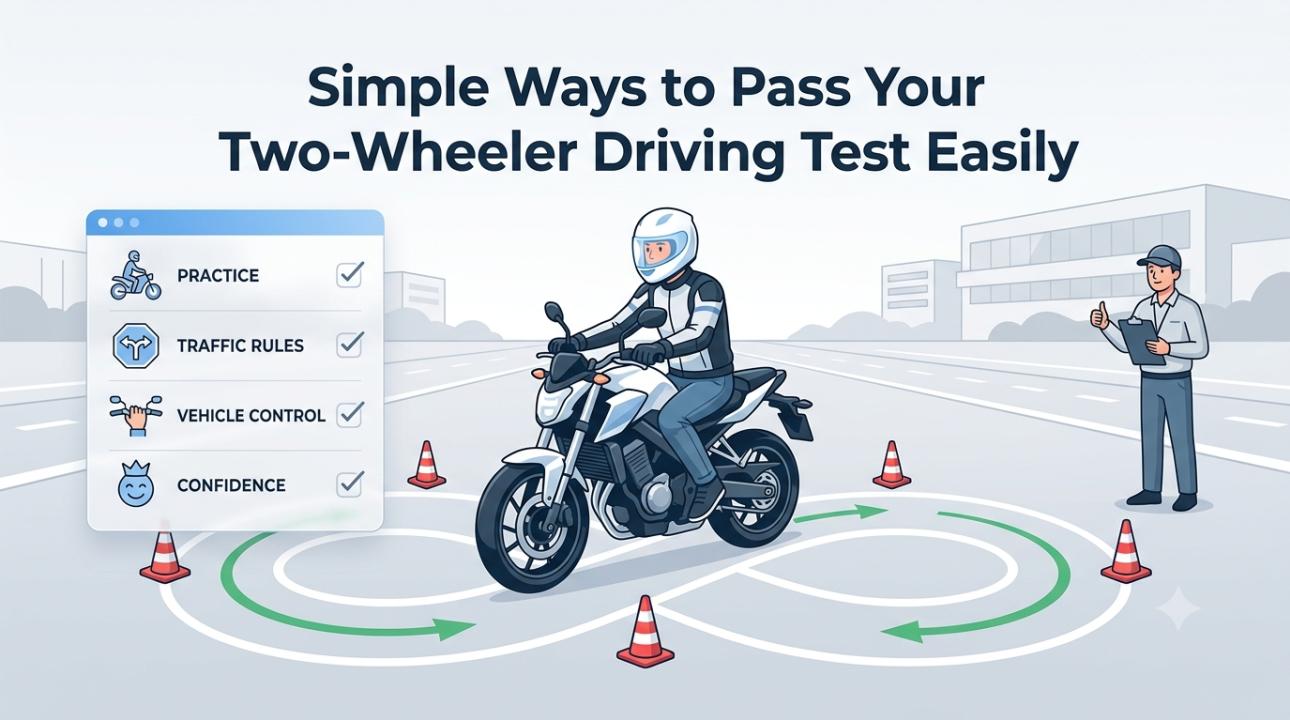
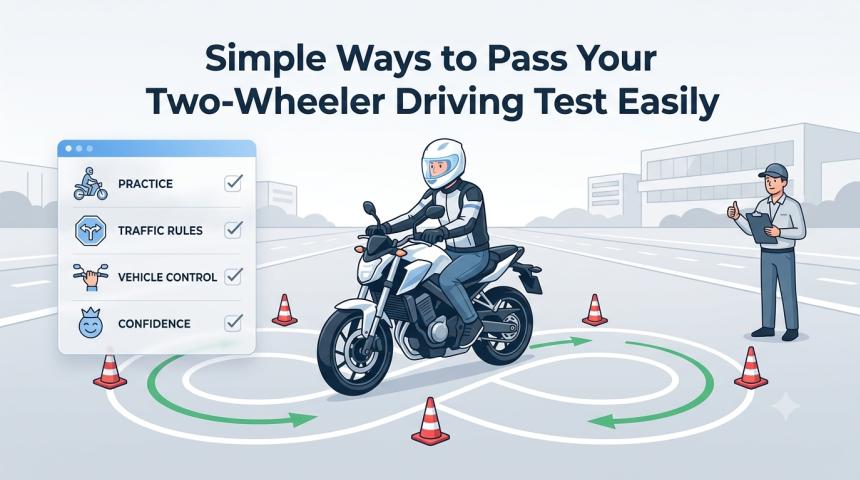
Practise
Figure-Eight and Track Riding
Depending on the local test
procedure, you may be required to ride through a designated track or complete a
figure-eight pattern. These exercises are generally intended to assess balance,
steering control and vehicle handling.
When practising:
- Start slowly and focus on maintaining balance.
- Look ahead rather than continuously looking at the
front wheel.
- Keep your hands relaxed on the handlebar.
- Avoid sudden acceleration.
- Maintain a steady pace.
- Practise repeatedly until the manoeuvre feels natural.
Do not focus exclusively on speed.
Controlled and confident riding is usually more important than completing the
manoeuvre quickly.
Understand
the Importance of Indicators
Indicators are an important part of
responsible road behaviour. During your test, use them appropriately when
required.
Practise activating the indicator
before making a turn or changing direction. Remember to cancel it after
completing the manoeuvre if your vehicle does not do so automatically.
Developing this habit during
practice will make it easier to demonstrate responsible riding behaviour during
the test.
Use
Brakes Correctly
Braking is one of the most important
skills for any two-wheeler rider. Avoid grabbing the brakes suddenly unless
emergency braking is required.
Practise using the front and rear
brakes smoothly and progressively. Understand how your vehicle responds to
different braking situations.
A good rider should be able to slow
down and stop without losing balance or making abrupt movements. Regular
practice in a safe and controlled environment can help improve braking
confidence.
Keep
Your Eyes Ahead
A common mistake among beginners is
focusing too much on the ground immediately in front of the vehicle. This can
affect balance and steering control.
Instead, look ahead and focus on the
direction you want to travel. Your hands and body naturally respond to where
your eyes are focused.
This technique is particularly
useful while navigating turns, curves and narrow tracks. It can help you
maintain a smoother riding line and better overall control.
Avoid
Sudden Movements
During a driving test, unnecessary
movements can increase the possibility of errors. Avoid sudden acceleration,
harsh braking or abrupt steering.
Maintain a steady speed and make
deliberate movements. If you make a minor mistake, do not panic. Losing
concentration because of one small error can lead to additional mistakes.
Stay calm, regain control and
continue following the test instructions.
Practise
With a Qualified Instructor
If you are not confident about your
riding skills, consider taking professional training before appearing for the
test. An experienced instructor can identify mistakes that you may not notice
yourself.
Professional practice can be particularly
helpful for beginners who struggle with:
- Balance.
- Clutch control.
- Tight turns.
- Figure-eight riding.
- Braking.
- Starting and stopping.
- Understanding road rules.
The goal is not simply to pass the
test but to develop safe riding habits that remain useful after you receive
your licence.
Know
the Traffic Rules and Road Signs
A driving test is not only about
controlling the vehicle. Responsible riding also requires knowledge of basic
traffic rules.
Before the test, revise important
road signs and traffic rules. Understand the meaning of common signs related to
speed limits, no-entry areas, parking restrictions, intersections and
pedestrian crossings.
You should also understand basic
practices such as giving way when required, maintaining a safe distance and
following lane discipline.
Having good knowledge of traffic
rules can make you a more responsible rider after obtaining your licence.
Carry
the Required Documents
Before visiting the RTO for your
test, check the documents and requirements applicable to your application. Keep
the necessary paperwork organised to avoid unnecessary delays.
Depending on the application and
local requirements, applicants may need documents related to identity, address,
learner's licence and other application details.
It is also important to arrive at
the test location on time. Rushing at the last minute can increase stress and
affect your concentration.
Check
Your Two-Wheeler Before the Test
If you are using your own vehicle,
inspect it before the test. Make sure the brakes, tyres, indicators, horn and
lights are functioning properly.
Check the fuel level and ensure the
vehicle is in good working condition. If you are using someone else's vehicle,
familiarise yourself with its controls before the test begins.
A basic vehicle check can help
prevent avoidable problems on the test day.
Common
Mistakes to Avoid During the Test
Several simple mistakes can affect
your performance. Avoid:
- Riding too fast on the test track.
- Looking down continuously.
- Making sudden turns.
- Forgetting to use indicators where required.
- Losing balance due to unnecessary braking.
- Ignoring instructions from the examiner.
- Arriving without required documents.
- Using a vehicle that is difficult for you to control.
- Becoming overly nervous after making a small mistake.
Remember that the test is intended
to assess whether you can operate a two-wheeler safely and responsibly. Focus
on demonstrating control rather than trying to impress the examiner with speed.
Stay
Calm and Confident on Test Day
Nervousness is common, especially
for first-time applicants. The best way to manage it is through preparation.
Get adequate rest before the test
and arrive early. Take a few moments to settle down before riding. Listen
carefully to the examiner's instructions and avoid rushing.
Confidence should come from
practice, not overconfidence. Ride at a controlled speed, follow the rules and
focus on each step of the test.
What
to Do If You Do Not Pass the Test
Not passing the driving test on your
first attempt does not mean you cannot become a good rider. Identify the areas
where you faced difficulty and practise those skills before attempting the test
again.
If you struggled with balance,
practise low-speed riding. If turns were difficult, work on steering and body
positioning. If you became nervous, practise the test route several times under
supervision.
Use the experience as feedback and
return better prepared for your next attempt.
Why
Safe Riding Should Continue After Getting Your Licence
Passing the driving test is only the
beginning of your journey as a two-wheeler rider. Real-world traffic conditions
are more unpredictable than a controlled test track.
Always wear a properly fitted
helmet, follow traffic rules, avoid distracted riding and maintain your vehicle
regularly. Never ride under the influence of alcohol or drugs, and maintain a
safe speed according to road and traffic conditions.
You should also keep your
two-wheeler insurance valid. Insurance is an important part of responsible
vehicle ownership and can provide financial protection against covered risks,
depending on your policy terms and conditions.
Conclusion
Passing a two-wheeler driving test
becomes easier when you prepare systematically and practise consistently.
Understanding the test format, improving balance, mastering low-speed control,
practising turns and following traffic rules can significantly improve your
confidence. Staying calm and avoiding sudden movements can also help you
perform better on the test day.
Remember that the real objective is
not simply to obtain a driving licence but to become a safe and responsible
rider. Along with developing good riding skills, keeping your vehicle
maintained and maintaining valid two-wheeler insurance are important parts of
responsible ownership. Square Insurance can help vehicle
owners explore suitable insurance options and manage their insurance needs conveniently.
FAQs
Q1.
How can I pass my two-wheeler driving test on the first attempt?
Practise regularly, understand your
local RTO's test procedure and become comfortable with your vehicle. Focus on
balance, low-speed control, turning, braking and following instructions.
Q2.
What should I practise before a two-wheeler driving test?
You should practise starting and
stopping, smooth acceleration, braking, turning, balance, low-speed riding and
any specific track manoeuvres required by your local RTO.
Q3.
Is it difficult to pass a two-wheeler driving test?
The difficulty varies depending on
your riding experience and the test procedure. With sufficient practice and
familiarity with the vehicle, many applicants can approach the test with
greater confidence.
Q4.
What are the common reasons for failing a two-wheeler driving test?
Common issues may include losing
balance, poor vehicle control, incorrect manoeuvring, not following
instructions or making mistakes while completing the designated test track.
Q5.
Should I practise on the same two-wheeler I will use for the test?
Yes, practising on the same or a
similar vehicle can help you become familiar with its controls, balance,
braking and handling characteristics.
Q6.
How can I control nervousness during my driving test?
Prepare well, practise the test
manoeuvres repeatedly and arrive at the test location early. Take a moment to
relax and listen carefully to the examiner's instructions before starting.