Every company says it values its people. Far fewer actually build systems that prove it. As hybrid work, tighter budgets, and rising burnout reshape the workplace, employee engagement has stopped being a nice-to-have HR initiative and turned into something closer to a business survival skill. Teams that feel disconnected disengage quietly, and by the time turnover numbers show it, the damage to productivity and morale has already
been done.
The good news is that engagement doesn't require a massive budget or a complete culture overhaul. It requires consistency, clarity, and a genuine understanding of what actually motivates people to show up and do their best work.
The Real Cost of a Disengaged Workforce
Disengagement rarely announces itself. It shows up as missed deadlines, shrinking participation in meetings, and a slow drift toward mediocrity. Employees stop raising ideas because they suspect no one is listening. Managers stop checking in because they're stretched thin across too many priorities.
The financial impact is easy to underestimate. Replacing an employee can cost half their annual salary once you factor in recruiting, onboarding, and lost productivity during the transition. Multiply that across a team of twenty or fifty people, and disengagement stops looking like a soft metric and starts looking like a line item.
Recognition Has to Be Specific to Matter
Generic praise wears out fast. Telling someone "great job" in a team meeting feels nice for about five minutes, but it rarely changes behavior or builds loyalty. What actually sticks is recognition tied to something concrete: the extra hours someone put into a client pitch, the way a support rep de-escalated a frustrated customer, the process improvement that quietly saved the team hours every week.
Specific recognition does two things generic praise can't. It tells the employee exactly what to keep doing, and it signals to the rest of the team what the company actually values. Over time, that shapes culture far more effectively than a mission statement on the wall.
Structure Turns Good Intentions Into Habits
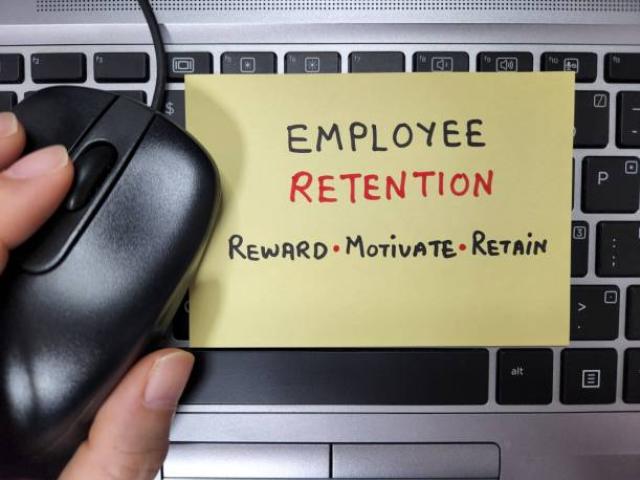
Most managers genuinely intend to recognize good work. The problem is that intentions fade under deadline pressure. This is where structured approaches outperform ad hoc gestures. Companies that build well-designed employee incentive programs give managers a repeatable framework instead of relying on memory and good will. When recognition and rewards are tied to clear, measurable goals, they stop being random acts of appreciation and become part of how the business actually operates.
Structure also removes bias. Without a system, recognition tends to flow toward the loudest or most visible employees, while quieter high performers get overlooked. A defined program forces managers to evaluate contributions on merit rather than proximity or
Personality.
Small, Consistent Gestures Beat Occasional Big Ones
There's a common assumption that employee rewards requires grand gestures: an annual retreat, a lavish holiday party, a surprise bonus once a year. These moments matter, but they can't carry the full weight of a culture on their own. employees remember how they were treated on an ordinary Tuesday far more than they remember a single flashy event.
Small, frequent signals of appreciation build trust in a way occasional spectacle never can. A manager who takes two minutes to acknowledge a well-handled project does more for morale over a year than a single expensive offsite. Consistency is what turns recognition into a felt sense of belonging rather than a scheduled obligation.
Give People a Say in What Motivates Them
One of the fastest ways to waste an engagement budget is to guess what employees want instead of asking them. A points-based rewards catalog might excite one team and completely miss the mark with another that would rather have flexible hours or professional development funding.
Short, anonymous surveys asking employees to rank what actually motivates them cost almost nothing and prevent months of misdirected effort. Some will value public recognition, others will prefer private acknowledgment, and plenty will care more about growth opportunities than about gift cards. Building flexibility into how rewards are delivered respects that diversity instead of forcing a one-size-fits-all approach.
Building a Culture That Doesn't Depend on Luck
Engagement isn't a single initiative you launch and check off a list. It's the sum of hundreds of small decisions: how quickly a manager responds to good work, whether feedback loops actually close, and whether employees believe their effort is noticed even when no one is Watching.
Companies that treat engagement as infrastructure, not decoration, tend to weather turnover storms and market pressure far better than those relying on culture by accident. The businesses that get this right aren't necessarily the ones spending the most. They're the ones being the most deliberate about where and how that effort shows up.