Ask any parent with young kids, and there's a good chance they'll have an ear infection story to tell. It's one of the most common reasons families end up at the doctor's office, particularly before age five. The good news is that most cases are straightforward to treat and rarely serious, as long as they're caught in time. Here's what actually causes them, what to look out for, and how they're usually handled.
Why kids get them so much more than adults
There's a real anatomical reason kids seem to catch these constantly. The Eustachian tube — the little passage linking the middle ear to the back of the throat — sits shorter, narrower, and flatter in young children than it does in adults. That makes it much easier for fluid, bacteria, or viruses from a cold to work their way up into the middle ear and get stuck there.
On top of that, a child's immune system is still building itself up, so it hasn't developed the same resistance to everyday colds and respiratory bugs that tend to set ear infections off in the first place. Throw in daycare exposure, secondhand smoke, seasonal allergies, and the sheer number of colds kids pick up each year, and it starts to make sense why ear infections are almost a rite of passage in early childhood.
What typically causes them
A handful of usual suspects show up again and again:
A cold or respiratory infection that leaves fluid sitting in the middle ear. Allergies that swell the nasal passages enough to block the Eustachian tube. Sinus infections that spread toward the ear. Bottle-feeding while a baby is lying flat, which lets milk creep into the tube. Secondhand smoke, which irritates the airway and raises infection risk. And simply being around other kids often, since daycare means more shared germs.
No parent can dodge all of these entirely — most children will go through at least one ear infection before they're much older, and that's completely normal.
Signs your child might have one
Younger kids can't always say "my ear hurts," so parents end up reading behavior almost as much as symptoms. Watch for tugging at the ear, unusual fussiness (especially worse when lying down), restless sleep, fluid leaking from the ear, not responding to sounds the way they normally would, wobbliness or balance issues, fever, or just not wanting to eat.
Older kids will usually just tell you outright that their ear hurts or feels blocked. If your child's had a cold recently and now seems extra irritable, running a fever, or keeps pulling at their ear, it's worth getting it looked at.
How doctors figure out what's going on
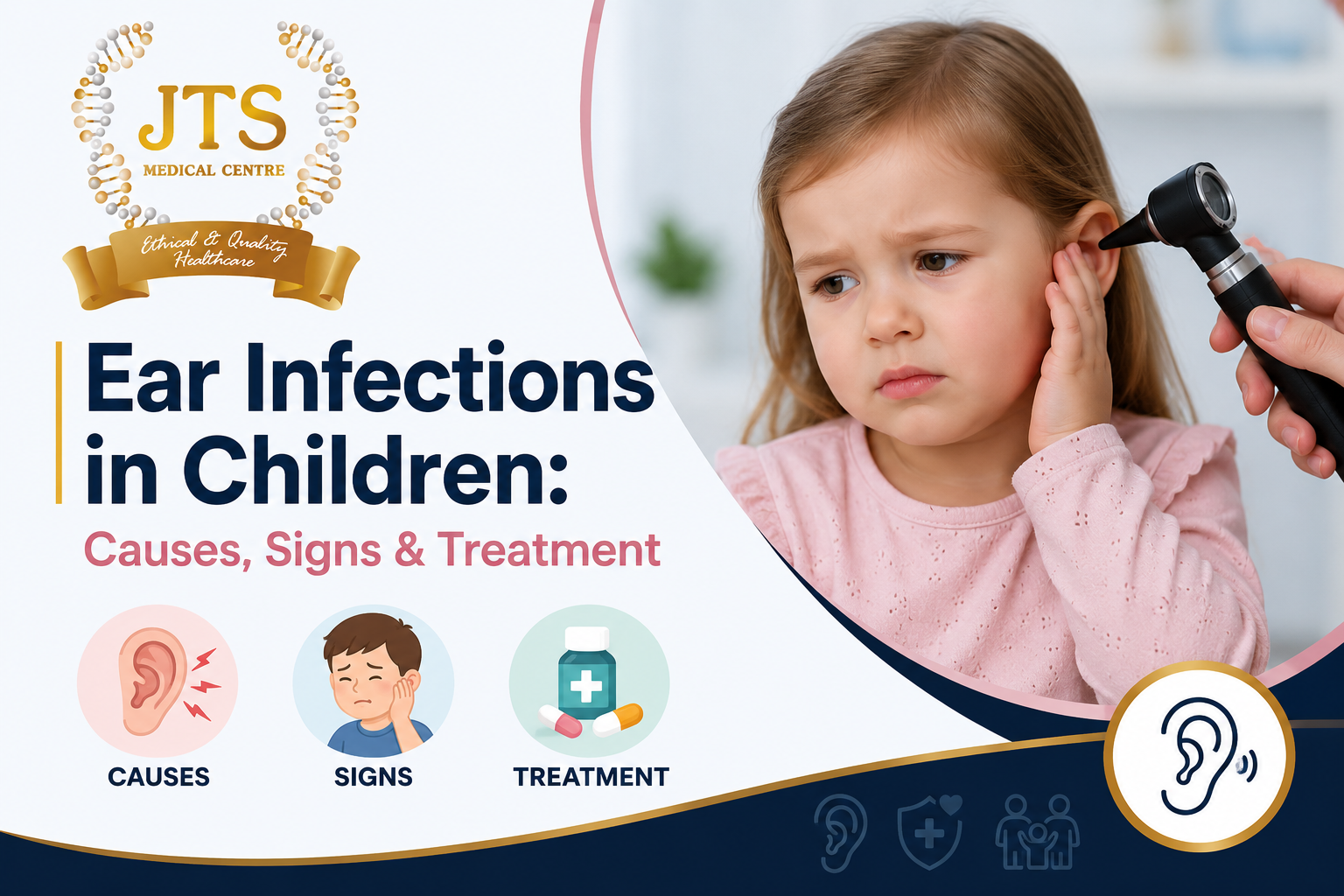
Diagnosis is usually quick. A pediatrician or ENT will look into the ear with an otoscope, checking the eardrum for redness, swelling, or fluid behind it. Sometimes they'll also use a tympanometer, a device that checks how the eardrum moves, to confirm whether fluid has built up.
Because the symptoms can sometimes overlap with things like teething pain or a sore throat, it's worth having a professional actually look rather than guessing at home.
How it's usually treated
Treatment depends on how bad the infection is and what's causing it.
For milder cases, especially in kids over two, doctors will often suggest waiting a few days first — plenty of infections clear up on their own as the immune system fights off the virus behind it.
Pain relief matters in the meantime. Age-appropriate over-the-counter medication can ease discomfort and bring down fever while things resolve; your doctor can tell you the right dose.
If the infection turns out to be bacterial, is more severe, or just isn't improving after a couple of days, antibiotics may be prescribed. It's worth finishing the full course even once symptoms ease up, so the infection doesn't come back or become harder to treat later.
For kids who keep getting ear infections over and over, a specialist might recommend a hearing check or, in some cases, a minor procedure to place ear tubes that help fluid drain properly.
When it's time to call the doctor
Most ear infections aren't emergencies, but get medical attention if your child has a high fever, is clearly in a lot of pain, has fluid or pus draining from the ear, seems to be having trouble hearing, hasn't improved after two or three days, or is under six months old and shows any signs at all.
Catching it early just makes recovery faster and lowers the odds of complications.
Cutting down the risk
You can't prevent every ear infection, but a few habits help: keeping kids away from secondhand smoke, breastfeeding if that's an option (it may offer some added immune protection), avoiding bottle-feeding while lying flat, staying current on vaccinations like the flu shot and pneumococcal vaccine, managing allergies before they flare, and just keeping up with hand hygiene to cut down on colds in general.
Ear infections are common, usually manageable, and rarely something to panic over. Knowing what causes them, spotting the early signs, and understanding the treatment options makes it a lot easier to handle calmly when it happens. And when it does, getting your child seen by a pediatric specialist quickly makes recovery faster and smoother.
If you're looking for that kind of expert, genuinely caring pediatric care, the Paediatric Clinic at JTS Medical Centre has experienced specialists who know exactly what growing kids need — from routine checkups to diagnosing and treating ear infections properly.