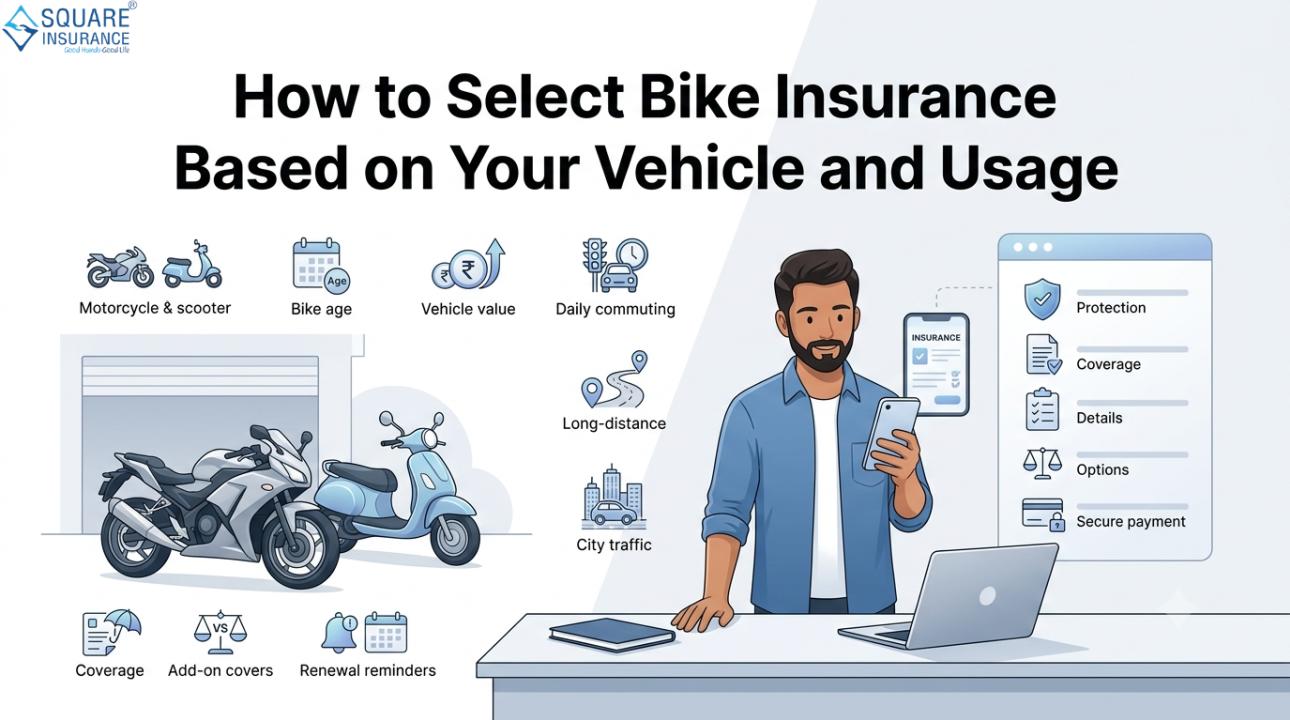
Choosing bike insurance is not
simply about finding the lowest premium available. Every two-wheeler owner has
different requirements depending on the type of bike they own, how often they
ride it, where they travel, and the level of financial protection they expect.
A policy that works well for a daily city commuter may not necessarily be the
right choice for someone who frequently takes long-distance trips.
Understanding your vehicle and
riding habits can therefore help you make a more informed insurance decision.
Whether you own a commuter bike, a premium motorcycle, a scooter, or a
performance-oriented two-wheeler, selecting suitable coverage can help protect
you against covered financial and legal liabilities.
This guide explains how to evaluate
your bike
insurance requirements based on your vehicle type, riding patterns,
location, and personal needs.
Why
Your Vehicle and Usage Matter When Choosing Bike Insurance
Insurance is designed to address
specific risks, and those risks can vary significantly from one rider to
another.
For example, a person who rides a
bike several hours every day in heavy city traffic may face different exposure
to accidents than someone who uses their two-wheeler only occasionally.
Similarly, a high-value motorcycle may require a different approach to coverage
compared with an older commuter bike.
Factors such as the bike's age,
model, value, usage, location, and riding frequency can influence the type of
protection you may want.
Before selecting a policy, consider
your actual circumstances instead of choosing coverage based solely on price.
1.
Identify Your Two-Wheeler Type
The first step is to understand what
kind of vehicle you own.
Commuter
Bikes
Commuter motorcycles are commonly
used for daily travel to work, college, markets, and other destinations. Owners
who use these bikes regularly may benefit from maintaining continuous insurance
coverage and choosing protection that aligns with frequent road use.
Since daily riders may have more
exposure to traffic and road-related risks, it is important to consider
suitable own-damage protection in addition to mandatory third-party liability
coverage, depending on individual requirements.
Scooters
Scooters are popular for urban
commuting and short-distance travel. Their usage may include frequent trips
through crowded roads and busy markets.
When selecting insurance for a
scooter, consider how frequently it is used, where it is parked, and whether
broader coverage against covered risks such as theft or accidental damage is
appropriate.
Premium
and High-Value Bikes
Premium motorcycles may have a
higher purchase price and potentially higher repair costs. Owners of such
vehicles may want to consider broader coverage and suitable add-ons, depending
on the bike's value and usage.
The Insured Declared Value, where
applicable, should also be reviewed carefully during policy selection and renewal.
Performance
and Sports Bikes
Performance-oriented motorcycles may
be used differently from regular commuter bikes. Owners should carefully review
policy conditions related to vehicle usage, modifications, and other applicable
requirements.
It is important to provide accurate
information to the insurer and ensure that the selected policy is appropriate
for the vehicle.
2.
Consider How Frequently You Ride
Your riding frequency is another
important factor.
Daily
Riders
If you use your bike every day, your
exposure to road risks is generally greater simply because you spend more time
riding.
Daily commuters may want to consider
comprehensive insurance or suitable own-damage protection in addition to
mandatory third-party cover. The right choice depends on the bike's value,
usage, budget, and individual risk preference.
Occasional
Riders
If you use your bike only
occasionally, you may still need mandatory third-party insurance to legally
ride it on public roads. However, you should also consider whether additional
protection for your own vehicle is appropriate.
Even an infrequently used bike can
be exposed to risks such as theft, fire, natural events, or accidental damage
while parked or being ridden.
3.
Think About Where You Ride
Location can significantly influence
your insurance requirements.
Riders in busy metropolitan areas
may face heavy traffic, congestion, and a higher frequency of short trips.
Those living in areas with challenging weather conditions or specific
environmental risks may also want to consider broader protection.
If you regularly travel on highways,
your requirements may differ from those of someone who rides only within a
small local area.
Consider your typical routes and
riding environment before selecting coverage.
4.
Decide Between Third-Party and Comprehensive Coverage
The type of policy you select should
reflect your desired level of protection.
Third-Party
Insurance
Third-party liability insurance is
mandatory for vehicles being driven on public roads in India. It provides
coverage for certain liabilities arising from third-party injury, death, or
property damage, subject to applicable law and policy terms.
However, it generally does not cover
damage to your own bike.
Comprehensive
Insurance
A comprehensive policy generally
combines third-party liability protection with coverage for the insured vehicle
against specified risks.
Depending on the policy, this may
include risks such as accidental damage, theft, fire, and natural calamities.
For owners who want broader
protection, comprehensive insurance may be worth considering.
Standalone
Own-Damage Insurance
A standalone own-damage policy may
provide coverage for damage to your own vehicle against specified risks,
provided the applicable requirements are met.
Understanding the differences
between these options can help you select coverage that aligns with your needs.
5.
Consider the Age and Value of Your Bike
The age and value of your
two-wheeler should also influence your decision.
For a newer or high-value bike,
broader protection may be more important because repairing or replacing the
vehicle could involve significant expenses.
For an older bike with a lower
market value, you may evaluate whether comprehensive coverage and certain
add-ons continue to provide sufficient value relative to the premium.
This does not mean that older bikes
do not require insurance. Mandatory third-party coverage remains important,
while additional protection should be considered based on your financial
circumstances and risk preferences.
6.
Evaluate Add-On Covers Based on Usage
Add-ons can provide additional
benefits beyond standard coverage, but they generally increase the policy
premium.
Depending on availability and
eligibility, options may include:
- Zero depreciation cover
- Roadside assistance
- Engine protection
- Consumables cover
- Return to invoice cover
A rider who frequently travels long
distances may find roadside assistance useful. Someone with a newer bike may
consider zero depreciation protection, subject to the policy terms.
Do not select every available add-on
automatically. Review the coverage, exclusions, limits, and additional premium
before deciding.
7.
Check the Insured Declared Value
For comprehensive and own-damage
policies, the Insured Declared Value, or IDV, is an important consideration.
It generally represents the
approximate insured value of the vehicle for certain total loss or theft
claims, subject to policy terms and applicable conditions.
When comparing policies, avoid
selecting an unusually low IDV merely to reduce the premium. At the same time,
an unnecessarily high IDV may increase the premium.
Review the available IDV carefully
and select an appropriate value based on the vehicle's age and applicable
depreciation.
8.
Consider Your Parking and Storage Conditions
Where you keep your bike can also
influence your risk exposure.
A motorcycle parked overnight on a
busy street may have a different theft exposure from one stored inside a
secured residential parking area.
While parking conditions alone
should not determine your insurance choice, they can help you evaluate whether
broader protection against covered risks is appropriate.
If your bike is frequently parked in
public or unsecured areas, consider the value of coverage that protects against
covered theft-related losses.
9.
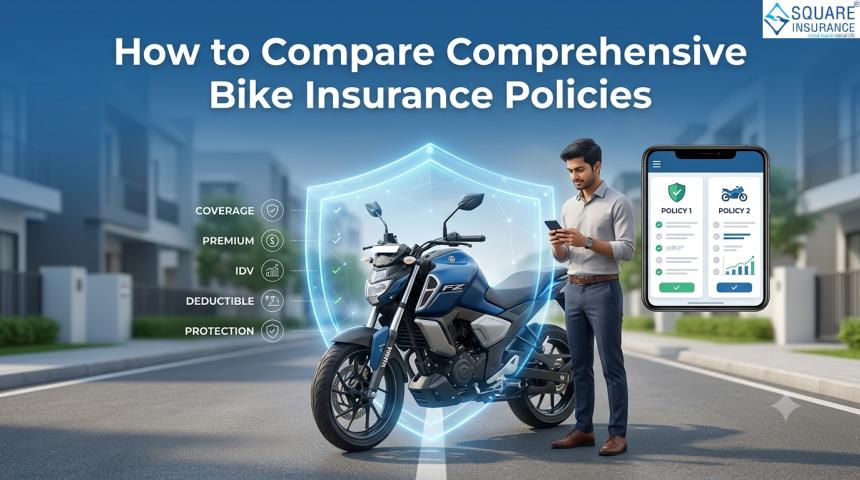
Compare Policies Beyond Premium
When selecting bike insurance, avoid
comparing policies only on price.
Review:
- Coverage benefits
- Exclusions
- Deductibles
- IDV
- Add-ons
- Claim procedures
- Network garage availability, where applicable
- Customer service
- Policy conditions
A policy with a slightly higher
premium may offer features that are more suitable for your requirements.
The goal should be to select the
right balance between coverage, affordability, and service quality.
10.
Review the Policy Before Buying
Before finalizing your bike
insurance, carefully read the policy details.
Pay attention to exclusions and
conditions that could affect your coverage. Make sure the vehicle information
and personal details are accurate.
If you are unsure about any feature,
seek clarification before purchasing.
Insurance is a contract, and
understanding the terms can help you avoid misunderstandings during a claim.
11.
Renew Your Policy on Time
Selecting the right policy is only
one part of responsible insurance management. You should also renew your bike
insurance before it expires.
At renewal, review whether your
vehicle, usage, or insurance needs have changed.
For example, you may have started
using your bike for longer journeys, moved to a different location, or
purchased another vehicle. Such changes may affect the type of protection you
want.
Regular policy reviews can help
ensure that your coverage continues to match your circumstances.
Common
Mistakes to Avoid
Bike owners should avoid several
common mistakes when choosing insurance.
These include:
- Selecting a policy only because it has the lowest
premium
- Ignoring the difference between third-party and
own-damage coverage
- Choosing unsuitable add-ons
- Not checking policy exclusions
- Providing inaccurate vehicle information
- Selecting an inappropriate IDV
- Forgetting to review coverage at renewal
- Allowing the policy to expire
Avoiding these mistakes can help you
make a more informed insurance decision.
Conclusion
Selecting bike insurance based on
your vehicle and usage can help you choose coverage that is better aligned with
your actual needs. Consider the type and value of your bike, how frequently you
ride, where you travel, parking conditions, and the level of protection you
want.
While third-party insurance is
mandatory for vehicles used on public roads, broader coverage may be
appropriate for riders who want protection against covered risks affecting
their own vehicle. Add-ons should also be selected carefully based on genuine
requirements rather than simply choosing every available option.
Square Insurance can help customers
explore suitable insurance solutions and manage their insurance requirements
more conveniently. By reviewing your needs carefully, comparing coverage beyond
the premium, and renewing your policy on time, you can make a more confident
decision about protecting your two-wheeler.
FAQs
Q1.
How does my bike type affect my insurance choice?
The type, age, value, and usage of
your bike can influence your insurance requirements. A high-value or premium
motorcycle may require broader protection than an older commuter bike,
depending on your individual circumstances.
Q2.
Is third-party bike insurance enough for daily riders?
Third-party insurance is legally
mandatory and provides coverage for eligible third-party liabilities. However,
it generally does not cover damage to your own bike. Daily riders may consider
broader coverage based on their vehicle value, usage, and financial needs.
Q3.
Should I choose comprehensive bike insurance for a new motorcycle?
A comprehensive policy may be worth
considering for a new motorcycle if you want broader protection against covered
risks affecting your own vehicle in addition to third-party liability coverage.
The right choice depends on your requirements and budget.
Q4.
Are add-ons necessary for every bike owner?
No. Add-ons should be selected
according to your vehicle, riding habits, and personal requirements. Review the
additional premium, coverage, exclusions, and limits before purchasing an
add-on.
Q5.
What is IDV in bike insurance?
IDV stands for Insured Declared
Value. It generally represents the approximate insured value of your vehicle
for certain total loss or theft claims, subject to the policy terms and
applicable conditions.
Q6.
Does where I park my bike affect my insurance decision?
Parking conditions can be one factor
when assessing your overall risk. If your bike is frequently parked in
unsecured or public locations, you may consider whether broader coverage
against covered risks such as theft is appropriate.
Q7.
Can I change my bike insurance coverage during renewal?
At renewal, you can generally review
your existing policy and select coverage that better matches your current
requirements, subject to the insurer's terms and applicable rules.
Q8.
What should I compare before selecting bike insurance?
Compare the coverage, exclusions,
IDV, deductibles, add-ons, claim process, service features, and premium.
Choosing a policy based only on the lowest price may not provide the protection
you actually need.