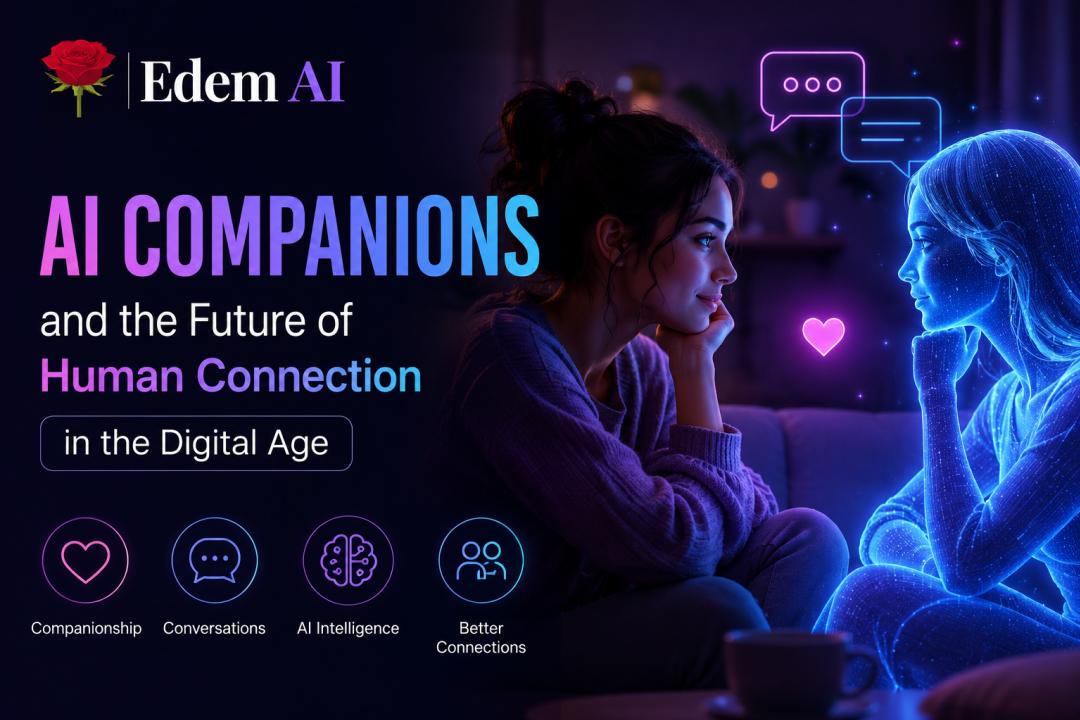
Not long ago, the idea of having meaningful conversations with artificial intelligence felt like something from science fiction. Today, it has quietly become part of everyday life. Millions of people now spend time chatting with AI, asking for advice, sharing thoughts, or simply looking for someone who listens without judgment. This shift has changed how many of us think about relationships, technology, and emotional support.
As these digital experiences become more personal, AI Companions are moving beyond simple chatbots. They can remember conversations, adapt to different personalities, and create interactions that feel surprisingly natural. While they cannot replace genuine human relationships, they are filling new roles that many people never expected technology to play.
The digital age has already transformed the way we communicate through messaging apps, social media, and video calls. AI is simply the next step in that journey. The real question is no longer whether people will interact with AI. Instead, it is how these interactions will shape the future of human connection.
Why people are turning to AI Companions
Life has become busier than ever. Many people work remotely, relocate frequently, or spend long hours online. While technology has connected us globally, it has also left some people feeling isolated in their daily lives.
This is where AI Companions are finding a place. They offer conversations whenever someone wants them, regardless of the time or location. There are no schedules to match and no fear of interrupting someone else's day.
Some common reasons people enjoy these platforms include:
- Having someone available to chat at any hour.
- Practicing conversations without social pressure.
- Finding entertainment through roleplay and storytelling.
- Feeling less alone during stressful periods.
- Exploring creative conversations that would not happen elsewhere.
For many users, these experiences are not about replacing real friendships. Instead, they provide another form of interaction that fits naturally into modern digital life>
Digital relationships are becoming more personalized
One major reason AI has become more engaging is personalization. Earlier chatbots often repeated scripted responses, making conversations feel mechanical. Today's systems remember preferences, adapt their tone, and respond more naturally over time.
Someone who enjoys discussing books may receive recommendations based on previous conversations. Another user who prefers lighthearted humor may notice their AI gradually adopting a more playful personality.
This personalized approach makes interactions feel more consistent and enjoyable. Likewise, users often return because the conversations continue rather than restarting from scratch every time.
The experience feels closer to talking with someone who remembers your interests instead of interacting with a search engine.
The growing interest in virtual companionship
The popularity of virtual companionship reflects changing social habits rather than simply technological progress.
Many younger adults spend much of their free time online. Gaming communities, virtual events, and digital friendships have already shown that meaningful interactions do not always require physical presence.
Similarly, AI-powered companionship has become another form of online interaction.
Some users enjoy talking with an AI virtual girlfriend because the conversations are personalized and available whenever they want. Others simply appreciate having a space where they can discuss ideas, hobbies, or everyday experiences without feeling judged.
These platforms often include customizable personalities, voice conversations, memory features, and interactive storytelling, creating experiences that feel much more engaging than traditional chatbots.
Human connection still matters most
Whenever AI relationships are discussed, an important concern quickly appears.
Will AI replace real people?
For most users, the answer is no.
Family relationships, friendships, romantic partners, and community interactions involve shared experiences that artificial intelligence cannot truly recreate. Real relationships include empathy, physical presence, mutual growth, and emotional complexity that extend far beyond digital conversations.
Instead, many people see AI as something that complements existing relationships rather than replacing them.
Someone might chat with AI during late-night work hours, while still spending weekends with friends and family. Another person may practice difficult conversations with AI before discussing sensitive topics with loved ones.
Used this way, technology becomes another communication tool instead of a substitute for human interaction.
AI is helping people practice communication
One interesting benefit receiving attention is communication practice.
Many people struggle with confidence when meeting new people, preparing for interviews, or expressing emotions.
AI provides a private environment where users can practice conversations repeatedly without worrying about embarrassment.
For example, someone preparing for a job interview might simulate interview questions. Another person could rehearse difficult discussions before talking with a family member.
At the same time, language learners often use conversational AI to practice speaking naturally between formal lessons.
These examples show that conversational AI has practical uses beyond entertainment.
Emotional support in a digital world
Stress, loneliness, and anxiety affect people across every age group.
While AI should never replace licensed mental health professionals, many users appreciate having a conversation available whenever they need one.
Some people use AI simply to organize their thoughts. Others enjoy journaling through conversation rather than writing in a notebook.
The immediate availability makes these systems appealing.
Instead of waiting hours for someone to reply to a message, users can begin talking immediately.
That instant interaction often makes people feel heard, even when they fully recognize they are communicating with software.
Entertainment is becoming more interactive
Many conversations with AI are purely for fun.
Interactive storytelling has become one of the fastest-growing features across AI platforms. Users create fictional adventures, fantasy worlds, mystery stories, or historical scenarios where the AI responds dynamically.
Likewise, roleplaying experiences continue attracting large audiences.
Some platforms even offer an AI girlfriend love simulator, where users participate in fictional romantic storylines designed primarily for entertainment. These experiences allow people to create unique narratives, customize personalities, and enjoy imaginative conversations without confusing fiction with real-life relationships.
For many users, the attraction is similar to playing story-driven games or reading interactive novels.
Creativity is finding a new partner
Writers, artists, game developers, and content creators increasingly use conversational AI during brainstorming.
An AI conversation can help generate character ideas, fictional dialogue, plot twists, or creative writing prompts.
Instead of replacing creativity, it often becomes a collaborative partner during the early stages of a project.
For example, a novelist may discuss different endings before deciding which direction fits the story best.
Similarly, YouTubers and marketers often use AI to organize ideas before creating their own original content.
The final creative work still depends on human judgment, but AI can make the creative process feel less overwhelming.
Privacy and trust will shape the future
As AI becomes more personal, privacy becomes increasingly important.
Users often share thoughts, preferences, and personal experiences during conversations.
Because of this, companies building AI Companions need transparent privacy policies, secure data practices, and clear explanations about how conversations are stored or processed.
People are becoming more aware of digital privacy than ever before.
The platforms that earn long-term trust will likely be those that prioritize user safety while giving people greater control over their personal information.
Likewise, responsible development includes clear boundaries about what AI can and cannot do.
Relationships with AI are becoming more realistic
One reason conversations feel more engaging today is the rapid improvement in language models.
Responses are faster, more context-aware, and better at remembering previous discussions.
Voice interaction has also improved dramatically.
Instead of typing every message, users can hold spoken conversations that feel much closer to everyday communication.
Similarly, visual avatars continue becoming more expressive through realistic facial expressions, gestures, and animation.
An AI Girlfriend experience today often feels significantly more interactive than similar products available only a few years ago.
As technology continues improving, realism will likely increase even further.
Different generations are adopting AI differently
Age plays an interesting role in how people approach conversational AI.
Younger users often treat AI as another digital platform alongside gaming, messaging, and social media.
Working professionals may use AI for productivity during the day and entertainment during the evening.
Older adults sometimes appreciate AI because it offers regular conversation, reminders, or companionship during quiet moments.
Although their motivations differ, each group finds value in having conversations available whenever they choose.
This wide range of users suggests conversational AI is becoming part of mainstream digital life rather than remaining a niche technology.
Ethical questions deserve attention
Every new technology creates important discussions.
AI companionship raises questions about emotional attachment, responsible design, transparency, and healthy digital habits.
Developers should avoid encouraging unhealthy dependence or misleading users into believing AI possesses genuine human emotions.
Similarly, users benefit from remembering that AI generates responses based on data and programming rather than real feelings.
Keeping these expectations realistic helps people enjoy AI responsibly while maintaining healthy real-world relationships.
Balanced use is likely to produce the most positive experiences.
Businesses are paying attention
The rapid growth of conversational AI has attracted investment from startups and established technology companies alike.
Businesses now recognize that users want experiences rather than simple software tools.
Many companies are building subscription services with advanced memory, voice conversations, image generation, customizable personalities, and interactive storytelling.
Competition continues driving innovation, which means users can expect more realistic conversations, greater personalization, and broader accessibility over the coming years.
In addition, developers are working to make AI more multilingual, allowing people around the world to communicate comfortably in their preferred languages.
What the next few years may look like
The future of AI Companions will likely involve much more than text conversations.
We can expect improvements such as:
- More natural voice conversations.
- Better long-term memory between chats.
- Smarter personalization based on user preferences.
- Integration with smart devices and wearable technology.
- Richer virtual environments for interactive experiences.
These developments could make digital interactions feel increasingly seamless while still leaving human relationships at the center of everyday life.
Technology continues changing rapidly, but people will always value genuine emotional connections.
The challenge is finding the right balance between digital convenience and real-world relationships.
Finding balance in an AI-powered world
Every major communication technology has changed society in some way.
Letters became emails.
Phone calls became video meetings.
Social media connected billions of people across continents.
Conversational AI represents another step in that ongoing evolution.
For many people, these systems provide entertainment, creativity, practice, or companionship during moments when no one else is available. For others, they simply offer interesting conversations that make daily life a little more engaging.
Used thoughtfully, AI Companions can become useful digital tools without replacing the relationships that matter most. As technology continues evolving, the future of human connection will likely include both meaningful personal relationships and intelligent digital conversations working side by side.
Rather than competing with one another, the two can exist together, giving people more ways to communicate, create, learn, and connect in an increasingly digital world.