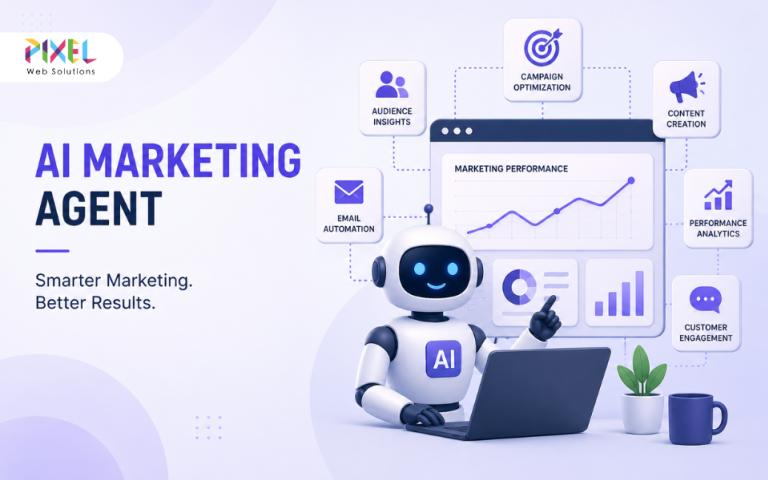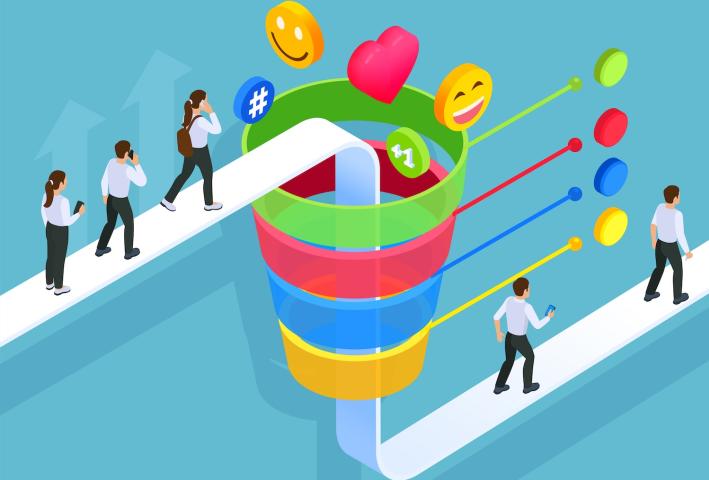
For twenty years, digital marketing revolved around one question: how do we rank on Google? In 2026, that question is being replaced by a bigger one — how do we get recommended by AI? From ChatGPT and Gemini to Perplexity and Google's own AI Overviews, generative AI tools are no longer a side channel. They are becoming the front door through which millions of people discover brands, compare products, and make buying decisions. For businesses — especially small and mid-sized ones — this is arguably the most consequential change to marketing since Google itself reshaped the web.
Here's what's actually happening, why it matters, and how any business — including those searching for the right digital marketing agency in Kerala to help them navigate it — can adapt without losing ground.
From "Search" to "Answers"
Traditional SEO was built around a simple mechanic: a user types keywords, Google returns a ranked list of links, and the brand with the strongest SEO wins the click. That mechanic is breaking down. Increasingly, users don't type keywords at all — they ask full questions, and AI tools respond with a single synthesized answer instead of ten blue links.
Industry researchers have tracked this shift closely. Zero-click searches — where a user gets their answer without clicking through to any website — now account for a majority of queries, and AI Overviews appear on a large share of Google results pages. Consumer surveys from major marketing platforms show that a significant portion of shoppers now treat AI chat tools as their primary starting point for product research, ahead of traditional search engines and retailer websites. The practical effect: a business can still "rank" well in the traditional sense and yet remain invisible, because the AI answer never mentions it.
Enter Generative Engine Optimization (GEO)
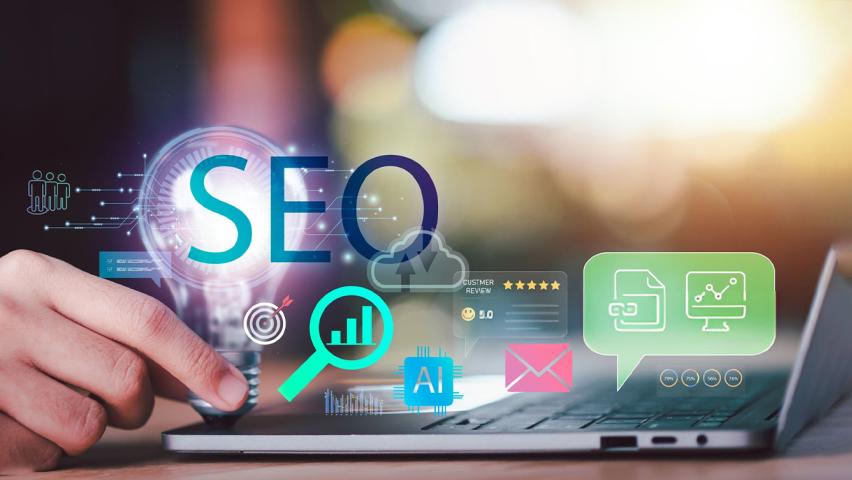
This shift has given rise to a new discipline sitting alongside SEO: Generative Engine Optimization, sometimes called AI search optimization or answer engine optimization. Where SEO optimizes for crawlers and rankings, GEO optimizes for something different — being the source an AI model trusts enough to cite, summarize, or recommend.
AI answer engines typically rely on retrieval methods that pull from a pool of vetted, authoritative sources rather than simply crawling every page on the web the way Google's bots do. That means a single unverified claim on a company website carries little weight. But the same fact repeated consistently across the company's site, review platforms, industry directories, and third-party publications becomes something the AI can treat as verified — and that consistency is what earns a citation.
This has real implications for how content should be built in 2026:
- Structure for extractability. Clear headings, direct answers near the top of a page, and well-organized data help AI systems lift and cite content accurately.
- Build a web of consistency. The same core facts about your business — services, pricing, location, credentials — should appear the same way across your website, Google Business Profile, directories, and review sites.
- Earn third-party mentions. Digital PR, guest content, and genuine reviews matter more than ever, because AI models weigh cross-referenced sources heavily.
- Track citations, not just rankings. New tools are emerging specifically to measure how often a brand is mentioned inside AI-generated answers, since traditional analytics can't see this.
Search Everywhere, Not Just Google
The second half of this shift is fragmentation. Consumers aren't only asking ChatGPT — they're searching on TikTok, YouTube, Amazon, and Instagram too, treating each as its own discovery engine. Marketers increasingly describe this as "Search Everywhere Optimization": the idea that visibility now has to be earned across many platforms and formats simultaneously, not just on a single search engine's results page.
For a business owner, this means the old playbook of "get a website, do some SEO, run some ads" is no longer sufficient on its own. Visibility today is an omnichannel exercise — one that spans a company's website, social presence, video content, and how consistently it's represented across the wider web.
What This Means for Local and Regional Businesses
This shift isn't limited to global brands. Local businesses — a hospital in Kochi, a homestay in Munnar, a manufacturing firm in Kozhikode — are just as exposed to it, because AI tools are increasingly used for local and regional queries too ("best interior designer near me," "top hospitals for cardiac care in Kerala," and similar prompts). A business that hasn't structured its content, reviews, and listings for AI visibility risks losing exactly the local customers it depends on most.
This is precisely why more Kerala-based businesses are looking for a digital marketing agency in Kerala that understands both sides of this transition — solid, fundamentals-first SEO and the newer discipline of AI/GEO visibility. A capable local digital marketing agency brings something global generic advice can't: familiarity with regional search behavior, local competitors, Malayalam and English content needs, and the directories and platforms that matter most to Kerala audiences.
How Businesses Can Prepare
- Audit your current visibility — search your own brand and product questions in ChatGPT, Perplexity, and Google AI Overviews to see whether and how you show up today.
- Tighten your factual consistency across your website, Google Business Profile, and third-party listings.
- Create genuinely useful, well-structured content that answers real customer questions clearly, rather than content built purely around keyword density.
- Invest in reviews and digital PR, since third-party validation is now a core trust signal for AI systems.
- Don't abandon SEO fundamentals — technical health, page speed, and clear site structure still matter, and largely underpin GEO success too.
- Partner with a team that's already adapting, rather than trying to decode this shift alone. Whether that's an in-house hire or an experienced digital marketing agency in Kerala, the businesses that move now — while most competitors are still catching up — stand to gain a durable head start.
The Bottom Line
Google didn't just change how people searched — it changed how businesses had to think about being found at all. AI-driven search is doing the same thing again, only faster. The brands that treat this as a passing trend risk becoming invisible in exactly the moment customers are asking the questions that matter most. The brands that adapt — building trust, consistency, and genuine authority across the platforms their customers actually use — will be the ones AI recommends next.