
Artificial intelligence has moved past the experimentation stage. It's no longer a shiny add-on that marketing teams test on the side — it's becoming the operating system behind how brands plan, create, and measure their campaigns. From predictive analytics to autonomous AI agents, the tools that once felt futuristic are now standard parts of the marketing stack.
For businesses trying to stay competitive, understanding where AI is taking digital marketing isn't optional anymore. It's the difference between brands that get discovered by both people and machines, and brands that quietly fade from view. Here's a look at the trends shaping where digital marketing is headed — and what they mean for businesses trying to grow online.
1. Hyper-Personalization at Scale
Generic, one-size-fits-all campaigns are losing ground fast. AI now allows marketers to build customer profiles from behavioral, transactional, and contextual data, then deliver content, offers, and messaging tailored to each individual — in real time. Instead of segmenting audiences into broad buckets, brands can personalize the journey for a single user, adjusting emails, ads, and website experiences based on what that person has done just minutes earlier.
The businesses winning here treat personalization as an ongoing capability, not a one-time project. They continuously feed first-party data into their systems and let AI refine the experience as customer behavior evolves.
2. Predictive Analytics Replacing Guesswork
Marketing has traditionally been reactive: launch a campaign, watch the numbers, adjust next quarter. AI is flipping that model. Predictive analytics tools can now forecast customer lifetime value, likely churn, and campaign performance before a single ad goes live, letting teams allocate budget and creative resources with far more confidence.
This shift means marketing decisions are increasingly made upstream — modeled and stress-tested before launch — rather than corrected after the fact.
3. Generative AI for Content at Scale
Generative AI has fundamentally changed content production. Blog posts, ad copy, product descriptions, and even video creative can now be produced faster and at a scale that would have required entire teams a few years ago. Video generation, in particular, is accelerating quickly, with a growing share of advertisers already using AI tools to build video ad creative.
The catch: as AI-generated content floods every channel, generic output stands out for the wrong reasons. The brands pulling ahead are the ones pairing AI's speed with genuine human judgment, brand voice, and editorial oversight — using AI to draft and iterate, not to replace strategic thinking.
4. Search Is No Longer Just Google
Perhaps the biggest structural shift in 2026 is where people actually search. AI Overviews, ChatGPT, Perplexity, Gemini, and Copilot are increasingly becoming the first stop for research and discovery, and many of these interactions end without a single click to a website. That means visibility now depends on showing up inside AI-generated answers, not just ranking on a results page.
This has given rise to what many are calling Generative Engine Optimization (GEO) or "Search Everywhere Optimization" — structuring content so it's easy for AI systems to extract, understand, and cite. Clear structure, direct answers, and well-organized information matter more than ever, because the goal is increasingly to be the source an AI model pulls from, not just a page a human clicks on.
5. Autonomous AI Marketing Agents
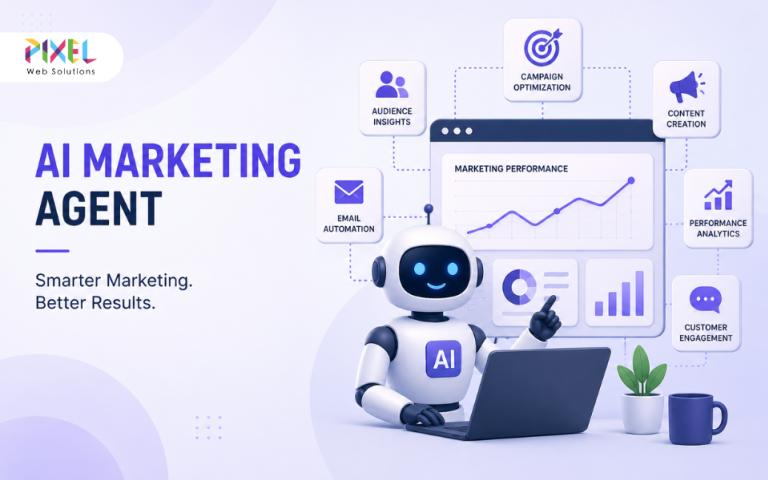
AI agents are moving from answering questions to actually taking action — adjusting bids, testing creative variations, sending follow-ups, and optimizing campaigns with limited human intervention. This is changing the day-to-day rhythm of marketing teams, shifting people from hands-on execution toward strategy, oversight, and quality control.
That said, most consumers remain cautious about letting AI make autonomous purchase decisions on their behalf, which means human trust-building still plays a central role even as agents take on more operational work.
6. Real Data, Real Context — Not Just Automation
One important lesson has emerged from early AI marketing missteps: automation without context can backfire. Campaigns scheduled purely on historical engagement data have occasionally landed on culturally sensitive dates or missed local nuance entirely, because the AI had no awareness of context outside the data it was trained on.
This is precisely why local expertise still matters, even in an AI-driven landscape. Global tools are powerful, but they don't automatically understand regional festivals, language nuances, or community sentiment. This is where working with a digital marketing agency in Kerala gives businesses an edge — combining AI-powered tools with genuine local market knowledge, so campaigns are optimized by data and grounded in real cultural and regional context.
7. Privacy-First, First-Party Data Strategies
As third-party cookies fade out and privacy regulations tighten, brands are leaning harder on first-party data — information customers willingly share directly with a business. AI plays a major role here too, helping marketers make the most of smaller, cleaner first-party datasets instead of relying on broad third-party tracking.
Trust is becoming a competitive advantage. Brands that are transparent about how they use AI and customer data are more likely to earn long-term loyalty than those that treat personalization as invisible surveillance.
8. Multimodal AI and Immersive Experiences
Text-only AI tools are giving way to multimodal systems that understand and generate images, video, voice, and text together. Combined with growing interest in AR and VR experiences, this is opening the door to more immersive product demos, virtual try-ons, and interactive ad formats — particularly for e-commerce and retail brands looking to close the gap between browsing and buying.
What This Means for Businesses Going Forward
The common thread across all these trends is clear: AI is no longer just a tool that makes marketing faster — it's reshaping the entire strategy layer, from how customers discover brands to how campaigns are planned, executed, and measured. Businesses that treat AI as a shortcut for volume will get lost in the noise. The ones that combine AI capability with human judgment, first-party data, and local market understanding will be the ones that actually convert that visibility into growth.
For businesses in Kerala looking to build an AI-informed marketing strategy without losing the local context that makes campaigns actually resonate, partnering with an experienced digital marketing agency in Kerala can bridge that gap — bringing together modern AI-driven tools with on-the-ground market insight to build campaigns that perform in the real world, not just on a dashboard.
The future of digital marketing isn't AI replacing marketers. It's AI amplifying the marketers who know how to use it well.