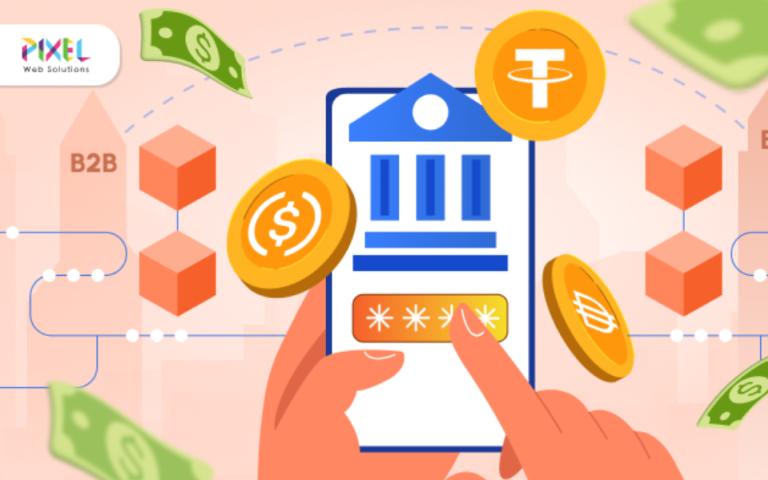
Digital transformation has fundamentally changed how enterprises manage payments, treasury operations, and global business relationships. Yet, despite advancements in cloud computing and automation, cross-border settlements remain slow, expensive, and dependent on fragmented financial infrastructure. Stablecoins have emerged as a practical solution to this challenge by combining the efficiency of blockchain technology with the value stability businesses require for commercial transactions.
Unlike speculative cryptocurrencies, stablecoins are designed to maintain predictable value through reserves or algorithmic mechanisms. This stability makes them increasingly relevant for enterprises seeking faster settlements, programmable payments, improved liquidity management, and always-on financial operations. As financial institutions, fintech companies, and multinational corporations continue to explore blockchain-enabled finance, stablecoin adoption is shifting from experimental pilots to long-term digital infrastructure.
This guide explains how enterprises can approach stablecoin adoption strategically while understanding the operational, regulatory, and technological considerations involved in building a sustainable digital payment ecosystem.
Why Enterprises Are Re-Evaluating Their Payment Infrastructure
Traditional financial systems were developed for a different era. Today, businesses operate across multiple jurisdictions, serve global customers, and require financial systems that function continuously rather than only during banking hours.
Several operational challenges continue to affect enterprise finance:
- Cross-border settlements often require multiple intermediaries, increasing costs and processing time.
- Treasury teams struggle with fragmented liquidity spread across different banking networks.
- International supplier payments involve currency conversion fees and settlement delays.
- Reconciliation processes remain heavily dependent on manual intervention.
- Limited banking hours create operational bottlenecks for global businesses operating across time zones.
Stablecoins address these inefficiencies by enabling programmable digital money that can move across blockchain networks within minutes while maintaining a relatively stable value. This allows enterprises to modernize payment workflows without exposing themselves to the volatility commonly associated with traditional cryptocurrencies.
Instead of replacing banking infrastructure entirely, stablecoins increasingly function as an additional settlement layer that complements existing financial operations.
Building a Stablecoin Adoption Strategy Beyond Technology
Successful enterprise adoption depends less on blockchain implementation and more on aligning stablecoins with measurable business objectives. Organizations that begin with technology rather than business outcomes often struggle to generate meaningful value.
A structured adoption strategy typically includes:
- Identifying payment workflows that experience high settlement costs or delays.
- Selecting an appropriate blockchain network based on scalability, transaction fees, and ecosystem maturity.
- Establishing governance policies for custody, compliance, and treasury management.
- Integrating blockchain infrastructure with ERP, accounting, and payment platforms.
- Defining risk management procedures for liquidity, cybersecurity, and operational resilience.
Many enterprises also evaluate how Stablecoin Development Services can help customize digital payment infrastructure, automate settlement logic through smart contracts, and integrate blockchain capabilities with existing enterprise systems. The objective is not simply issuing a stablecoin but creating an ecosystem that supports long-term operational efficiency.
Organizations that approach adoption incrementally—starting with pilot programs before enterprise-wide deployment—often experience smoother implementation and stronger stakeholder confidence.
Stablecoins Are Becoming a Treasury Management Tool
Enterprise treasury management has traditionally focused on cash optimization, liquidity forecasting, and capital allocation. Stablecoins introduce new capabilities that extend beyond payment processing.
Because blockchain transactions provide near real-time settlement visibility, treasury teams gain better oversight of fund movements across subsidiaries and international operations. This transparency improves cash positioning and reduces delays caused by traditional reconciliation cycles.
Programmable finance also enables automated treasury workflows. For example, businesses can execute supplier payments once contractual conditions are fulfilled or release escrow funds automatically after delivery verification. These automated financial processes reduce operational overhead while improving accuracy.
Stablecoins can also simplify internal capital movement between global entities, allowing organizations to rebalance liquidity without relying entirely on correspondent banking systems. Although regulatory compliance remains essential, digital settlement infrastructure offers treasury departments greater operational flexibility in an increasingly global economy.
As enterprises expand internationally, treasury modernization is becoming a strategic priority rather than simply a financial function.
Regulatory Readiness Will Determine Long-Term Success
Enterprise adoption depends heavily on regulatory clarity. Businesses cannot rely solely on technological innovation without establishing governance frameworks that satisfy legal, financial, and compliance requirements.
Several areas require continuous attention:
- Compliance with jurisdiction-specific digital asset regulations.
- AML and KYC procedures for customer and transaction verification.
- Reserve transparency and audit mechanisms for issued stablecoins.
- Data privacy requirements across multiple operating regions.
- Smart contract security assessments and operational risk monitoring.
Governments worldwide continue refining regulatory frameworks for digital assets, making compliance an ongoing business responsibility rather than a one-time implementation exercise.
Enterprises should also establish internal governance committees involving finance, legal, cybersecurity, and technology stakeholders. Cross-functional oversight helps ensure blockchain initiatives remain aligned with evolving regulatory expectations while minimizing operational risk.
Organizations that prioritize compliance from the beginning are generally better positioned to scale their stablecoin initiatives as regulations mature globally.
The Future of Enterprise Finance Will Be Programmable
Stablecoins represent more than an alternative payment mechanism—they are enabling a broader transformation toward programmable financial infrastructure.
Future enterprise ecosystems are expected to combine tokenized assets, decentralized settlement networks, embedded finance, and artificial intelligence to automate increasingly complex financial operations. Smart contracts may eventually coordinate procurement, trade finance, insurance payouts, payroll, and revenue sharing with minimal manual intervention.
As central bank digital currencies, tokenized deposits, and regulated stablecoins continue to evolve, interoperability between traditional financial systems and blockchain infrastructure will become increasingly important. Enterprises that invest in scalable digital finance architecture today will likely adapt more effectively to tomorrow's financial ecosystem.
The organizations gaining competitive advantage are not simply adopting blockchain—they are redesigning financial processes around automation, transparency, and continuous settlement capabilities.
Stablecoin adoption should therefore be viewed as a strategic business transformation initiative rather than a standalone technology project. Enterprises that balance innovation with governance, operational planning, and regulatory compliance will be better equipped to improve efficiency, reduce transaction friction, and support long-term digital growth in an increasingly connected global economy.