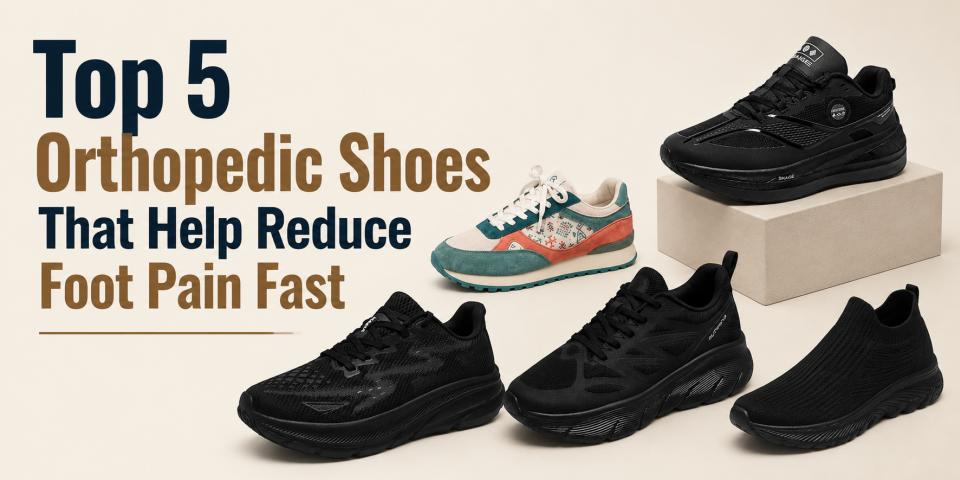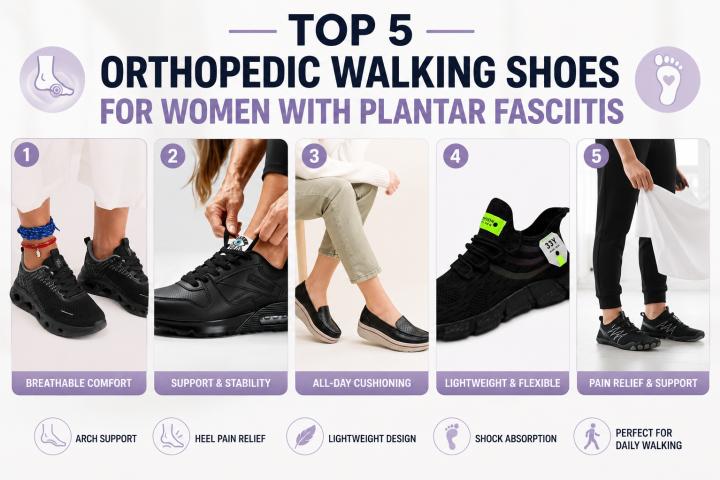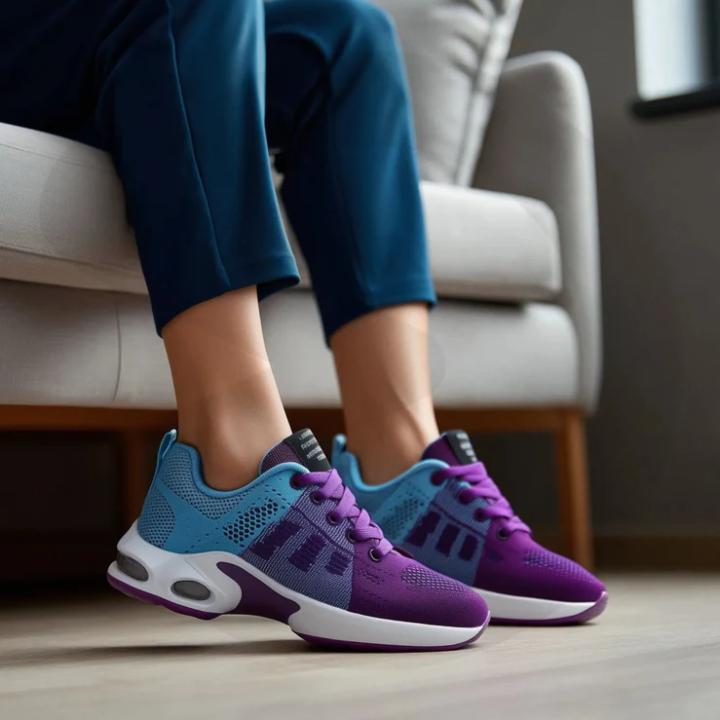
Most people only think about orthopedic walking shoes after their feet already hurt with a bad flight, a long shift, a hike that went sideways. But the real value of a well-built orthopedic shoe isn't damage control, it's preventing the pain from showing up at all.
Below are seven everyday situations where the difference between a regular sneaker and a proper orthopedic walking shoe is impossible to ignore; and what to look for in each case.
Understanding Orthopedic Walking Shoes
An orthopedic walking shoe isn't just a cushioned sneaker with a medical-sounding name. It's built around three things regular shoes usually skip: a contoured footbed that supports your natural arch, a firm heel counter that stops your foot from rolling inward with every step, and shock-absorbing midsole material that reduces impact on your knees and lower back over long distances.
That combination is why podiatrists recommend them for people with plantar fasciitis, flat feet, bunions, or general foot fatigue. Why they hold up in situations regular shoes fall apart in.
Key Features & Benefits: 7 Occasions That Put Them to the Test
1. Long Retail or Warehouse Shifts
Standing on concrete for 8–12 hours flattens the arch and stresses the plantar fascia far more than walking does. A firm arch support and deep heel cup keep the foot stable instead of letting it slowly collapse inward hour after hour.
2. Airport Travel and Long Layovers
Hours of walking through terminals, standing in security lines, then sitting cramped on a flight is a brutal combination for feet. Lightweight orthopedic walking shoes with good arch support prevent the swelling and soreness that usually shows up mid-trip.
3. Nursing and Healthcare Shifts
Twelve-hour hospital shifts on hard floors are one of the toughest tests for any shoe. This is where a genuine orthopedic walking boot->
4. Post-Injury or Post-Surgery Recovery
When you're easing back into walking after an ankle, knee, or foot injury, unstable footwear can undo weeks of recovery. Orthopedic shoes with a stable base and controlled motion reduce the risk of re-injury during rehab walks.
5. Daily Dog Walks or Neighborhood Walking Routines
Short walks add up. Doing 2–3 miles a day in unsupportive shoes gradually wears down arch strength over months, even if no single walk causes pain. A supportive daily shoe protects against that slow accumulation.
6. Standing Through Events, Weddings, or Long Errands
A full day on your feet at an event or running errands hits the same pressure points as a work shift — just without the excuse to sit down. This is one of the most common situations where best orthopedic walking shoes for women searches spike, since dress-adjacent options are harder to find than sneakers.
7. Managing Diabetes or Circulation Issues
For anyone managing diabetic foot sensitivity, seamless interiors and pressure-redistributing insoles aren't a comfort upgrade — they're a genuine injury-prevention feature, reducing pressure points that can go unnoticed until they become serious.
How to Choose the Right Fit
- Match arch support to your foot type. Flat feet need firmer, more structured support; high arches need extra cushioning to fill the gap.
- Size up slightly if you'll wear thicker socks for winter or work environments — cramped toe boxes cause blisters and numbness on long wear days.
- Check the heel counter. Press the back of the shoe; it should resist bending inward. A soft heel counter won't hold up on concrete or hospital floors.
- Consider your specific use case. A shoe built for 12-hour shifts (like the Ortho Walk 2.0) prioritizes different things than one built for casual daily walks — don't assume one orthopedic shoe fits every occasion equally well.
Care Tips & Common Mistakes
- Don't machine-wash or dry with heat — it breaks down the arch support structure and midsole cushioning far faster than normal wear.
- Rotate between two pairs if you wear them daily. Letting the cushioning fully decompress between wears extends the shoe's supportive life significantly.
- Replace insoles before replacing the whole shoe. Often the outer shoe is fine — it's the compressed insole underneath doing the damage.
- Don't judge fit in the first 10 minutes. Orthopedic shoes should feel supportive from the first step, but full comfort in unfamiliar arch positioning can take a few days to settle in.
- Avoid buying based on looks alone. The most common mistake with walking orthopedic shoes is prioritizing >
Conclusion & Recommendation
Whether it's a 12-hour shift, a long-haul flight, or just your daily dog walk, the right pair of orthopedic walking shoes changes how your feet — and by extension your knees and back — feel at the end of the day. If you're dealing with any of the seven situations above regularly, it's worth building your shoe choice around genuine arch and heel support rather than cushioning alone.
For shifts, travel, and all-day wear specifically, the Ortho Walk 2.0 is built around exactly this kind of extended, high-impact use, reinforced heel support, a contoured arch, and shock-absorbing midsole designed for people on their feet most of the day.