Most homeowners know what a smoke alarm sounds like, but far fewer know what actually happens when a residential sprinkler system encounters a fire.
There is a common misconception that all the sprinkler heads in a house activate as soon as smoke is detected. In reality, residential sprinkler systems work in a much more targeted way.
They are designed to respond to heat, not simply smoke, and their purpose is to help control a developing fire at an early stage.
Understanding how the system works can help homeowners decide whether sprinkler protection is suitable for their property.
Step 1: A Fire Starts
Every fire begins somewhere.
It could be a cooking accident in the kitchen, an electrical fault, a heater, a candle or another ignition source. At first, the fire may be relatively small, but it can grow as it finds more fuel.
This early stage is particularly important because controlling a fire before it becomes established can make a significant difference.
A sprinkler system is designed to be ready before anything happens. There is no need for someone to notice the flames and manually operate it.
Step 2: Heat Builds Around the Sprinkler
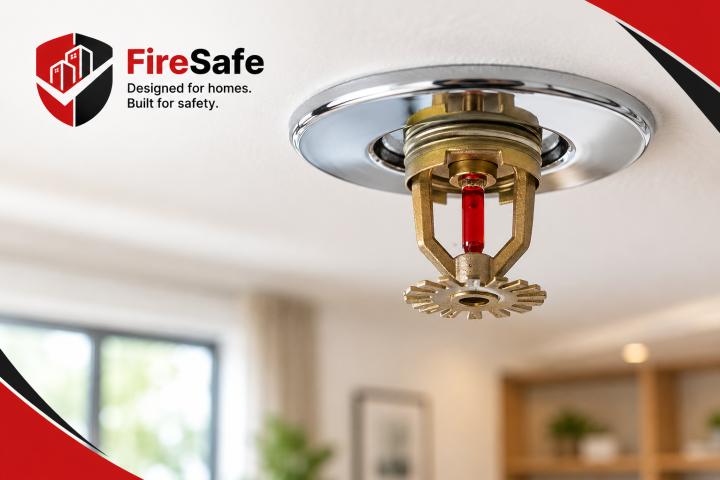
Unlike a smoke alarm, a sprinkler head does not normally activate simply because smoke reaches it.
The sprinkler responds to the heat generated by the fire.
As the fire develops, hot gases rise towards the ceiling. When sufficient heat reaches the sprinkler head and its operating element reaches the appropriate temperature, the sprinkler activates.
This means the system responds to conditions associated with a developing fire rather than simply reacting to smoke elsewhere in the property.
Step 3: The Sprinkler Head Activates
Once the operating mechanism releases, water is discharged through the sprinkler head.
The water is distributed over the intended area, helping to cool the fire and surrounding materials and, depending on the circumstances and system design, control or suppress the fire.
A key point for homeowners is that sprinkler systems are not designed simply to “go off everywhere”.
A fire in one part of a property does not automatically mean every sprinkler head will activate. Individual heads operate when the heat conditions around them reach their operating threshold.
Step 4: Water Targets the Fire Area
The purpose of the discharged water is to act where the fire is developing.
This targeted response is one reason residential sprinkler systems can be useful as part of a wider fire-protection strategy.
The objective is to control the fire while it is still manageable, rather than waiting for it to spread throughout the room or property.
However, no fire-safety system should be treated as a guarantee that a fire will always be extinguished completely. System design, installation, maintenance, the type of fire and the materials involved can all affect the outcome.
Step 5: The Alarm Still Has a Job
Installing sprinklers does not make smoke alarms unnecessary.
The two systems perform different functions.
A smoke alarm is designed to detect smoke and warn occupants. A sprinkler system responds to heat and provides active fire suppression.
This distinction is particularly important at night.
If a fire starts while people are asleep, an alarm can provide the warning needed to wake occupants and begin an escape. At the same time, a sprinkler may respond to the developing fire independently.
This creates multiple layers of protection rather than relying on a single system.
What Happens to the Rest of the House?
Another concern homeowners sometimes have is whether a sprinkler system will release large quantities of water throughout the property.
A properly designed residential system is not intended to activate every sprinkler head simply because one fire has started.
The individual sprinkler heads respond to local heat conditions.
This targeted activation can help limit unnecessary water discharge while allowing the system to respond where it is actually needed.
The exact behaviour of a system depends on its design, components and installation, which is why professional specification is important.
Where Are Residential Sprinklers Particularly Useful?
Sprinklers can be considered in many different residential situations.
They may be relevant to new-build homes, major renovations, loft conversions, extensions and properties where the layout has been substantially changed.
They can also be worth considering where occupants may need additional time to respond to an emergency.
The important point is that sprinkler protection should be assessed as part of the property rather than selected as a standalone product.
The home's layout, water supply, ceiling arrangements and other design considerations all need to be taken into account.
Why Professional Installation Matters
A sprinkler system is only as useful as its design and installation.
The system needs to be appropriate for the property and installed according to the relevant requirements and standards.
Poor positioning, unsuitable components or inadequate planning can affect performance.
This is particularly important during renovations. If you are already opening ceilings or changing the layout, planning firesafe sprinkler systems at an early stage can make installation more straightforward and less disruptive.
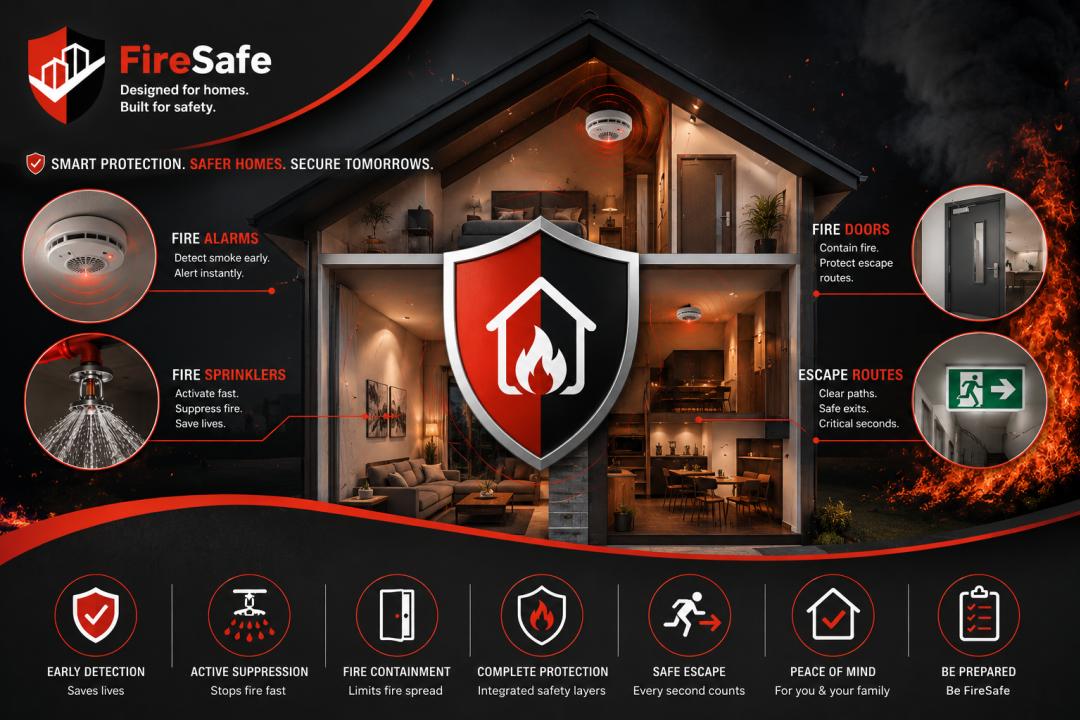
It also allows the sprinkler design to be considered alongside alarms, fire doors and escape routes.
What Happens After Installation?
Like other important safety equipment, a sprinkler system should not simply be installed and forgotten.
Regular inspection and maintenance help ensure that the system remains ready to operate when required.
Homeowners should understand what maintenance is needed and keep relevant equipment accessible and in suitable condition.
Professional servicing can also identify potential issues before they become a problem.
A Simple System With an Important Role
The basic sequence is straightforward:
Fire starts → heat rises → sprinkler head responds → water is discharged → fire is controlled or suppressed.
But the effectiveness of that sequence depends on good design, correct installation and ongoing maintenance.
For homeowners, the biggest benefit of understanding the process is knowing that sprinklers are not simply another type of alarm. They provide a different layer of protection by responding directly to heat from a developing fire.
FireSafe Residential can help homeowners explore how sprinkler protection can fit into a broader residential fire-safety strategy.
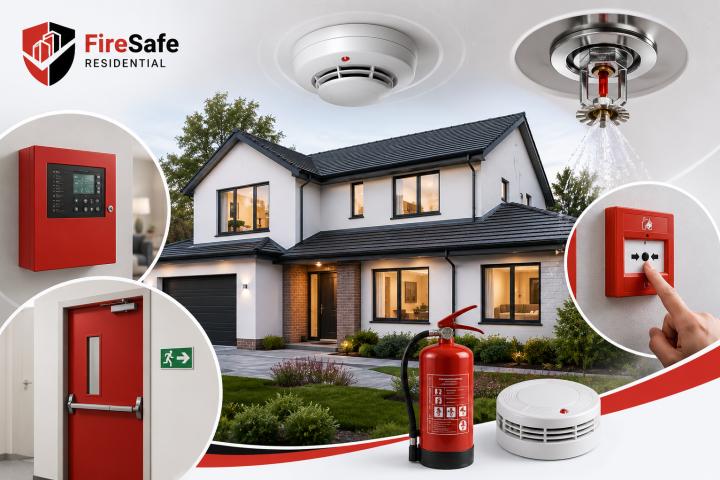
When alarms, protected escape routes, fire doors and active suppression are considered together, homeowners can create a more comprehensive approach to protecting their property and the people inside it.
Original source : https://www.jumparticles.com/article/21626/