Having sensitive skin has always made choosing skincare products more complicated for me. But when I became pregnant, I became even more careful about what I put on my skin. I started checking ingredient lists, avoiding products that irritated me, and discussing questionable ingredients with my healthcare provider.
One product I didn't want to stop using was sunscreen.
Daily sun protection became particularly important to me because my skin seemed more reactive during pregnancy, and I was also concerned about pigmentation and dark spots. That's when I started exploring Korean sunscreens and looking for a gentle formula that I could comfortably use every day.
My experience with Korean sunscreen was positive. I found that many formulas were lightweight, hydrating, and much easier for my sensitive skin to tolerate than some of the heavier sunscreens I had used before.
However, pregnancy also taught me an important lesson: a product being Korean, popular, or marketed as gentle doesn't automatically mean it is suitable for every pregnant person. I always checked the ingredients and discussed my concerns with my healthcare provider before introducing a new product.
So, is Korean sunscreen actually a good choice for sensitive skin, and can it be used during pregnancy? Here's what I learned from my own experience.
Why Did My Sensitive Skin Become More Difficult During Pregnancy?
Pregnancy changed my skin in ways I didn't expect.
Products that had previously worked perfectly well sometimes started feeling uncomfortable. My skin became more reactive, and I became more aware of dryness, redness, and irritation.
At the same time, I didn't want to give up sun protection.
Sun exposure can contribute to pigmentation and premature skin aging, while pregnancy-related hormonal changes can make pigmentation such as melasma more noticeable in some people.
For me, this meant finding sunscreen wasn't optional. I needed something that I could actually wear consistently.
That's what made me start researching korean sunscreen for sensitive skin.
What Made Korean Sunscreen Appealing to Me?
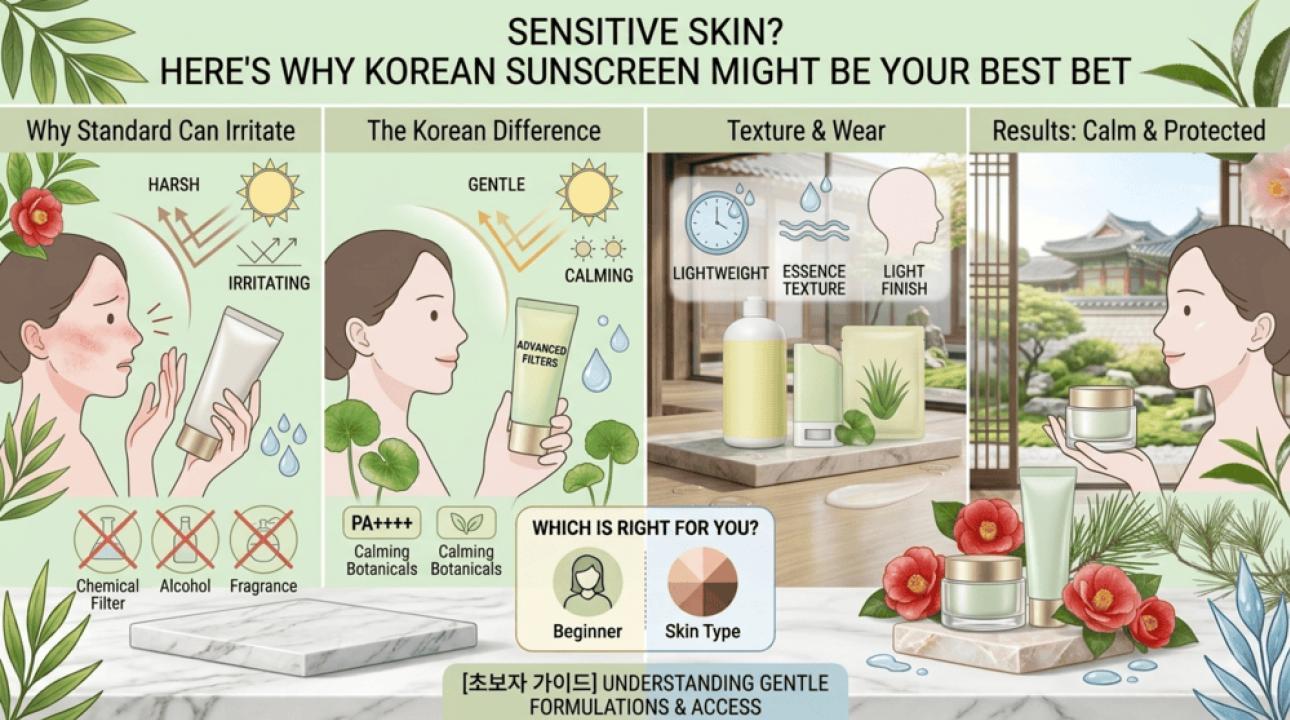
The first thing I noticed about Korean sunscreen was the texture.
Some sunscreens I had used previously felt thick and greasy. Others left a visible white cast or made my skin feel uncomfortable after a few hours.
Korean sunscreen formulas often have a different approach. Many are designed to feel more like skincare while still providing sun protection.
I particularly liked formulas that felt:
Lightweight on my skin
Hydrating rather than drying
Easy to spread
Comfortable underneath makeup
Free from a heavy or greasy feeling
That comfort made a real difference. I was much more willing to apply sunscreen every morning when I knew it wouldn't leave my face feeling uncomfortable.
Is Korean Sunscreen Safe to Use During Pregnancy?
This was the question I cared about most.
During my pregnancy, I did use Korean sunscreen, and I personally didn't experience any problems that I associated with the sunscreen. My skin tolerated the product well, and I continued using sun protection as part of my daily routine.
But I wouldn't tell another pregnant woman that every Korean sunscreen is automatically safe.
The important thing I learned is that the country where a sunscreen is made doesn't determine whether it is appropriate during pregnancy. The individual ingredients and formulation matter.
Before using a new sunscreen during pregnancy, I recommend discussing the ingredient list with your obstetrician, dermatologist, or another qualified healthcare professional.
That was the approach I personally followed, and it gave me much more confidence in my skincare choices.
Which Ingredients Did I Look For When Choosing Sunscreen?
When I was pregnant, I stopped choosing skincare based only on branding or popularity.
I started reading ingredient lists carefully.
Did I Prefer Mineral Sunscreens?
I paid particular attention to mineral UV filters such as zinc oxide and titanium dioxide because these are commonly recommended options for people who want to minimize concerns about systemic absorption.
However, I still checked the complete formula rather than assuming that every mineral sunscreen would work for me.
Did I Avoid Potential Irritants?
Because my skin was sensitive, I also considered fragrance and other ingredients that could potentially cause irritation.
A product can be technically suitable for one person while causing redness or discomfort for another.
Did I Check Other Active Ingredients?
Sunscreen isn't always just a UV-filter product. Some formulas also contain additional skincare ingredients.
During pregnancy, I became much more cautious about these additional ingredients and checked with my healthcare provider whenever I wasn't sure about something.
Why Did I Look Specifically for Korean Sunscreen for Sensitive Skin?
My goal wasn't simply to find a Korean product.
I wanted a sunscreen that my sensitive skin could tolerate every day.
That's why my search for korean sunscreen for sensitive skin focused on the formulation rather than the country of origin.
I looked for products with a comfortable texture, hydrating ingredients, and a formula that didn't leave my skin feeling tight.
I also preferred products that were easy to reapply because one application in the morning isn't always enough when you're spending extended time outdoors.
How Did I Choose the Best Korean Sunscreen for Sensitive Skin?
For me, the best korean sunscreen for sensitive skin wasn't necessarily the most expensive or most popular product.
Instead, I considered several practical factors.
Was It Gentle Enough for My Skin?
I looked for formulas designed with sensitive skin in mind and avoided products that had previously caused me irritation.
Did It Provide Broad-Spectrum Protection?
I wanted protection from both UVA and UVB radiation.
This was more important to me than whether the sunscreen had a trendy ingredient or attractive packaging.
Did It Feel Comfortable?
This might sound like a small consideration, but it wasn't.
If a sunscreen feels heavy, greasy, or irritating, I'm much less likely to use it consistently.
A comfortable sunscreen made daily application much easier.
Could I Wear It Under Makeup?
As someone who wanted my skincare routine to remain simple during pregnancy, I appreciated sunscreen that layered well underneath makeup without excessive pilling.
Did Korean Sunscreen Irritate My Sensitive Skin?
Thankfully, the Korean sunscreen I chose worked well for me.
I didn't experience unusual irritation, and I found the lightweight texture much more comfortable than some of the traditional sunscreens I had previously tried.
I also didn't notice the heavy greasy feeling that had made me dislike some sunscreens in the past.
But I want to emphasize that this is my personal experience.
Sensitive skin is highly individual. A sunscreen that feels perfect for me could still cause irritation for someone else.
That's why I believe patch testing and checking the ingredients are more useful than simply following a "best sunscreen" list.
What Should You Do If You Have Sensitive Skin?
My experience taught me that finding sunscreen is more about consistency than finding a magical product.
If you have sensitive skin, I'd recommend starting with a simple approach.
Check the Ingredient List
Don't buy a sunscreen solely because it says "Korean," "sensitive skin," or "gentle."
Look at the actual ingredients.
Patch Test First
Before applying a new sunscreen across your entire face, test a small amount on an appropriate area of skin.
This can help you identify irritation before making the product part of your daily routine.
Don't Ignore Your Skin's Reaction
If your skin becomes red, itchy, burning, or unusually irritated, stop using the product and seek professional advice if needed.
Ask Your Doctor During Pregnancy
This was especially important for me.
When I was pregnant, I didn't rely solely on skincare blogs, social media, or product descriptions. If I had concerns about an ingredient, I asked my healthcare provider.
Is Korean Sunscreen the Best Choice for Everyone With Sensitive Skin?
Not necessarily.
Although Korean sunscreens worked very well for me, I wouldn't say that everyone with sensitive skin needs to use them.
The best sunscreen is ultimately one that provides appropriate UV protection, agrees with your skin, and is comfortable enough for you to use consistently.
For some people, that may be a Korean sunscreen. For others, a different formulation may be a better choice.
What matters most is finding something that works for your individual skin.
What Did My Pregnancy Experience Teach Me About Sunscreen?
Pregnancy changed the way I approached skincare.
Before pregnancy, I was more likely to choose products because they were popular or had good reviews. During pregnancy, I became much more careful.
My experience with Korean sunscreen showed me that sensitive-skin products don't have to feel heavy or uncomfortable. I found a formula that fit easily into my routine and allowed me to continue protecting my skin every day.
At the same time, I learned not to confuse personal experience with medical advice.
The fact that I used a particular Korean sunscreen during pregnancy without experiencing problems doesn't mean that every Korean sunscreen is appropriate for every pregnant woman.
What Is My Final Take on Korean Sunscreen for Sensitive Skin?
After using Korean sunscreen during my pregnancy, I understand why these products have become so popular.
For me, the biggest advantage was comfort. The formula I chose felt lightweight, moisturizing, and easy to wear every day. That made it much easier to stay consistent with sun protection.
If you're searching for the best korean sunscreen for sensitive skin, I would start by looking beyond the brand name. Check the UV filters, review the complete ingredient list, consider your skin's specific sensitivities, and patch test before committing to a new product.
And if you're pregnant, take the extra step that I took: discuss your skincare choices with your healthcare provider.
My experience was positive, but everyone's skin and pregnancy are different. Korean sunscreen can be an excellent option for some people with sensitive skin, but the right choice should always be based on the individual formula and your personal needs not simply where the product was made.