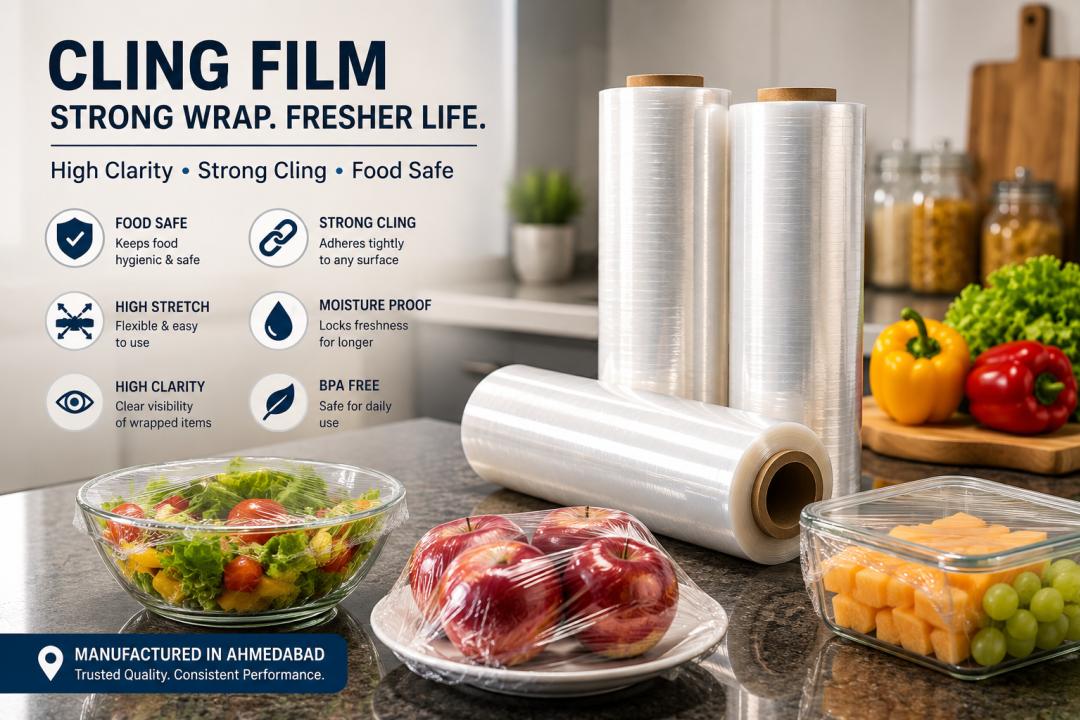
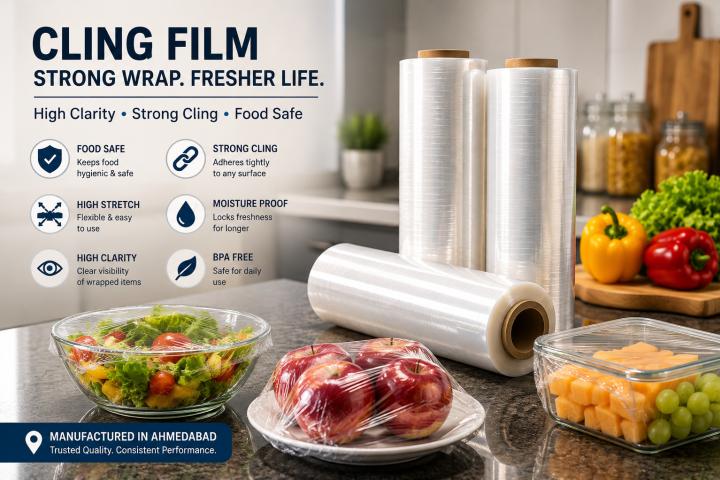
Cling film is a widely used packaging material for protecting food, ingredients, and other products from dust, moisture, and external exposure. Its ability to adhere closely to containers and surfaces makes it convenient for kitchens, food-processing facilities, restaurants, supermarkets, and packaging operations. However, not every cling film performs in the same way. Thickness, transparency, flexibility, cling strength, puncture resistance, and material quality can influence its effectiveness. Businesses looking for a Cling Film Manufacturer in Ahmedabad should therefore consider more than just price when selecting a supplier. Understanding the film's intended application, quality requirements, storage conditions, and manufacturing consistency can help buyers choose a dependable packaging solution that performs reliably during everyday use.
What Is Cling Film?
Cling film, also known as food wrap or plastic wrap, is a thin flexible film designed to adhere to containers and surfaces. It is commonly used to cover bowls, trays, plates, food containers, and packaged food items.
Its primary purpose is to create a protective barrier that helps reduce exposure to air, dust, moisture, and other external contaminants. Depending on its formulation and intended application, cling film may be manufactured for household, commercial, or food-service use.
For professional applications, buyers should ensure that the product is suitable for the intended contact and packaging requirements rather than assuming that every plastic wrap has the same properties.
Why Does Manufacturer Selection Matter?
The quality of cling film depends on factors such as raw materials, film formulation, production technology, thickness control, and quality inspection. A film that appears clear and flexible may still differ significantly in terms of strength and adhesion.
When evaluating a Cling Film Manufacturer in Ahmedabad, businesses should examine whether the manufacturer provides consistent product specifications and maintains appropriate quality-control practices.
- Important characteristics to consider include:
- Consistent film thickness
- Strong and reliable cling
- Good flexibility and stretchability
- Suitable transparency
- Resistance to tearing during handling
- Clean and uniform film appearance
- Proper roll winding and packaging
Consistent manufacturing is especially important for businesses that purchase film regularly because variations between batches can affect packaging efficiency.
Key Applications of Cling Film
Cling film is used across several sectors because of its convenient wrapping and covering properties.
Food Packaging
Restaurants, catering businesses, food processors, and commercial kitchens often use cling film to cover prepared food, ingredients, trays, and containers. It can help reduce exposure to environmental contaminants during short-term storage and handling.
Retail and Supermarkets
Retailers may use suitable wrapping materials for covering food products and maintaining a clean presentation. The transparency of cling film can also allow products to remain visible after wrapping.
Household and Commercial Kitchens
Cling film is useful for covering leftovers, bowls, containers, and prepared ingredients. Its flexible structure makes it easy to wrap products of different shapes.
Food Processing
Commercial food operations may use plastic wrap as part of their packaging and handling processes. However, the film should always be selected according to the specific application and relevant food-contact requirements.
Expert Buying Tips
Before purchasing cling film in bulk, businesses should evaluate the following factors.
1. Identify the application: Determine whether the film will be used for household, restaurant, retail, food-service, or industrial purposes.
2. Check thickness: The appropriate thickness depends on the type of product being covered and the expected handling conditions.
3. Evaluate cling strength: The film should adhere effectively without becoming unnecessarily difficult to handle.
4. Consider roll dimensions: Select suitable width and length according to the containers, trays, or products being wrapped.
5. Check material suitability: For food-related applications, confirm that the product is appropriate for its intended food-contact use and complies with applicable requirements.
6. Assess consistency: Regular buyers should look for stable specifications and dependable quality across different production batches.
7. Consider storage: Keep rolls in suitable conditions away from excessive heat, direct sunlight, moisture, and physical damage.
Frequently Asked Questions
What is cling film mainly used for?
Cling film is mainly used to cover and protect food, ingredients, containers, trays, and other products from external exposure during storage and handling.
What should I look for when buying cling film?
Important factors include thickness, cling strength, flexibility, transparency, roll dimensions, material suitability, and manufacturing consistency.
Is cling film suitable for food packaging?
Certain cling films are manufactured specifically for food-contact applications. Buyers should verify the product's intended use and applicable compliance information before using it with food.
How does cling film stay attached to containers?
Its flexible film structure and surface properties allow it to adhere closely to containers and itself, creating a secure covering when properly applied.
How should cling film be stored?
Cling film should generally be stored in a clean, dry environment away from direct sunlight, excessive heat, moisture, and sharp objects that could damage the roll.
Conclusion
Finding a reliable cling film supplier requires a clear understanding of the intended application and the film characteristics needed for it. Thickness, cling performance, flexibility, transparency, material suitability, and consistency should all be evaluated before making a purchasing decision. Businesses should also consider how the film performs in their actual packaging environment instead of relying solely on price comparisons.
For businesses researching packaging materials in Ahmedabad and across Gujarat, Stretchfilm can be a useful source for information about plastic film and packaging applications. By comparing specifications, checking product suitability, and evaluating quality consistency, buyers can make a more informed decision and select cling film that meets their everyday packaging requirements.