Building financial security during employment becomes easier when a part of your income is systematically saved for the future. For salaried employees in India, the Employees’ Provident Fund is one of the most widely used retirement-oriented savings mechanisms. If you are wondering What is EPF, it is a government-backed provident fund system designed to help eligible employees build a long-term financial corpus through regular contributions from the employee and employer.
EPF is administered by the Employees’ Provident Fund Organisation (EPFO) under the Employees’ Provident Funds and Miscellaneous Provisions Act, 1952. Apart from retirement savings, the system can provide financial support during certain eligible situations, making it an important component of employee social security.
What Is EPF?
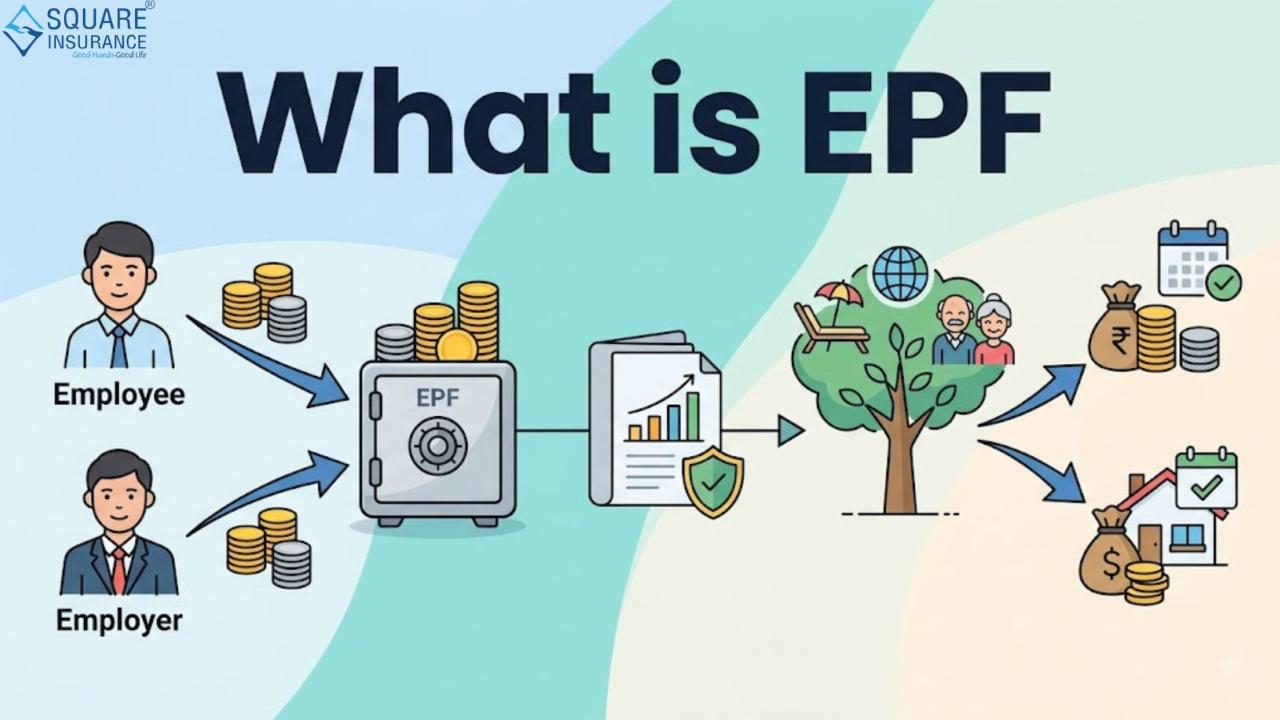
The Employees’ Provident Fund, commonly known as EPF, is a savings scheme in which eligible employees contribute a portion of their qualifying wages every month. The employer also makes a contribution as prescribed under the applicable rules.
The employee’s EPF contribution is generally 12% of basic wages plus dearness allowance, while the employer generally contributes 12%. A portion of the employer’s contribution may be allocated towards the Employees’ Pension Scheme (EPS), subject to applicable provisions. EPFO’s current employer information also notes a wage ceiling of ₹15,000 for statutory contributions, although contribution on higher wages may be possible in specified circumstances.
The accumulated amount, along with applicable interest, can help employees create a substantial corpus over their working years.
Key Features of EPF
EPF has several features that make it useful for long-term financial planning:
1. Regular Monthly Savings
Contributions are made systematically from salary, helping employees save without having to make separate investment decisions every month.
2. Employer Contribution
EPF is not solely dependent on the employee’s contribution. The employer also contributes according to applicable EPF rules, which can significantly increase the overall corpus.
3. Long-Term Financial Security
EPF is primarily intended to support financial security after employment and can become an important source of retirement savings.
4. Interest on Accumulated Balance
The EPF balance earns interest as declared under the applicable framework. Over a long period, the combination of regular contributions and compounding can help grow the corpus.
5. UAN-Based Account Management
The Universal Account Number (UAN) helps members manage their EPF-related records across employment changes. EPFO currently provides member services through its digital platforms, while UAN activation and certain services are also available through the UMANG application.
6. Withdrawal Facilities
EPF is designed as a long-term savings mechanism, but withdrawals may be permitted in specified circumstances. Recent EPFO reforms have simplified certain withdrawal provisions and introduced more uniform eligibility periods for different categories.
EPF Contribution: How Does It Work?
Understanding the contribution structure is important for employees who want to estimate their future EPF balance.
In the standard structure, the employee contributes 12% of basic wages and dearness allowance. The employer also contributes 12%. However, the entire employer contribution does not necessarily go directly into the EPF account because a prescribed portion can be diverted towards EPS, depending on the employee’s circumstances and applicable rules.
For example, if an employee’s qualifying monthly wages are ₹15,000, the employee’s standard contribution at 12% would be ₹1,800. The employer’s contribution would also generally be ₹1,800, subject to the applicable allocation between EPF and EPS.
The exact amount credited to an individual’s EPF balance can therefore differ from a simple calculation of 24% because the employer’s share may include pension-related allocation.
EPFO also states that employees may contribute at a higher rate in certain cases, while the employer is not automatically required to match the higher employee contribution.
Benefits of EPF
EPF offers multiple advantages beyond basic salary deductions.
Retirement Corpus
Regular contributions throughout employment can create a sizeable corpus for retirement. Starting early can make the benefit of compounding more meaningful over time.
Financial Discipline
Since contributions are deducted automatically from salary, EPF encourages disciplined saving without requiring employees to manually set aside money each month.
Support During Financial Needs
Subject to applicable conditions, EPF funds may be accessed for certain eligible requirements. This can provide a financial cushion during periods when an employee faces significant expenses.
Employer Participation
The employer’s contribution helps accelerate the accumulation of retirement savings compared with a system where the employee saves independently.
Social Security Support
EPF works alongside other components of the EPFO framework, including pension and insurance-related benefits, providing broader social security coverage to eligible employees.
EPF Withdrawal Rules
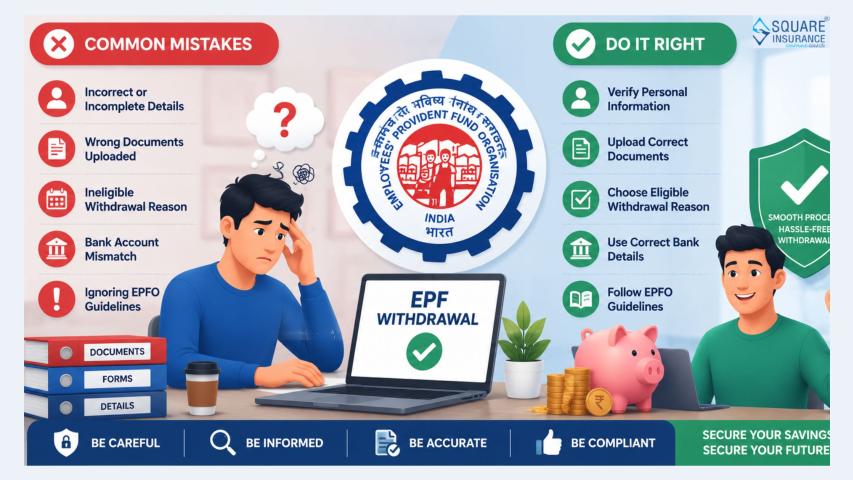
EPF withdrawal is subject to the applicable rules and the reason for making the withdrawal. It is important not to treat the EPF account like an ordinary savings account because its primary purpose is long-term social security.
EPFO announced significant simplification of withdrawal provisions in 2025. Under the revised framework described by the Ministry of Labour and Employment, eligible members can withdraw 75% of the PF balance in cases of unemployment, with the remaining 25% available after one year. Full withdrawal is also permitted in specified situations such as retirement after the prescribed age, permanent disability or incapacity to work, retrenchment, voluntary retirement and permanent departure from India, subject to applicable conditions.
Withdrawals may also be permitted for certain specified purposes during employment, subject to eligibility requirements and applicable limits. Therefore, employees should verify the latest conditions before submitting a claim.
How to Check EPF Balance
Employees can monitor their accumulated savings through EPFO’s available digital services. The EPFO member portal provides access to member-related services, while the EPF passbook facility can be used to review account information and contribution records.
Keeping your UAN, Aadhaar, PAN and bank details properly updated can help reduce difficulties when using EPF-related services or submitting claims.
Important Points to Remember About EPF
Before making an EPF withdrawal or planning your retirement savings, keep these points in mind:
- EPF is primarily a long-term savings and social security mechanism.
- Employee and employer contributions are calculated according to applicable EPF rules.
- The employer’s contribution may be divided between EPF and EPS.
- The actual contribution structure can vary based on the employee’s circumstances.
- Withdrawal eligibility depends on the reason and applicable conditions.
- UAN helps maintain continuity of EPF records across employment.
- Employees should keep their personal and bank details updated.
- EPF rules and withdrawal provisions can change, so the latest official provisions should be checked before making financial decisions.
Frequently Asked Questions (FAQs)
Q1. What is EPF and why is it important?
EPF is a provident fund savings scheme for eligible employees. It helps build long-term savings through regular employee and employer contributions and can support financial security after employment.
Q2. How much does an employee contribute to EPF?
Under the standard contribution structure, an employee generally contributes 12% of basic wages plus dearness allowance, subject to applicable rules and wage ceilings.
Q3. Does the employer also contribute to EPF?
Yes. The employer generally contributes 12% of the applicable wages. However, a portion of the employer’s contribution may be allocated towards EPS as prescribed under the rules.
Q4. Can I withdraw money from my EPF account?
Yes, withdrawals are permitted in specified circumstances and subject to applicable eligibility conditions. Recent reforms have simplified several withdrawal provisions.
Q5. What happens to EPF when I change jobs?
The UAN helps maintain continuity of EPF-related records when an employee changes jobs. Employees should ensure that their employment and KYC details are correctly updated.
Conclusion
EPF is an important financial security mechanism for eligible salaried employees, combining systematic savings, employer participation and long-term wealth accumulation. Understanding What is EPF, how contributions are calculated, what benefits it provides and when withdrawals are permitted can help employees make more informed financial decisions.
For broader financial protection and insurance-related needs, Square Insurance can also be considered as part of a well-rounded financial planning approach. EPF can help build long-term savings, while suitable insurance can provide protection against various financial risks.