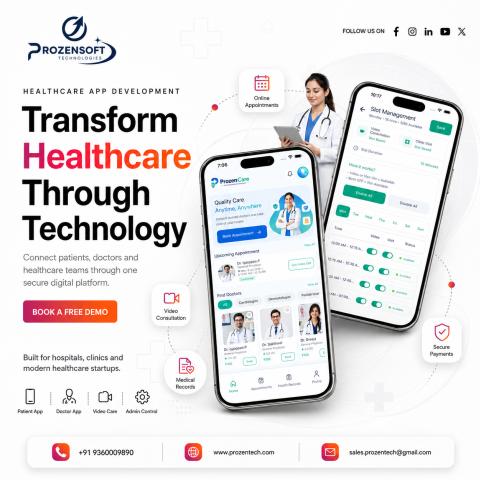
Doctors today are expected to manage more than consultations.
They handle appointments, patient follow-ups, schedules, reports, prescriptions, payments, communication, and sometimes multiple clinic locations—all while trying to focus on patient care.
This is where Doctor App Development can make a real difference.
A well-designed doctor application can simplify daily workflows, give doctors better control over appointments and availability, and create a smoother experience for patients.
For individual doctors, clinics, hospitals, specialty centers, and healthcare startups, a dedicated doctor app can become a valuable digital workspace that connects clinical and administrative activities in one place.
Why Doctors Need a Dedicated Mobile App
Traditional appointment management often depends on reception staff, phone calls, paper notes, and manual follow-ups.
That can work for a small practice, but as patient volume increases, these processes become harder to manage.
A doctor app can provide instant access to important information such as:
- Today's appointments
- Upcoming consultations
- Patient details
- Consultation history
- Availability
- Leave schedules
- Video appointments
- Reports
- Earnings
- Notifications
Instead of depending entirely on administrative staff, doctors gain greater visibility into their own schedule.
Start the Day with a Clear Appointment View
One of the most useful features of a doctor application is a simple daily schedule.
When doctors open the app, they should immediately understand:
Who is the next patient?
What time is the appointment?
Is it an in-person or video consultation?
Which branch is the appointment assigned to?
What appointments are still pending?
A clear appointment dashboard can reduce confusion and improve time management throughout the day.
Let Doctors Control Their Availability
Doctor schedules can change frequently.
There may be emergency duties, conferences, leave, personal commitments, or schedule changes across different clinics.
A modern doctor app can allow doctors to manage their availability directly.
They can configure:
- Available days
- Working hours
- Consultation slots
- Break periods
- Online availability
- Leave dates
- Temporary unavailability
Once updated, unavailable time slots can be removed from patient booking options.
This helps reduce scheduling conflicts and last-minute cancellations.
Support Multiple Hospitals and Clinic Branches
Many doctors consult at more than one healthcare facility.
For example, a specialist may work at one clinic in the morning and another hospital in the evening.
A scalable Doctor App Development solution can support multiple branches under one doctor profile.
Each location can have its own:
- Consultation schedule
- Appointment slots
- Consultation fee
- Address
- Availability
- Appointment list
This gives doctors one centralized place to manage different consultation locations.
Manage In-Person and Video Consultations Together
Healthcare is no longer limited to face-to-face appointments.
Doctors may need to conduct remote consultations for:
- Follow-ups
- Report reviews
- General consultations
- Patients in distant locations
- Post-treatment discussions
The doctor app can display both physical and online consultations within the same schedule.
For video appointments, doctors can join the consultation directly at the scheduled time.
This gives healthcare providers more flexibility while improving patient access.
Patient Information at the Right Time
Doctors should be able to access relevant patient information before beginning a consultation.
Depending on the platform workflow, the app may display:
- Patient name
- Age
- Contact information
- Appointment reason
- Previous consultations
- Uploaded reports
- Medical documents
- Previous prescriptions
- Appointment history
Organized information can help doctors prepare better for consultations and improve continuity of care.
Access should always be controlled according to the platform's privacy and authorization requirements.
Digital Prescription Management
After a consultation, doctors may need to provide medication instructions.
A doctor app can support digital prescription creation.
Doctors can enter details such as:
- Medicine name
- Dosage
- Frequency
- Number of days
- Special instructions
- Follow-up recommendation
Patients can then access the prescription through their own healthcare application.
This reduces dependence on physical paperwork and keeps consultation information more organized.
Upload and Review Medical Reports
Patients may submit lab results, scans, or previous medical documents before an appointment.
Doctors can review these documents from the application where appropriate.
This can be particularly useful for:
- Follow-up consultations
- Telemedicine
- Diagnostic reviews
- Long-term treatment
- Specialist consultations
Having consultation-related documents available in one place can reduce unnecessary communication between doctors, patients, and administrative teams.
Appointment Status Management
A doctor app should make it easy to update the consultation journey.
Appointments can move through statuses such as:
Upcoming
Patient Arrived
Consultation Started
Completed
Cancelled
No Show
For online appointments, additional statuses may be used based on the consultation workflow.
Accurate status updates help hospital staff and administrators understand what is happening in real time.
Leave Management Without Repeated Coordination
Doctor leave can affect many patients when it is not updated quickly.
A digital leave management feature can allow doctors to submit leave requests directly from the application.
They can select:
- Leave date
- Time period
- Reason
- Applicable branch
Once approved according to the healthcare organization's process, affected appointment slots can be blocked or handled appropriately.
This makes doctor scheduling easier for both medical and administrative teams.
Notifications Help Doctors Stay Updated
Doctors have busy schedules.
They should not need to repeatedly check the system for every change.
Push notifications can alert them about:
- New appointment bookings
- Appointment cancellations
- Upcoming consultations
- Video consultation reminders
- Schedule changes
- Leave approval
- Patient document uploads
- Important administrative updates
Relevant notifications can help doctors stay informed without overwhelming them.
Doctor Earnings and Consultation Reports
For healthcare marketplaces or commission-based platforms, doctors may also need visibility into their consultation earnings.
The app can display:
- Total consultations
- Completed appointments
- Consultation revenue
- Platform commission
- Doctor earnings
- Payment history
Doctors can view daily, weekly, or monthly summaries depending on platform requirements.
This improves transparency between doctors and the healthcare platform.
Custom Consultation Fees for Different Branches
A doctor may charge different consultation fees depending on the location or consultation type.
For example:
Clinic A consultation: ₹500
Hospital B consultation: ₹700
Online consultation: ₹600
A flexible system can maintain separate fees while allowing patients to see the correct amount before booking.
This is particularly useful for multi-hospital healthcare networks.
Build Better Follow-Up Care
A consultation should not always end when the patient leaves.
Doctors may need to recommend a follow-up after one week, one month, or another defined period.
The application can help manage follow-up recommendations and reminders.
Patients can receive notifications when it is time to book again.
This can help improve continuity for treatments that require ongoing monitoring.
Make Doctor Onboarding More Professional
For healthcare platforms working with multiple doctors, onboarding should be structured.
Doctors can register and submit required information such as:
- Profile details
- Specialty
- Qualifications
- Experience
- Registration information
- Identification documents
- Professional documents
- Hospital affiliations
Administrators can verify the submitted information before activating the profile.
This creates a more controlled and trustworthy doctor network.
A Better Experience for Both Doctors and Patients
The doctor app is only one part of the healthcare ecosystem.
When integrated with a patient application and admin system, information flows more smoothly.
A patient books an appointment.
The doctor receives it.
The patient arrives or joins online.
The doctor completes the consultation.
The prescription or report is updated.
Payment and appointment status are recorded.
The patient receives the relevant information.
When this flow works well, unnecessary manual coordination is reduced.
Powerful Admin Control Behind the Doctor App
Healthcare administrators need visibility over the doctor network.
Through a centralized dashboard, authorized teams can manage:
- Doctor profiles
- Documents
- Specialties
- Hospitals
- Branches
- Availability
- Appointment slots
- Consultation fees
- Appointments
- Payments
- Commissions
- Leave requests
- Reports
- Notifications
This allows hospitals and healthcare businesses to manage doctors at scale.
Role-Based Access for Healthcare Organizations
Larger healthcare organizations often have multiple teams handling doctor operations.
A branch manager may need access only to doctors in one location.
A finance team may handle payments.
A doctor onboarding team may review documents.
A support team may manage appointments.
Role-based access can give each employee only the permissions required for their responsibility.
This creates a cleaner and more secure administrative workflow.
Privacy and Security Need to Be Built In
Doctor apps may provide access to sensitive patient and healthcare information.
Security should therefore be a core development requirement.
Depending on the region and healthcare model, important considerations can include:
- Secure authentication
- Role-based permissions
- Encryption
- Session management
- Controlled patient data access
- Audit logs
- Secure file handling
- Data backup
- Relevant privacy and healthcare regulations
Healthcare security requirements should be reviewed carefully before deployment.
Why Custom Doctor App Development Matters
Every doctor workflow is different.
A general practitioner may need a simple appointment system.
A specialist may work across multiple hospitals.
A telemedicine doctor may conduct most consultations online.
A healthcare marketplace may need doctor commissions and earnings management.
A hospital network may require complex role-based scheduling.
Custom Doctor App Development allows the product to match the actual workflow instead of forcing doctors to adapt to generic software.
The platform can be built around:
- Doctor schedules
- Consultation types
- Branch structure
- Patient workflow
- Payment model
- Commission system
- Reports
- Notifications
- Administrative requirements
That flexibility becomes increasingly valuable as the healthcare platform grows.
Build Technology That Gives Doctors More Time for Patients
The best doctor applications do not add more work.
They remove unnecessary work.
Doctors should spend less time checking schedules, coordinating appointments, searching for reports, or asking staff for updates.
Technology should help organize these activities quietly in the background.
When doctors have better control over their day and patients have a smoother booking experience, the entire healthcare system benefits.
Ready to Build Your Doctor App?
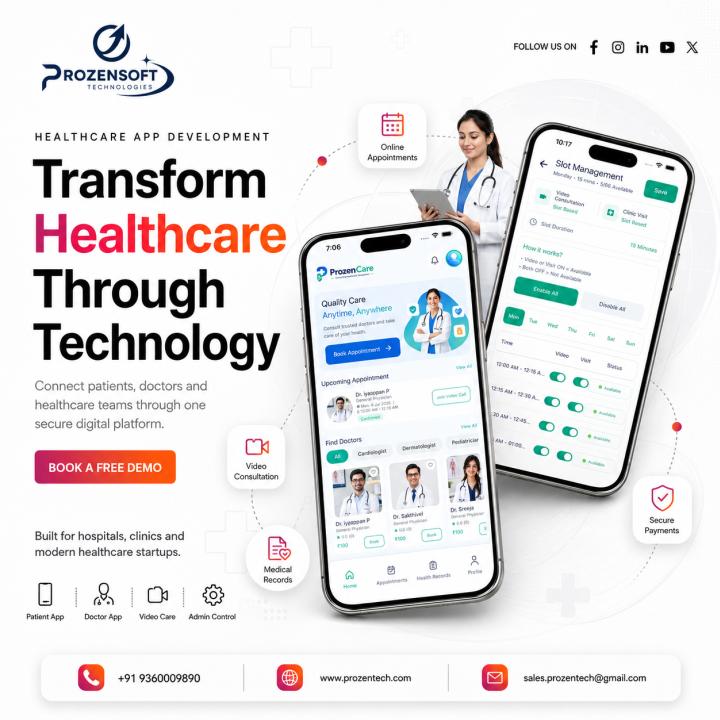
At Prozensoft Technologies, we develop custom doctor applications for clinics, hospitals, healthcare startups, doctor networks, and telemedicine businesses.
Our solutions can include doctor availability management, appointments, multi-branch schedules, video consultation, patient information, digital prescriptions, reports, leave management, consultation earnings, notifications, payments, commissions, and centralized administration.
Whether you need a dedicated app for your doctors or a complete patient-doctor healthcare ecosystem, we can build the platform around your operational requirements.
Frequently Asked Questions
What is Doctor App Development?
Doctor App Development involves creating a dedicated digital application that helps doctors manage appointments, schedules, patient consultations, availability, reports, prescriptions, and other practice-related activities.
Can doctors manage their own availability?
Yes. Doctors can update working days, consultation hours, breaks, and unavailable periods depending on the configured workflow.
Can one doctor manage multiple hospital branches?
Yes. The app can support separate availability, appointments, and consultation fees for multiple hospitals or clinic locations.
Can video consultation be integrated?
Yes. Doctors can join scheduled online consultations directly through the healthcare platform.
Can doctors create digital prescriptions?
Yes. Prescription functionality can allow doctors to add medicines, dosage instructions, duration, and consultation notes.
Can doctors view their earnings?
Yes. For applicable business models, doctors can view consultation earnings, platform commissions, and payment history.
Can leave management be included?
Yes. Doctors can submit leave requests, and approved leave can be reflected in their appointment availability.
Can doctors access patient reports?
Yes. Authorized doctors can access consultation-related reports and documents based on the platform's privacy and access-control rules.