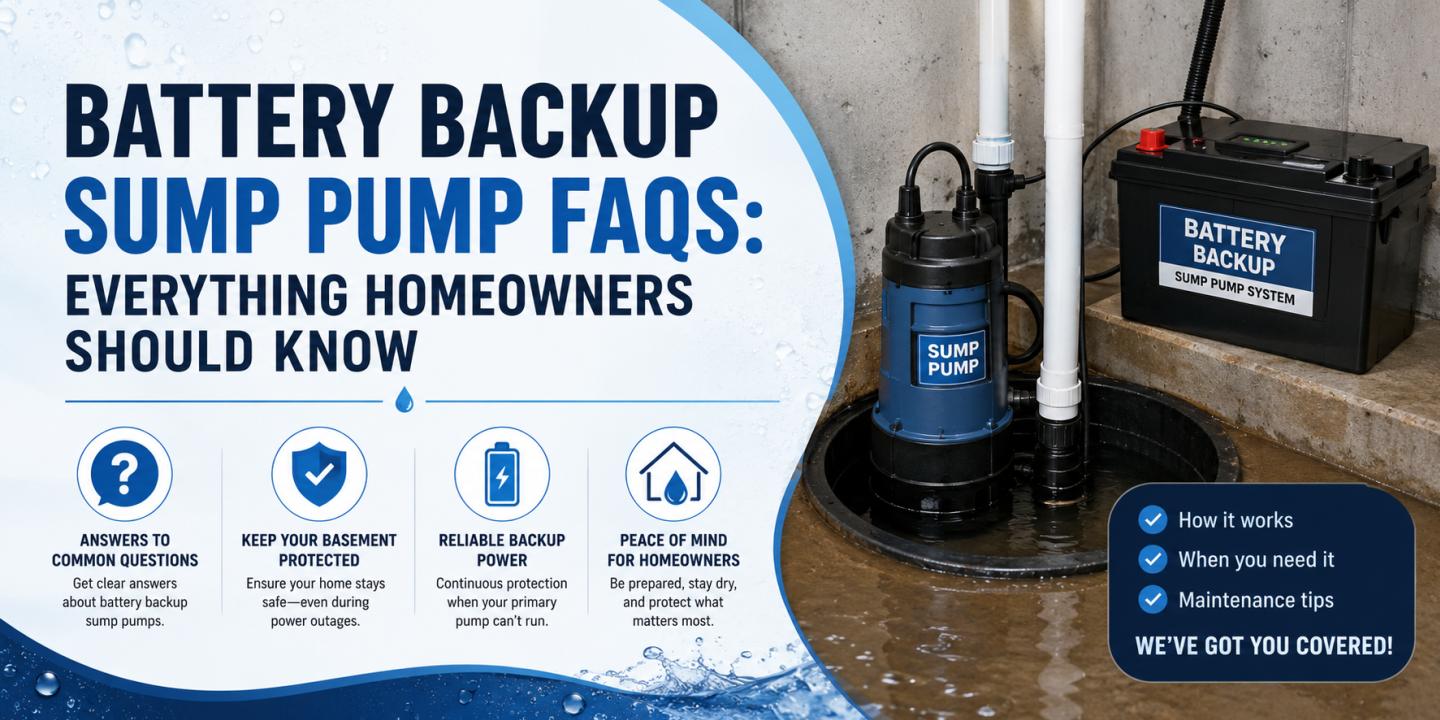
A sump pump plays an important role in keeping your basement dry by removing water that collects around your home's foundation. However, what happens when the power goes out during a heavy storm? A standard electric sump pump may stop working exactly when you need it most. This is where a battery backup sump pump can provide an additional layer of protection.
A battery backup system is designed to operate when your primary sump pump cannot run because of a power outage, pump failure, or other electrical issue. Below are answers to some of the most common questions homeowners ask about battery backup sump pump systems.
1. What Is a Battery Backup Sump Pump and How Does It Work?
A battery backup sump pump is a secondary pump designed to remove water when the primary sump pump is unavailable. It is typically installed inside the sump pit alongside the main pump and connected to a battery-powered control system.
When the primary pump stops working because of a power outage or mechanical problem, the backup system can automatically activate when the water level reaches a specific point. The battery provides the electricity needed to operate the backup pump.
This system can be especially valuable during severe storms when flooding risks and electrical outages often occur at the same time.
2. Why Do I Need a Battery Backup Sump Pump?
A primary sump pump depends on electricity to operate. If the power goes out during a major rainstorm, the pump may stop removing water from your basement.
A battery backup sump pump helps reduce this risk by providing another way to pump water. It can also serve as protection if the primary pump becomes clogged, overloaded, or fails mechanically.
For homeowners who use their basement for storage, living space, or valuable equipment, having a backup system can provide greater protection against unexpected water accumulation.
3. How Long Does a Battery Backup Sump Pump Last?
The lifespan of a battery backup sump pump depends on the pump's quality, how frequently it operates, maintenance, and the conditions in the sump pit.
With proper care, many backup pump systems can provide reliable service for several years. However, the battery itself generally needs replacement sooner than the pump.
Regular testing can help identify unusual noises, weak pumping performance, corrosion, or other warning signs before an emergency occurs. Professional inspections can also help determine whether the system is still performing properly.
4. How Often Should a Battery Backup Sump Pump Battery Be Replaced?
Battery replacement intervals vary depending on the battery type, manufacturer recommendations, usage, and environmental conditions. Many sump pump batteries require replacement every few years, but homeowners should follow the specific recommendations provided for their system.
Do not wait until a storm occurs to discover that the battery no longer holds enough charge. Regularly check the battery condition and test the backup system.
If the alarm indicates a low battery or the system does not operate properly during testing, the battery may need service or replacement.
5. Will a Battery Backup Sump Pump Work During a Power Outage?
Yes. A battery backup sump pump is specifically designed to operate when normal electrical power is unavailable.
During an outage, the system draws energy from its dedicated battery rather than relying on household electricity. This allows the backup pump to continue removing water from the sump pit.
However, the operating time depends on factors such as battery capacity, pump size, water inflow, and how frequently the pump needs to run. A professional can help determine whether the selected backup system is appropriate for your home's water conditions.
6. How Much Does a Battery Backup Sump Pump Cost?
The cost of a battery backup sump pump system can vary significantly depending on the pump type, battery capacity, installation requirements, discharge configuration, and other components.
A basic system may cost less, while a more advanced setup with a high-capacity battery, alarms, upgraded controls, and professional installation may cost more.
Homeowners should consider more than the initial purchase price. A reliable backup system can help reduce the potential costs associated with basement flooding, damaged belongings, mold growth, and water-related repairs.
Getting a professional evaluation and detailed estimate is the best way to understand the total cost for your specific basement.
7. What Size Battery Backup Sump Pump Do I Need?
The right size depends on several factors, including the size and depth of the sump pit, the amount of water entering the pit, the vertical distance water must be pumped, and the length and configuration of the discharge line.
A pump that is too small may struggle to keep up with incoming water, while an unnecessarily large pump may not be the most efficient choice.
A professional assessment can help determine the appropriate pump capacity and battery system for your property's specific requirements.
8. How Do I Maintain a Battery Backup Sump Pump?
Regular maintenance helps keep your backup system ready when you need it. Homeowners should periodically inspect the sump pit, pump, battery, discharge pipe, and connections.
Test the backup pump according to the manufacturer's instructions and check that the float switch moves freely. Keep debris away from the pump intake and make sure the discharge line is not blocked.
The battery should also be inspected for signs of corrosion, damage, or deterioration. If your system includes an alarm, test it to ensure it can alert you when there is a problem.
Professional maintenance can provide additional peace of mind, particularly before seasons with frequent storms.
9. Can a Battery Backup Sump Pump Prevent Basement Flooding?
A battery backup sump pump can significantly reduce the risk of basement flooding caused by sump pump failure or power loss, but no system can guarantee that flooding will never occur.
The effectiveness of the backup depends on the system's capacity, battery condition, installation, and the amount of water entering the basement.
Other factors, such as foundation drainage, groundwater levels, clogged discharge lines, and extreme rainfall, can also affect basement water management. For comprehensive protection, homeowners should consider the entire drainage and waterproofing system rather than relying on one component.
10. When Should I Replace My Battery Backup Sump Pump?
Replacement may be necessary when the pump repeatedly fails, operates inefficiently, makes unusual noises, shows visible damage, or cannot keep up with water entering the sump pit.
The battery should also be replaced when it no longer maintains an adequate charge or repeatedly triggers low-battery warnings.
If your backup system is older or has experienced repeated problems, a professional inspection can determine whether repair or replacement makes more sense.