Your app can have excellent code, a polished interface, and a perfectly functional backend, and still fail to gain traction.
Why? Because successful mobile products depend on much more than development. The right technology stack, user experience, localization, payment options, scalability, security, and post-launch support all influence whether people actually use the product.
This is especially relevant in Dubai, where startups and established companies are building digital products across fintech, real estate, healthcare, logistics, eCommerce, hospitality, education, and on-demand services.
For a founder, choosing a development partner can determine how quickly an idea becomes an MVP and how easily that MVP can evolve. For an enterprise, the decision is often even bigger: the development team may need to connect the application with existing business systems, cloud infrastructure, payment platforms, analytics tools, and internal workflows.
So, which companies should you consider in 2026?
This roundup highlights 10 mobile app development companies serving Dubai businesses, with a mix of established providers and newer, startup-oriented teams.
What to Look for in a Dubai Mobile App Development Partner
Before comparing companies, define what your project actually needs.
A simple customer-facing application may require iOS and Android development, authentication, payments, notifications, analytics, and an administrative dashboard. A marketplace needs considerably more: multiple user roles, vendor management, search, payments, commissions, messaging, logistics, and real-time updates.
Enterprise applications bring another layer of complexity. Your app may need to communicate with ERP, CRM, HR, inventory, payment, or customer-support systems.
There is also localization.
If your application targets customers in the UAE or wider GCC, Arabic and English support may be essential. Right-to-left layouts need to be considered during UX and engineering rather than added during the final testing phase.
And then there is AI.
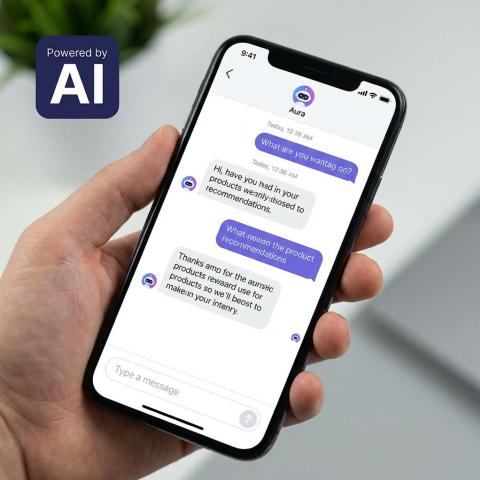
In 2026, many companies are asking development agencies to add AI-powered recommendations, conversational assistants, predictive analytics, document processing, intelligent search, or automated workflows. The best partner won't simply add AI because it sounds impressive. They will first determine whether it solves a genuine product or operational problem.
With those factors in mind, here are the companies worth considering.
1. Code Brew Labs
Code Brew Labs is a strong choice for enterprises that want a mobile app development company in Dubai rather than a team focused only on writing mobile code.
The company works across iOS, Android, Flutter, React Native, backend development, UI/UX design, cloud solutions, AI, blockchain, and custom software development. That broader capability is useful when an app is only one part of a larger digital platform.
For example, a startup launching a marketplace may need customer and vendor applications, an admin dashboard, payment integration, analytics, notifications, and cloud infrastructure. An enterprise may require mobile applications connected to existing business systems.
Code Brew Labs can also be a practical option for businesses experimenting with AI-powered applications. AI recommendation engines, conversational interfaces, predictive analytics, intelligent automation, and AI-assisted workflows can be incorporated where they make business sense.
Key services offered
- Custom iOS and Android app development
- Flutter and React Native development
- AI-powered mobile applications
- Fintech application development
- Marketplace and on-demand apps
- Enterprise mobility solutions
- UI/UX design
- Backend and API development
- Cloud infrastructure
- Blockchain development
- App maintenance and support
Best for: Startups, enterprises, fintech, marketplaces, on-demand platforms, AI applications, and businesses looking for end-to-end product development.
2. Dubai App Developers
Dubai App Developers is another option for businesses that want a Dubai-focused development partner.
The company works with native iOS and Android development as well as cross-platform technologies such as Flutter and React Native. Its positioning around Arabic-first interfaces and regional requirements can make it particularly relevant for businesses targeting customers across the UAE and GCC.
The company also works with AI and cloud technologies, which can be useful for applications that need more than a basic mobile frontend.
For a startup, this type of partner can be useful when the product needs to launch locally but has ambitions to expand across the region.
Best for: Arabic-first applications, UAE startups, AI-powered apps, and cloud-based mobile products.
3. Royo Apps
Royo Apps is particularly relevant for startups building marketplace and on-demand businesses.
Its technology offering covers applications for areas such as delivery, transportation, food ordering, healthcare, education, consultation, and other service-based business models.
The advantage of working with a company that understands these models is that you don't necessarily have to design every operational component from scratch. Common features such as customer accounts, vendor management, bookings, payments, delivery tracking, ratings, and notifications are familiar territory.
That can help founders concentrate on differentiating their business rather than rebuilding basic infrastructure.
However, startups should still check how much customization is possible before signing a contract. A reusable foundation is useful, but your application shouldn't become difficult to modify when the business model evolves.
Best for: Marketplaces, delivery apps, transportation platforms, booking applications, and startups looking for faster MVP development.
4. Blocktech Brew
Blocktech Brew is worth considering when blockchain or Web3 is a genuine part of your product strategy.
The company combines mobile application development with blockchain-related services, making it relevant to products involving decentralized applications, digital assets, tokenized ecosystems, or blockchain-enabled transactions.
That specialization can be valuable for a founder who needs both mobile engineering and blockchain expertise under one development team.
But there is an important distinction here.
You shouldn't choose a blockchain specialist simply because blockchain is popular. If your business is building a conventional marketplace, healthcare platform, booking system, or eCommerce application, a standard cloud architecture may be more appropriate.
Best for: Blockchain applications, Web3 products, decentralized platforms, and businesses requiring specialized blockchain integration.
5. Control Shift
Control Shift is a newer Dubai-focused option aimed strongly at founders and growing businesses.
Its offering emphasizes custom mobile application development, MVP planning, source-code ownership, and fixed-scope development. That positioning can be attractive for startups that want greater clarity around project ownership and delivery.
For an early-stage company, intellectual property ownership deserves particular attention. Your source code, cloud infrastructure, design files, databases, documentation, and application-store accounts should not become dependent on a vendor indefinitely.
Control Shift's startup-oriented positioning makes it worth adding to a founder's shortlist when transparency and direct product ownership are priorities.
Best for: Startups, MVPs, founder-led products, and businesses looking for a structured development engagement.
6. NEXAPP FZCO
NEXAPP FZCO is a relatively young Dubai-based mobile development company focused specifically on digital products and mobile applications.
Its services cover custom mobile development, iOS, Android, startup MVP development, enterprise mobility, UI/UX, and ongoing product development.
A smaller specialist company can have an advantage when you want closer access to the people actually building your product. You may get a more direct relationship with developers and designers instead of moving through several layers of account management.
For startups, that can make communication easier during the early product-definition stage, when requirements are likely to change.
Before hiring, however, ask to see relevant projects and speak directly with the proposed technical team.
Best for: Startup MVPs, custom mobile applications, SMEs, and businesses wanting a smaller development partner.
7. Innoveev
Innoveev is another newer Dubai-based technology company worth considering, particularly for businesses that need mobile development combined with web and AI capabilities.
Its positioning goes beyond traditional app development, covering mobile, web, AI products, and digital platforms.
That broader approach can be useful when your mobile application is part of a larger product ecosystem.
Consider a UAE marketplace, for example. The customer may use a mobile app, while vendors use a web dashboard and administrators operate another system. An AI layer might eventually handle recommendations, customer support, or operational automation.
Having one development partner capable of working across those layers can reduce technical fragmentation.
Best for: Startups, SaaS products, AI-enabled applications, marketplaces, and businesses building mobile and web ecosystems together.
8. ELACTRO
ELACTRO is a newer technology provider focusing on mobile application development for businesses operating in Dubai and the UAE.
Its approach emphasizes product discovery, technical strategy, architecture, development, and production readiness rather than treating app development as a simple coding assignment.
That distinction matters for startups.
A founder often knows the problem they want to solve but hasn't yet decided which features belong in version one. A development company that helps prioritize the MVP can prevent unnecessary spending on features that nobody has validated.
ELACTRO also emphasizes platform selection, device performance, app-store readiness, and maintaining applications through operating-system updates.
Best for: Startup products, MVPs, custom applications, and businesses that need help defining the technical roadmap.
9. Burj Code
Burj Code is another relatively new Dubai-focused option, particularly interesting for entrepreneurs building marketplace and clone->
Its offering centers around ready-to-customize applications for business models such as ride-hailing, food delivery, property platforms, social applications, and other on-demand concepts.
For a founder who wants to launch a proven business model quickly, this approach can make sense. Instead of developing every fundamental feature from zero, the team can begin with an established product structure and customize it around the company's branding and requirements.
The trade-off is flexibility. If your product has a highly unusual business model, a completely custom architecture may provide more room for long-term evolution.
Best for: Entrepreneurs, white-label products, marketplaces, on-demand apps, and founders prioritizing speed to market.
10. TryDigital Solution
TryDigital Solution is another startup-oriented development provider serving businesses in Dubai and the wider UAE.
Its focus includes AI-powered iOS, Android, Flutter, fintech, real estate, SaaS, and enterprise applications.
This makes it worth considering for companies that want AI included as part of the product architecture rather than added as a separate experiment.
For example, a real estate application could use AI to improve property discovery, qualify leads, summarize listings, or assist agents. A fintech product could use intelligent automation for customer support, document processing, or financial insights, subject to the appropriate regulatory and security requirements.
The important thing is to establish exactly where AI adds value before development begins.
Best for: AI-enabled startups, fintech, real estate, SaaS applications, and businesses seeking cost-conscious product development.
How AI Makes Mobile Apps Better in 2026
AI is changing what users expect from mobile applications.
Search is one obvious example. Instead of forcing users to navigate multiple filters, an application can allow them to describe what they want in natural language.
Recommendations are another.
An eCommerce app can learn from browsing and purchasing behavior to improve product discovery. A property platform can prioritize listings based on user preferences. A fitness application can adapt plans according to previous activity.
AI can also reduce internal workload.
Customer-service teams can use AI assistants to summarize conversations, classify requests, or suggest responses. Employees can search internal knowledge through conversational interfaces instead of manually navigating multiple systems.
But AI isn't automatically useful.
If the underlying data is poor, the model may produce poor results. If the feature doesn't solve a real user problem, it simply adds development and operational costs.
Your development partner should therefore start with the business use case, data requirements, security considerations, and expected outcome, not the AI model.
What Enterprises Should Ask Before Hiring
Enterprise buyers should go beyond portfolios.
Ask about security architecture, API integration, authentication, access control, deployment environments, monitoring, documentation, testing, disaster recovery, and long-term maintenance.
You should also establish ownership from the beginning.
Who owns the source code?
Who controls the cloud account?
Who owns the database?
Who manages the app-store accounts?
What happens if you change development partners?
These questions may feel administrative at the beginning of a project, but they become extremely important once an application is handling real customers and business operations.
What Startups Should Ask Before Signing a Contract
Startups have a different challenge: avoiding unnecessary complexity.
Ask the development company to identify the minimum viable version of the product.
A good partner should be willing to tell you when a feature can wait.
You should also understand how change requests are handled, how milestones are defined, who approves releases, how bugs are classified, and what post-launch support costs.
Most importantly, make sure the company understands your business model.
A technically strong team that doesn't understand your customers can still build the wrong product.
How to Choose the Right Company From This List
Don't choose based on the ranking alone.
Instead, narrow the list to three or four companies that match your requirements. Give each one the same product brief and ask them to explain how they would approach the project.
Compare their proposals based on architecture, product thinking, UX, communication, technical ownership, development methodology, security, scalability, and support—not just price.
If you're launching an MVP, prioritize a team that understands product validation and can avoid unnecessary development.
If you're building an enterprise application, prioritize architecture, security, integrations, documentation, and long-term support.
If you're building an AI product, ask for a specific explanation of the AI architecture, data flow, model strategy, monitoring, and expected operating costs.
And if your customers are primarily in the UAE or GCC, make Arabic UX, RTL support, regional integrations, and localization part of the initial requirements.
The Bottom Line
The best Mobile App Development Company in Dubai for your business isn't necessarily the largest agency or the company offering the lowest quote.
It's the team that understands what you're trying to accomplish and can turn that objective into a realistic technical roadmap.
For startups, that might mean launching a focused MVP quickly and learning from real users. For enterprises, it may mean building a secure mobile layer around existing systems. For AI-driven products, it means choosing technology because it improves the product, not because AI happens to be fashionable.
Shortlist a few companies, give them the same requirements, ask difficult technical questions, and compare the answers carefully.
The right partner should make you feel that your product is being engineered as a business, not simply coded as an app.