Every needleworker knows the urge: you see an endearing photo of your pet, a family cottage, or an anniversary bouquet, and think, “I want to stitch this.”
You upload the snapshot into an online photo-to-pattern tool, hit convert, and print the chart. But the moment you start stitching, reality hits:
1. Confetti hell: Thousands of single, isolated stitches scattered across the fabric, demanding constant thread snipping and knotting.
2. Muddy colors: The vibrant dog portrait turns into twenty shades of murky grayish-brown.
3. An impossible shopping list: The chart demands 80+ floss colors for a modest 6-inch hoop.
Why has photo-to-chart conversion been notoriously disappointing for years, and how is modern AI finally making custom cross-stitch enjoyable?
The Fundamental Flaw of Traditional Converters
Cross stitch is a discrete medium: each square on an Aida cloth represents exactly one strand color. A digital camera, on the other hand, captures millions of continuous micro-gradients, sensor noise, and lens blur.
When traditional converters pixelate a photo, they treat every single pixel block literally:
- Soft transitions (like fur or cheek highlights) get mapped as chaotic clusters of single stitches (*confetti*).
- Naive algorithms calculate color distance using standard Euclidean RGB formulas (how cameras measure light) instead of human visual perception.
The result? Charts that look acceptable on a tiny phone screen become an absolute nightmare to stitch with needle and thread.
How AI Vision Changes the Game: Smarter Pre-processing
The true breakthrough in modern pattern design isn't simply gridding pixels finer—it's AI-driven image preparation.
Instead of feeding raw, noisy photographs directly to a quantization grid, modern AI tools like StitchCraft utilize vision models (such as Google’s Nano Banana and OpenAI’s GPT Image 2) to redraw and simplify images before they touch the grid.
1. Preserving Subject, Eliminating Confetti:
The AI recognizes the subject (e.g., your corgi or cat), preserves facial features and posture, but collapses chaotic background noise and micro-gradients into smooth, flat color fields.
2. Tailored Needlecraft Styles:
Whether you prefer a modern Flat Floss aesthetic, a traditional Folk Art sampler, or crisp Pixel Art, prompt-guided presets allow crafters to steer the artwork toward clean, stitchable color boundaries.
3. Text-to-Pattern Generation:
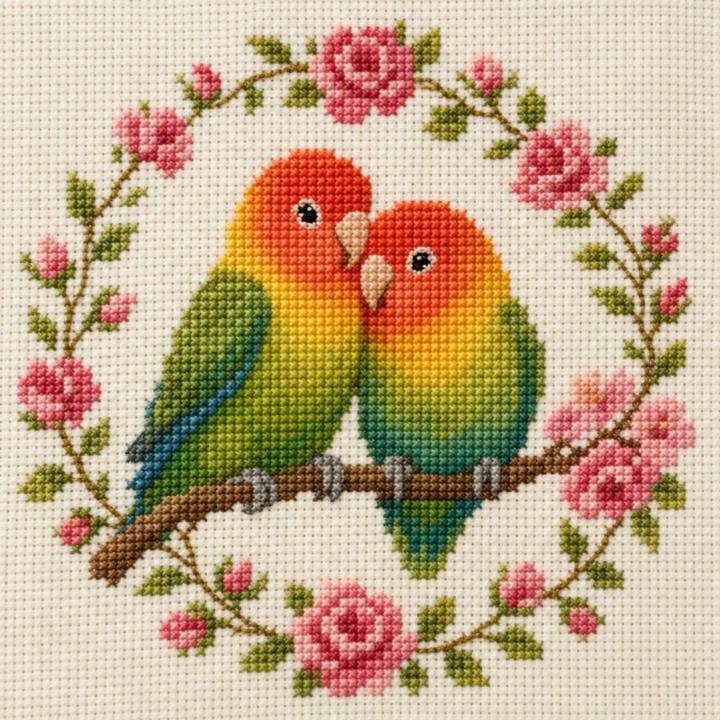
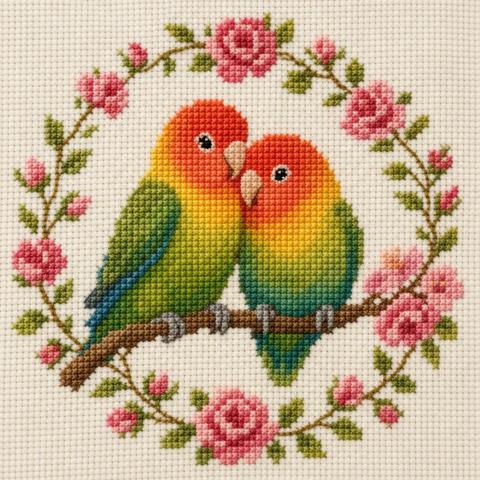
Beyond photo editing, crafters can generate custom heirloom designs entirely from scratch simply by describing their idea (e.g., “a pair of Scandinavian folk birds surrounded by a floral wreath”).
Perceptual DMC Floss Matching (Delta-E in CIELAB)
Floss is tangible thread dyed with real pigment. You cannot stitch with hypothetical HEX codes.
To bridge digital artwork and physical floss, modern charts require perceptual color matching. By calculating color distances using Delta-E in CIELAB color space, each quantized area maps accurately to authentic DMC stranded cotton shades (out of the 454 standard catalog).
When you print a chart from a dedicated free cross stitch pattern maker, the printed symbol key matches real DMC skein numbers exactly—complete with estimated thread skein counts and Aida cloth dimensions (14, 16, or 18 count), so you never overbuy supplies at the craft store.
Real-Time Tradeoffs: Grid, Palette, and Stitchability Scoring
Every stitcher works differently. An experienced crafter might welcome a 40-color challenge, while a weekend hobbyist wants a clean 18-color palette finishable in three evenings.
Modern web tools put these levers directly in the user's hands:
- Live Grid Sizing: Drag to resize the stitch count and watch how resolution adjusts in real time.
- Floss Budget Slider: Cap the maximum allowed colors; notice how color areas actually sharpen as unnecessary thread changes are pruned.
- Instant Stitchability Feedback: Live algorithms analyze remaining single stitches, alerting you to potential confetti zones before you commit to thread.
Bringing the Craft into the Modern Era
Cross stitch has experienced a massive resurgence among crafters seeking mindful, tactile creation away from screens. AI isn't replacing the slow, meditative joy of sewing—it is removing the tedious technical friction that kept beautiful personalized memories from being stitched in the first place.
Whether you're immortalizing a family pet or drafting an original needlework sampler, intelligent conversion tools are making custom pattern design accessible, accurate, and truly stitchable for everyone.