Market Overview:
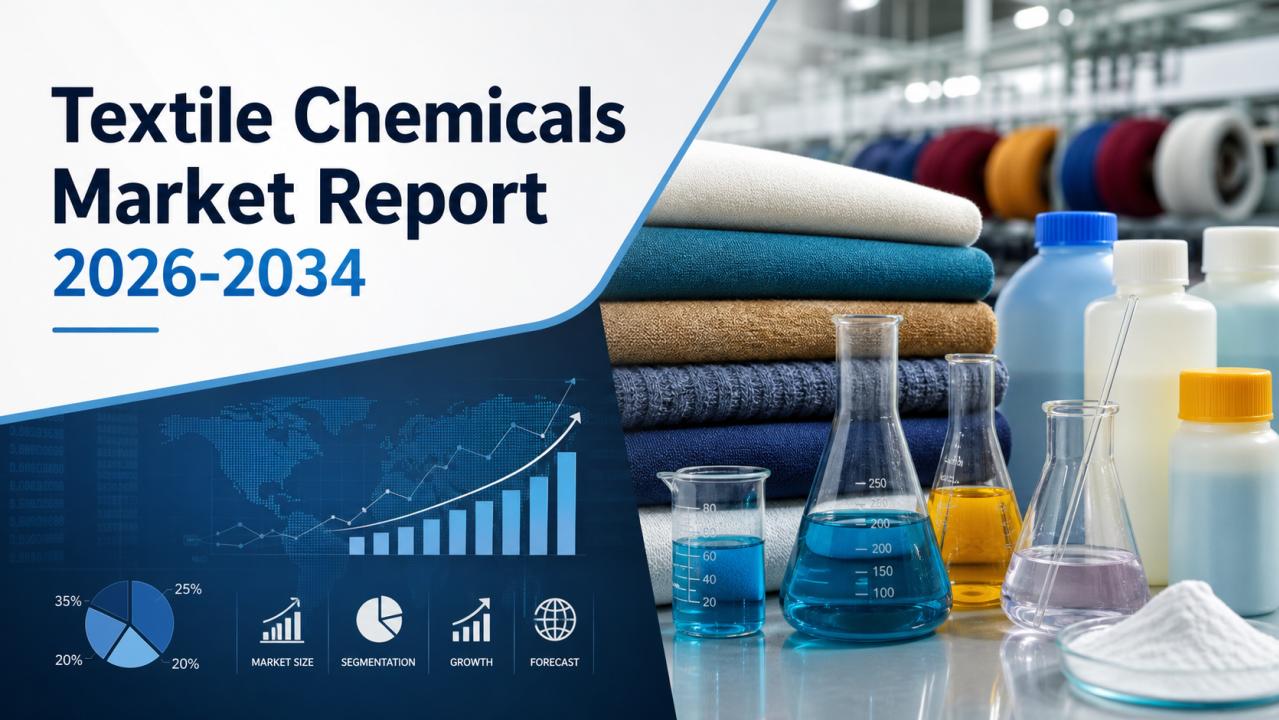
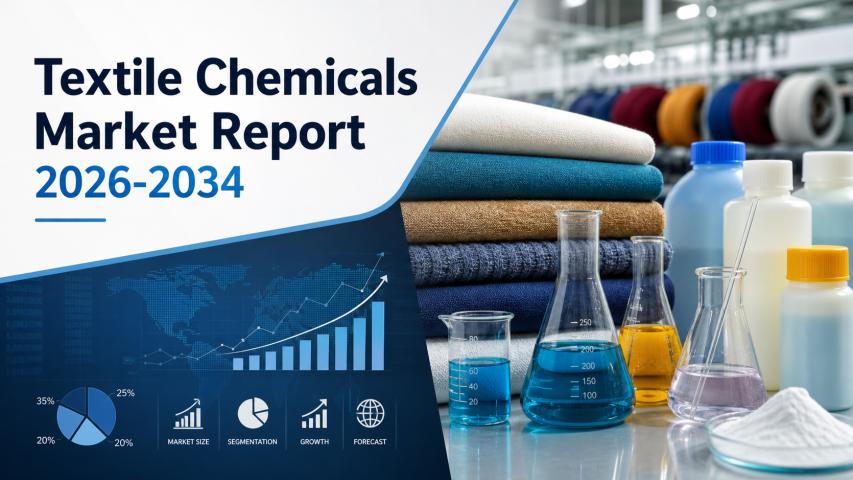
According to IMARC Group's latest research publication, "Textile Chemicals Market Report by Fiber Type (Natural Fiber, Synthetic Fiber), Product Type (Coating and Sizing Chemicals, Finishing Agents, Colorants and Auxiliaries, Surfactants, Desizing Agents, Others), Application (Home Furnishing, Apparels, Industrial Textile, Automotive Textile, Others), and Region," the global textile chemicals market size reached USD 27.8 Billion in 2025. Looking forward, IMARC Group expects the market to reach USD 38.9 Billion by 2034, exhibiting a growth rate (CAGR) of 3.66% during 2026-2034. Rising demand for apparel with trendy designs and prints, increasing preferences for durable and unique clothing items of luxury brands, and the growing adoption of social media influencer marketing by textile and apparel companies represent some of the key factors driving the market forward.
Textile chemicals are specialized chemical compounds utilized for processing, pretreatment, dyeing, and refining fabrics, comprising a wide variety of compounds such as wetting agents, detergents, emulsifiers, sizing components, de-sizing agents, dye carriers, and dye fixing agents. They also consist of water repellents or proofing agents, such as fluorocarbons, synthetic waxes, and silicones, primarily incorporated in scouring, bleaching, and printing steps to improve the overall finish of textiles. These chemicals provide flame, crease, wrinkle, and stain resistance properties to retain fabric quality, along with antimicrobial properties to enhance performance and lifespan while preventing odor production and reducing the occurrence of skin rashes.
How Sustainability Trends are Reshaping the Future of the Textile Chemicals Market
- Rising preferences of clothing brands to use clean and sustainable bio-based textile chemicals, which are non-toxic and do not cause bioaccumulation in the environment, are supporting market growth.
- The increasing influence of celebrities on fashion >
- The rising emergence of fast fashion brands selling fashionable clothes at affordable prices continues to propel demand for versatile, cost-effective textile processing chemicals.
- Growing adoption of textile chemicals in manufacturing automobile fabrics, such as seat belts, seat covers, and headliners, is bolstering demand beyond traditional apparel applications.
- The increasing use of home décor items, including curtains, carpets, bedsheets, pillow covers, and sofa covers, continues to catalyze demand for textile chemicals across the home furnishing segment.
Grab a sample copy of this report: https://www.imarcgroup.com/textile-chemicals-market/requestsample
Key Trends in the Global Textile Chemicals Market
- Rising Demand for Trendy Apparel Designs: The escalating demand for apparel with trendy designs and prints represents one of the primary factors positively influencing the increasing employment of textile chemicals across the industry.
- Growing Social Media Influencer Marketing: The growing adoption of social media influencer marketing by textile and apparel companies is offering a favorable market outlook, accelerating fashion trend cycles worldwide.
- Expansion of Fast Fashion Brands: The rising emergence of fast fashion brands selling fashionable clothes at affordable prices is propelling market growth through sustained volume demand for processing chemicals.
- Adoption of Sustainable Bio-Based Chemicals: Clothing brands' rising preference for clean and sustainable, non-toxic textile chemicals that avoid environmental bioaccumulation is supporting a shift toward greener formulations.
- Expanding Automotive Textile Applications: The increasing adoption of textile chemicals in manufacturing automobile fabrics, such as seat belts, seat covers, and headliners, is bolstering market growth beyond apparel.
Growth Factors in the Global Textile Chemicals Market
- Luxury and Premium Clothing Demand: The increasing number of consumers investing in durable and unique clothing items from luxury brands and foreign textile companies is contributing to sustained market growth.
- Synthetic Fiber Segment Leadership: Synthetic fiber represents the largest fiber type segment, reflecting its widespread use across apparel, industrial, and automotive textile applications requiring durable chemical treatment.
- Colorants and Auxiliaries Dominance: Colorants and auxiliaries account for the largest product type share, essential for achieving vibrant prints and patterns while providing an optical brightening finish to textiles.
- Apparel Application Strength: Apparels account for the majority of the market share, driven by rising consumer demand for trendy designs, prints, and durable clothing across both fast fashion and luxury segments.
- Asia-Pacific Manufacturing Advantages: The rising availability of various raw materials, low cost of fabric production, and increasing demand from end-use industries continue to reinforce Asia-Pacific's leading market position.
Leading Companies Operating in the Global Textile Chemicals Industry:
- Archroma
- BASF SE
- CHT Group
- Dow Inc.
- Evonik Industries AG
- Huntsman Corporation
- Kiri Industries Limited
- OMNOVA Solutions Inc. (Synthomer plc)
- Solvay S.A.
- Tanatex Chemicals BV (Zhejiang Transfar Co. Ltd.)
- The Lubrizol Corporation (Berkshire Hathaway Inc.)
- Wacker Chemie AG
Textile Chemicals Market Report Segmentation:
Breakup By Fiber Type:
- Natural Fiber
- Synthetic Fiber
Synthetic fiber represents the largest segment, reflecting its widespread durability and cost advantages across apparel, industrial, and automotive textile manufacturing processes requiring extensive chemical treatment.
Breakup By Product Type:
- Coating and Sizing Chemicals
- Finishing Agents
- Colorants and Auxiliaries
- Surfactants
- Desizing Agents
- Others
Colorants and auxiliaries account for the largest market share, essential for the dyeing and printing processes that create vibrant prints and patterns while supporting the optical brightening needed for a clean fabric finish.
Breakup By Application:
- Home Furnishing
- Apparels
- Industrial Textile
- Automotive Textile
- Others
Apparels account for the majority of the market share, driven by rising consumer demand for trendy designs and prints, along with growing adoption of durable, unique clothing items from luxury and fast fashion brands alike.
Breakup By Region:
- Asia-Pacific
- North America
- Europe
- Latin America
- Middle East and Africa
Asia-Pacific was the largest market for textile chemicals, driven by the rising availability of various raw materials, low cost of fabric production, and increasing demand from end-use industries across the region.
Note: If you require specific details, data, or insights that are not currently included in the scope of this report, we are happy to accommodate your request. As part of our customization service, we will gather and provide the additional information you need, tailored to your specific requirements. Please let us know your exact needs, and we will ensure the report is updated accordingly to meet your expectations.
About Us:
IMARC Group is a global management consulting firm that helps the world's most ambitious changemakers to create a lasting impact. The company provides a comprehensive suite of market entry and expansion services. IMARC's offerings include thorough market assessment, feasibility studies, company incorporation assistance, factory setup support, regulatory approvals and licensing navigation, branding, marketing and sales strategies, competitive landscape and benchmarking analyses, pricing and cost research, and procurement research.
Contact Us:
IMARC Group
134 N 4th St. Brooklyn, NY 11249, USA
Email: sales@imarcgroup.com
Tel No: (D) +91 120 433 0800
United States: +1-201-971-6302