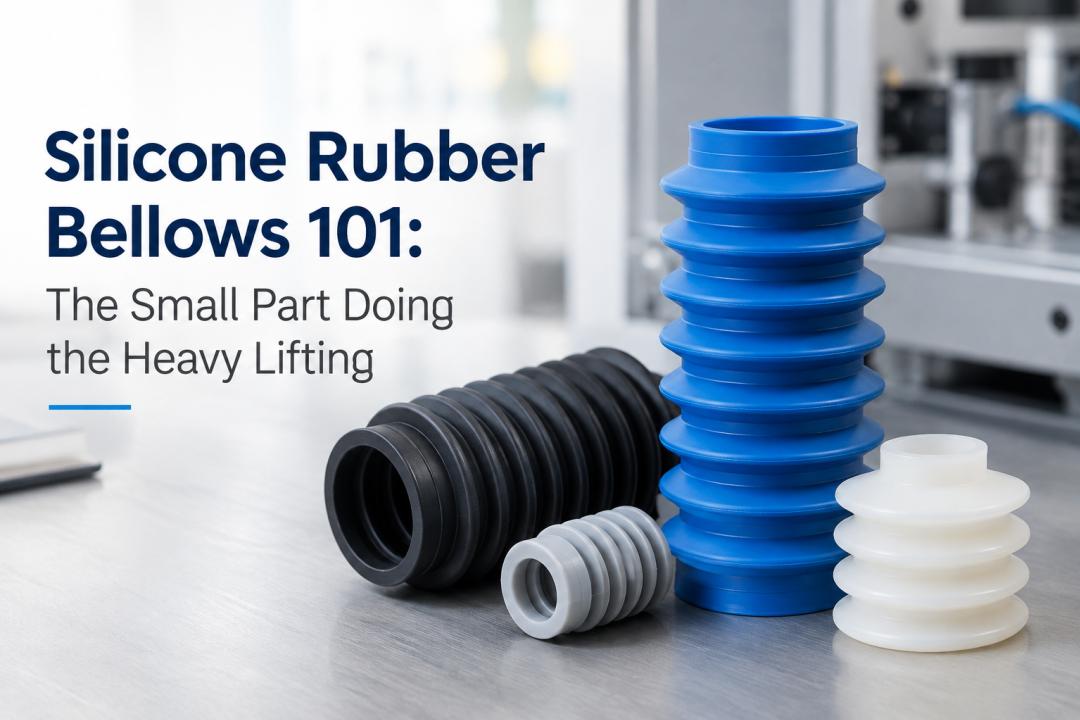
Walk into any factory floor, medical lab, or automotive assembly line, and you'll probably walk right past one of the hardest-working components in the machine — the silicone rubber bellow. It doesn't spin, it doesn't light up, and nobody notices it until it fails. But this flexible, accordion-shaped part is quietly protecting joints, sealing gaps, and absorbing movement in equipment that simply can't afford downtime.
If you've ever wondered what makes this small part so essential — or why so many industries are switching to silicone bellows over standard rubber ones — this guide breaks it down in plain language.
What Exactly Are Silicone Rubber Bellows?
A silicone rubber bellow is a flexible, folded (or "convoluted") component designed to expand, contract, and bend without cracking or losing its seal. Think of it like a mechanical accordion — it moves with the equipment, absorbing vibration, heat, dust, and moisture along the way.
Unlike standard rubber compounds, silicone brings a unique mix of flexibility and thermal stability to the table. That's exactly why industrial silicone bellows are now the go-to choice in environments where regular rubber would harden, crack, or degrade over time.
Why Silicone Over Regular Rubber?
Not all rubber is built the same, and this is where silicone genuinely stands apart:
- Extreme temperature tolerance – Silicone bellows can typically handle temperatures ranging from as low as -60°C to as high as 250°C without losing their shape or elasticity.
- Chemical and weather resistance – They hold up well against ozone, UV exposure, and mild chemical contact, making them suitable for both indoor and outdoor use.
- Long service life – Because silicone resists aging and cracking, bellows made from it tend to outlast standard rubber in demanding conditions.
- Consistent flexibility – Even after thousands of expansion-contraction cycles, silicone bellows retain their original shape and sealing performance.
This combination is why so many engineers now specify silicone rubber bellows for applications where failure simply isn't an option — medical devices, aerospace components, and high-heat industrial machinery included.
Where Are Silicone Bellows Actually Used?
The versatility of silicone bellows means they show up in more places than most people realize:
Industrial Machinery
Protecting moving joints, shafts, and pistons from dust, debris, and lubricant leakage.
Medical & Laboratory Equipment
Medical-grade silicone bellows are used in devices requiring sterility, flexibility, and resistance to repeated sterilization cycles.
Automotive Applications
From CV boots to steering assemblies, silicone bellows handle constant motion while sealing out contaminants.
Aerospace & Electronics
Where temperature swings are extreme and reliability is non-negotiable, industrial silicone bellows provide consistent performance.
Food Processing Equipment
Food-grade silicone bellows offer a safe, non-reactive barrier in processing lines.
Each application demands something slightly different — different shapes, wall thicknesses, or convolution patterns — which is where customization becomes critical.
Why Customization Matters
No two machines are built exactly alike, so off-the-shelf bellows don't always fit the bill. This is where working with an experienced silicone rubber bellows manufacturer makes a real difference.
A good manufacturer doesn't just sell a standard product — they work with you to design bellows based on:
● Exact dimensions and shape (square, circular, hexagonal, or custom profiles)
● Required temperature and chemical resistance
● Specific mounting and sealing requirements
● Industry compliance standards (medical-grade, food-grade, etc.)
This tailored approach ensures the final part fits perfectly into your equipment, rather than forcing your design around a generic component.
Working With the Right Manufacturing Partner
Companies like Custom Rubber Bellows are a good example of how this collaborative approach works in practice. Rather than offering only standard sizes, manufacturers with strong engineering backgrounds typically start by understanding the operating environment — temperature range, chemical exposure, and mechanical stress — before recommending a design. This kind of consultative process is what separates a bellow that merely fits from one that actually performs reliably over years of use.
How to Choose the Right Silicone Bellows Manufacturer
With so many silicone bellows manufacturers in the market, picking the right one can feel overwhelming. Here's what actually matters:
- Material expertise – Do they understand different silicone grades and when to use each one?
- Customization capability – Can they design bellows around your exact specs, not just modify a stock part?
- Quality certifications – Especially important for medical or food-grade applications.
- Production flexibility – Can they handle everything from a single prototype to full-scale production runs?
- Industry experience – A manufacturer familiar with your specific industry will understand challenges you may not even think to mention.
Choosing a manufacturer isn't just about price — it's about finding a partner who understands that a five-dollar part failing can cause a five-figure problem down the line.
The Bottom Line
Silicone rubber bellows may be small, but their job is anything but minor. They absorb shock, seal out contaminants, tolerate extreme heat, and keep machinery running smoothly — often for years without needing attention. Whether you're sourcing for industrial machinery, medical devices, or automotive parts, understanding what makes silicone bellows different helps you make a smarter, longer-lasting choice — and working with manufacturers who prioritize engineering over generic mass production, such as Custom Rubber Bellows, often makes that decision easier.
Frequently Asked Questions
1. What temperature range can silicone rubber bellows handle?
Most silicone rubber bellows perform reliably between -60°C and 250°C, though exact limits depend on the specific silicone grade used.
2. Are silicone bellows better than standard rubber bellows?
For high-heat, chemical exposure, or long-term flexibility needs, yes — silicone generally outperforms standard rubber in durability and temperature resistance.
3. Can silicone rubber bellows be custom made?
Yes. Most silicone rubber bellows manufacturers offer full customization, including shape, size, wall thickness, and material grade based on your application.
4. Are silicone bellows safe for medical or food applications?
Medical-grade and food-grade silicone bellows are specifically manufactured to meet safety and sterilization standards for these industries.
5. How long do silicone rubber bellows typically last?
With proper design and material selection, silicone bellows can last significantly longer than standard rubber, often several years, even under repeated stress cycles.
6. What industries use industrial silicone bellows the most?
Industrial machinery, automotive, aerospace, medical equipment, and electronics are among the top industries relying on silicone bellows for sealing and protection.