You can have a strong app concept, a clear business model, and a budget approved by the board—and still end up with the wrong development partner.
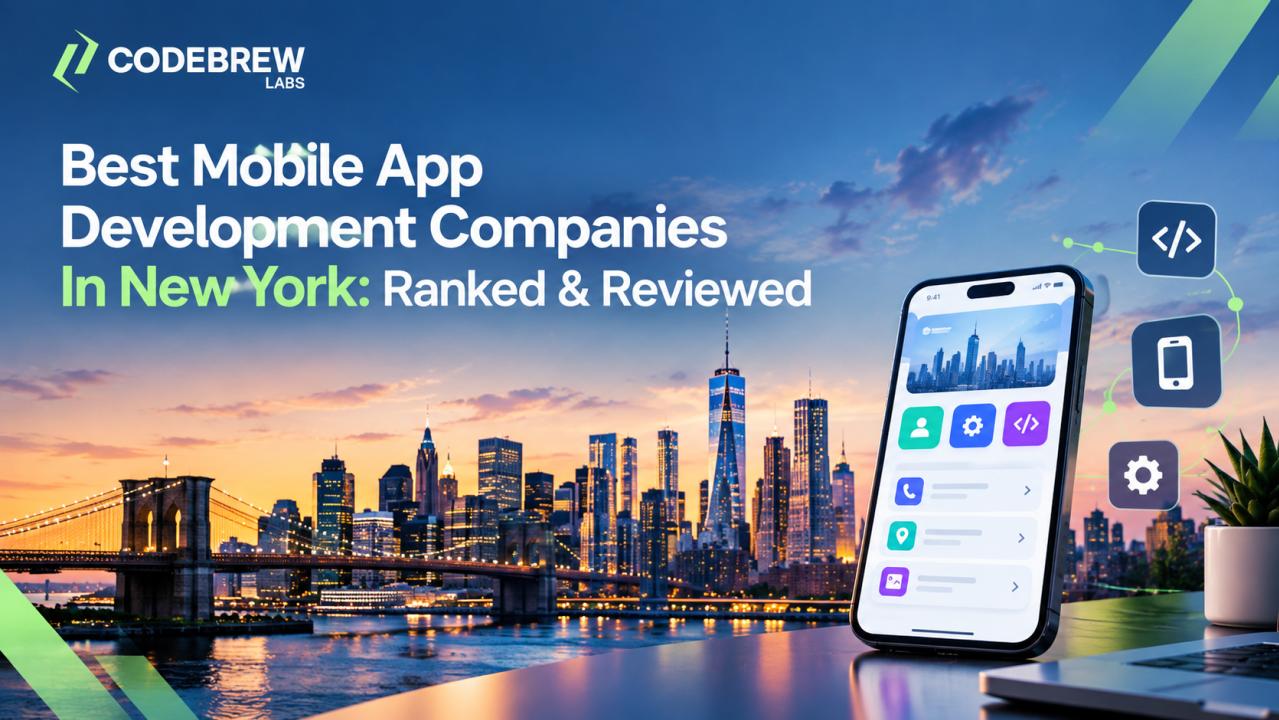
The problem usually isn't finding a Mobile App Development Company in New York. There are hundreds of firms serving the city, from small product studios and startup-focused teams to large engineering organizations handling enterprise applications. Current industry directories show just how crowded the New York market has become.
The harder question is fit.
A startup may need a team that can turn a rough product idea into an MVP without creating months of unnecessary engineering work. An enterprise may care more about integrations, security, governance, scalability, and post-launch ownership. A company expanding between the US and the Middle East may have another requirement entirely: a development partner that understands both markets.
The 12 companies below are reviewed with those differences in mind. The ranking considers technical range, product fit, delivery approach, New York or US presence, and the ability to support more complex requirements where relevant.
How We Chose These Mobile App Development Companies
The selection focuses on four practical areas.
Technical range comes first. A serious app project may involve native iOS and Android development, Flutter or React Native, backend engineering, cloud infrastructure, APIs, AI features, analytics, QA, and ongoing maintenance. A company doesn't need to offer everything, but its core capabilities should match the product being planned.
Industry fit matters just as much. Fintech, healthcare, retail, media, logistics, and consumer applications have very different requirements. Experience with a particular type of product can reduce avoidable mistakes during planning and development.
We also considered the delivery process and product strategy. The strongest partners don't simply receive specifications and start coding. They should be able to challenge assumptions, identify technical risks, validate important workflows, and establish a sensible release plan.
Finally, post-launch support matters. An app isn't finished when it reaches the App Store or Google Play. Operating-system updates, security patches, analytics, performance improvements, new features, and changing business requirements continue long after launch.
With those factors in mind, here are the companies worth considering.
1. Code Brew Labs
- iOS App Development
- Android App Development
- Cross-Platform App Development
- Custom Mobile App Development
- AI-Powered App Development
- Enterprise App Development
- Flutter App Development
- React Native App Development
- UI/UX Design
- Mobile App MVP Development
- Backend & Cloud Development
- API Integration
- App Testing & Quality Assurance
- App Maintenance & Support
2. Dubai App Developer
- AI App Development
- Custom AI Development
- AI Automation Solutions
- AI Agents & RAG Development
- Generative AI Development
- AI Consulting & Strategy
- Machine Learning Development
- Natural Language Processing (NLP)
- Computer Vision & OCR
- Cloud AI & Data Engineering
- Predictive Analytics
- Enterprise AI Integration
- AI-Powered Mobile App Development
- Business Process Automation
3. Royo Apps
- iOS App Development
- Android App Development
- React Native App Development
- Flutter App Development
- Custom Mobile App Development
- On-Demand App Development
- Marketplace App Development
- E-commerce App Development
- AI & ML Solutions
- Software Development
- UI/UX Design
- MVP Development
- Blockchain Development
- IT Consulting
- DevOps Services
4. Blocktech Brew
- Blockchain App Development
- Custom Blockchain Development
- dApp Development
- Blockchain Consulting
- Crypto Wallet Development
- NFT Marketplace Development
- DeFi Development
- Smart Contract Development
- Web3 Development
- AI Development
- Generative AI Development
- AI Consulting
- Metaverse Development
- Blockchain Game Development
- Mobile Game Development
5. Big Human
Big Human is an NYC-based digital product company that works on mobile applications and custom software, with a particular focus on startups and growing brands. Its startup development offering is built around the realities of early-stage product work, where teams often need to make quick decisions about features, design, technology, and what should actually make it into the first release.
That startup focus is one of its more useful differentiators. Big Human also develops its own products, giving it a perspective on the pressure that comes with taking an idea from an early concept to something real and usable. For founders, that can make the discovery and product-planning side of a project just as valuable as the development itself.
The limitation is scope. If you're planning a large enterprise implementation involving complex legacy systems, extensive procurement requirements, or a very large engineering team, you'll want to compare Big Human with providers that specialize more heavily in enterprise delivery. For startups and scaling companies that want a product-focused development partner, though, it's a company worth considering.
6. Start It Up
Start It Up is a New York-focused software development company that builds mobile applications, SaaS products, and customized software. Its capabilities include mobile development, product management, cloud architecture, React Native, Node.js, MongoDB, and other technologies used to build full digital products.
What makes the company interesting for startups is its emphasis on combining software engineering with product and technical guidance. Early-stage founders don't always have a technical leader sitting beside them to make architecture decisions, prioritize features, or determine which technology stack makes sense. Start It Up positions its model around filling some of that gap through its CTO-as-a-Service approach.
That makes it a potentially good fit for startups and smaller businesses that need both development and technical direction. The trade-off is that companies looking for a large-scale enterprise engineering organization may need a provider with greater delivery capacity and a more extensive enterprise infrastructure. For an early product where practical technical guidance matters, however, Start It Up offers a more startup-oriented alternative.
7. Simpalm
Simpalm is a U.S.-based application development company serving the New York market. Its services include mobile and web development, application management, ongoing support, and related software engineering.
That combination is useful for businesses that expect their applications to evolve after launch. The first release is only the beginning. New features, bug fixes, operating-system updates, and changing user expectations all create ongoing development work.
Simpalm may suit startups and established businesses that want a practical software partner to help build and maintain a product over time. Its broader application services can also be relevant when the mobile app needs to work alongside a web platform.
For a very large international technology program, however, you should look carefully at delivery capacity, team structure, and experience with complex enterprise integrations. A provider that handles a mid-sized application well may not automatically be the right choice for a multinational rollout.
8. Bolder Apps
Bolder Apps has a New York presence and focuses on mobile applications, custom software, artificial intelligence, and generative AI.
Its service mix is relevant to product teams that want AI to serve a clear purpose inside the application. That might mean improving search, generating content, personalizing recommendations, or helping users complete tasks through intelligent features.
Custom software development can also be useful when a mobile product needs a supporting backend or web-based management platform.
For startups, the appeal may lie in bringing product functionality and AI capabilities together without treating them as entirely separate projects. Established businesses can also consider the company when exploring AI-enabled customer experiences.
The limitation comes down to project complexity. Enterprises with extensive legacy systems, demanding procurement processes, or complex international compliance requirements should examine the company's experience with comparable projects before committing to a major engagement.
9. Fueled
Fueled is a New York-based digital product development company with a focus on mobile applications, user experience, interface design, and web development.
It's worth considering when the way people interact with your product is central to its success. For a consumer-facing app, small design decisions can affect how easily users complete a purchase, find information, or return to the product. Design and engineering need to work together to get those details right.
Fueled may appeal to startups building customer-facing products and established businesses looking to improve an existing mobile experience. Rather than simply recreating a website on a smaller screen, the aim is to build something that feels appropriate for the device and the people using it.
Budget is one consideration. A founder trying to validate an early idea with limited funding should compare the proposed scope and commercial model with smaller development studios. The right choice depends on how much product strategy, design, and engineering support you actually need.
10. Infinum
Infinum is a digital product development company with a New York presence and capabilities spanning mobile applications, design, and broader software engineering.
Its approach may suit organizations that want product strategy, design, and development to inform one another from the start. This can be valuable when building a new digital product or reworking an existing application that has become difficult to maintain or extend.
For an established business, the work may involve more than refreshing the interface. The team may need to consider the underlying architecture, how the application connects to other systems, and how future product changes will be managed.
The trade-off is that a comprehensive product-development engagement may be more than a startup needs for a simple first release. If your immediate goal is to test a limited set of features, compare the proposed approach with a smaller MVP-focused team before deciding.
How to Choose the Right Mobile App Development Company in New York
The most expensive mistake isn't always choosing the highest-priced vendor. It's choosing a team whose delivery model doesn't match the product.
Start with budget and scope. A relatively simple MVP may require a compact team consisting of product, design, mobile engineering, backend engineering, and QA. An enterprise application may require architects, security specialists, DevOps, data engineers, compliance input, and dedicated project management.
Then consider timeline. If the product has a fixed commercial launch date, ask what the team can realistically deliver in the first release. A shorter schedule shouldn't simply mean adding more developers. Sometimes reducing the initial feature set is the smarter way to meet the deadline.
Your in-house capability should influence the engagement model. If you already have product managers, designers, and backend engineers, you may only need mobile engineering capacity. If the internal team is small, a full-service product partner may be more practical.
Compliance can change the shortlist completely. Healthcare, fintech, insurance, government, and other regulated sectors may require specific security controls, data handling processes, auditability, or integrations. Ask potential partners to explain how those requirements affect architecture before development begins.
For startups, the key question is usually whether the agency understands MVP discipline. Can it distinguish between the features users need on day one and the features that can wait?
For enterprises, the conversation should move toward architecture and ownership. Ask about APIs, authentication, cloud infrastructure, monitoring, CI/CD, testing, source-code ownership, documentation, and support after launch.
And don't judge a company only by its portfolio screenshots. Ask to see products that are similar in complexity to yours.
Making the Final Decision
There is no universal winner among New York app development firms. A startup validating a consumer concept may need a very different partner from a financial institution replacing an existing mobile platform.
Code Brew Labs, Dubai App Developer, Royo Apps, and Blocktech Brew bring different combinations of mobile, AI, marketplace, cloud, and emerging-technology capabilities.
The right choice comes down to the product you are actually building.
Before requesting final proposals, prepare a short brief covering the target users, platforms, core workflows, integrations, compliance requirements, launch date, expected scale, and what success should look like six months after launch. Give the same brief to each shortlisted Mobile App Development Company.
Then compare not just the price.
Compare the questions they ask, the risks they identify, the architecture they propose, what they recommend leaving out, and how clearly they explain what happens after launch.
That is usually where the strongest development partner becomes much easier to identify.