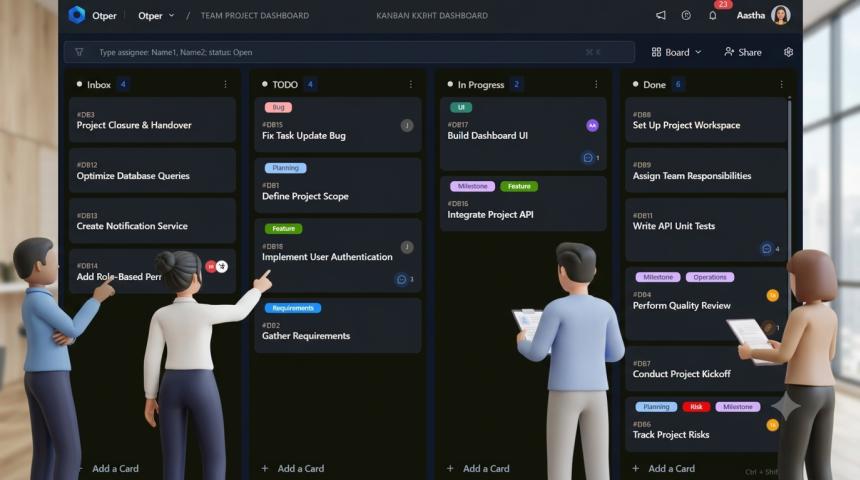
Teams often start a project with a simple task list, but as work grows, a list can quickly become difficult to manage. Tasks get buried, priorities change, and it becomes unclear who is responsible for what.
This is where Kanban project management can help.
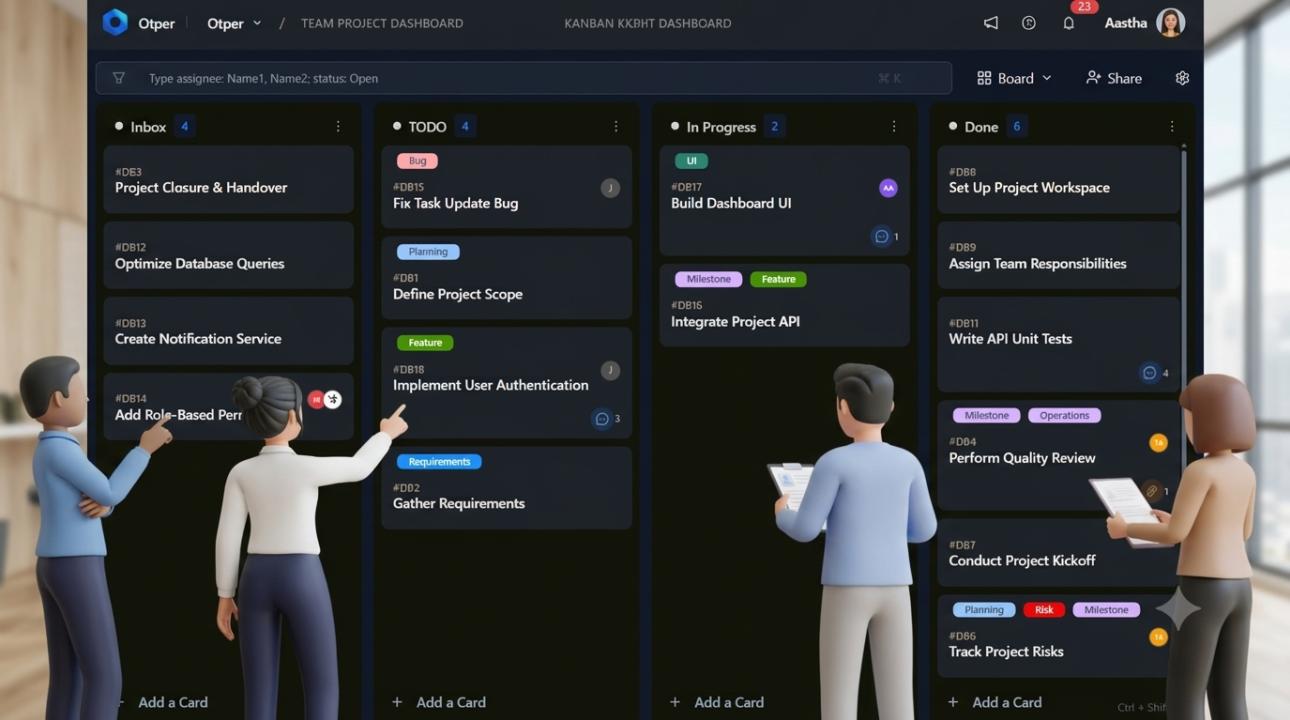
A Kanban board gives a team a visual way to organize work, track progress, and identify tasks that need attention.
What is Kanban project management?
Kanban is a visual approach to managing work. Instead of keeping every task in a long list, work is divided into stages such as:
- To Do
- In Progress
- Review
- Done
Each task is represented by a card that moves across the board as work progresses.
The basic idea is simple: make work visible, limit unnecessary work in progress, and keep tasks moving toward completion.
Why teams use Kanban boards
One of the biggest advantages of a Kanban board is visibility.
A project manager can quickly see which tasks are waiting to be started, which are currently being worked on, and which have already been completed.
This can reduce the need for constant status updates.
For example, instead of asking five team members what they are working on, a manager can look at the board and immediately see the current state of the project.
Kanban also makes bottlenecks easier to notice. If many cards remain stuck in the same stage, the team has a clear signal that something needs attention.
Ownership is just as important as visibility
A board is useful, but simply having tasks on a board does not guarantee that work will get done.
Every important task should have a clear owner.
When several people are responsible for the same task, accountability can become unclear. Assigning one person to each card makes it easier to answer a basic question:
Who is responsible for moving this task forward?
Adding due dates can make this even more useful. Teams can see not only what needs to be done, but also who owns it and when it is expected to be completed.
Kanban vs. a simple task list
A traditional task list can work well for personal productivity or very small projects. But teams often need more context.
A task list might tell you:
Write customer report
A Kanban board can show:
Write customer report
Owner: Alex
Due: Friday
Status: In Progress
That additional context becomes valuable when multiple people are working on multiple projects at the same time.
Use delivery data, not just task status
Another useful part of modern Kanban project management is reporting.
Knowing that 20 cards were completed is useful, but teams can learn more by looking at questions such as:
- How many tasks are completed each week?
- Which tasks are overdue?
- Where do tasks spend the most time?
- Which team members have the most assigned work?
- How much work is currently in progress?
- Are projects actually becoming faster to deliver?
These metrics can help teams identify recurring bottlenecks instead of relying only on meetings and manual status reports.
Choosing a Kanban project management tool
There are many project management tools available, but teams should choose based on how they actually work.
A useful Kanban tool should make it easy to:
- Create and organize boards
- Assign tasks to specific people
- Add deadlines and priorities
- Move work through different stages
- Track overdue or blocked work
- Understand delivery performance
For smaller teams, simplicity can be particularly important. A tool with dozens of features may create more administrative work than it removes.
One example is Otper, a Kanban project management tool designed around clear task ownership and delivery visibility. Teams can organize work on Kanban boards, assign individual owners, add due dates, and use reporting to understand how work is progressing.
You can learn more about Otper if you want to explore a Kanban workflow for your team.
Start with a simple board
Teams do not need to build a complicated workflow on day one.
A good starting point is:
To Do → In Progress → Done
Add your current tasks, assign an owner to each one, and add deadlines where appropriate.
After using the board for a while, look for problems. If tasks frequently wait for review, add a Review stage. If work gets blocked by external dependencies, make that visible too.
The goal is not to create the most complicated board. The goal is to create a system where everyone can understand what needs to happen, who owns it, and what is slowing the work down.
For teams that want a clearer view of day-to-day execution, Kanban can turn project management from a collection of task lists into a visible workflow.