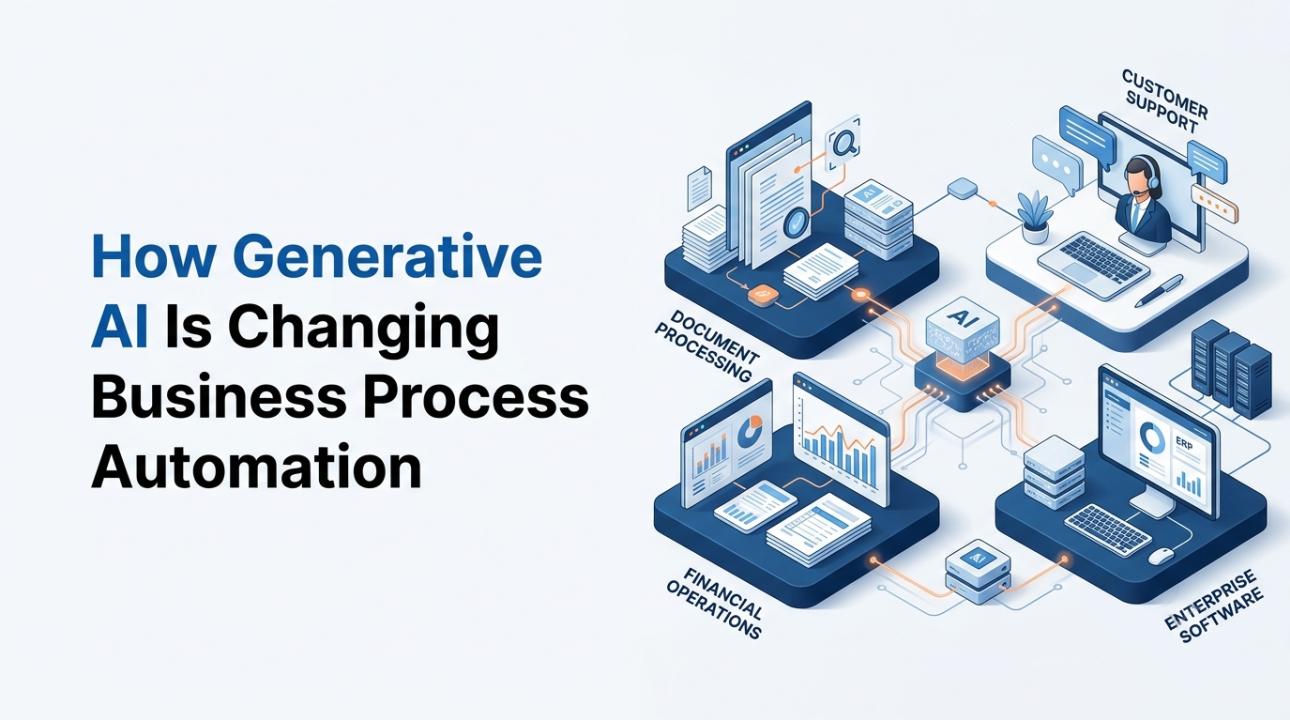
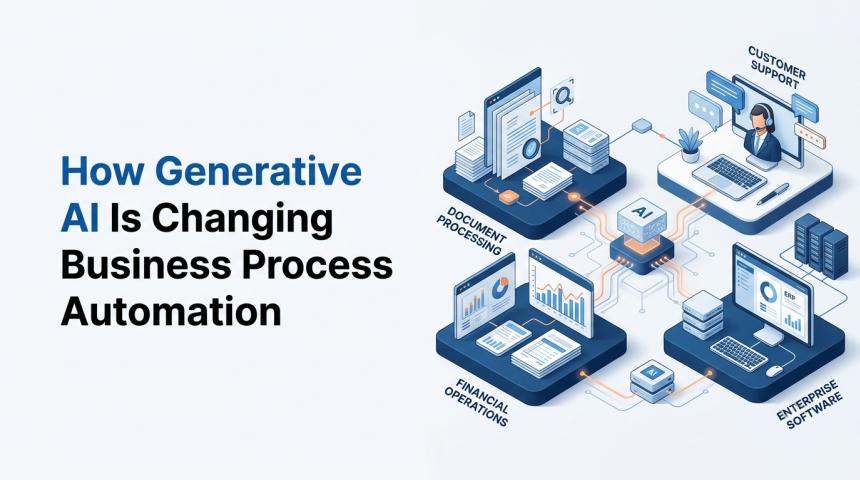
Generative AI is changing how businesses manage daily operations by helping teams reduce manual work and handle complex tasks faster. Traditional automation follows fixed rules and predefined steps. Generative AI adds the ability to understand language, create content and work with unstructured information. This allows companies to improve workflows while giving employees more time to focus on decisions and customer needs.
Moving Beyond Traditional Automation
Traditional automation works well for repetitive tasks such as moving data between systems or processing standard forms. However, it often struggles when information is incomplete or arrives in different formats. Generative AI can help fill this gap by reading documents, summarizing information and identifying relevant details.
For example, an accounts team can use AI to review invoices and extract key information before sending the details into an accounting system. Customer support teams can summarize conversations and suggest suitable responses. These capabilities make automation more flexible and useful across different business functions.
How Businesses Are Using Generative AI
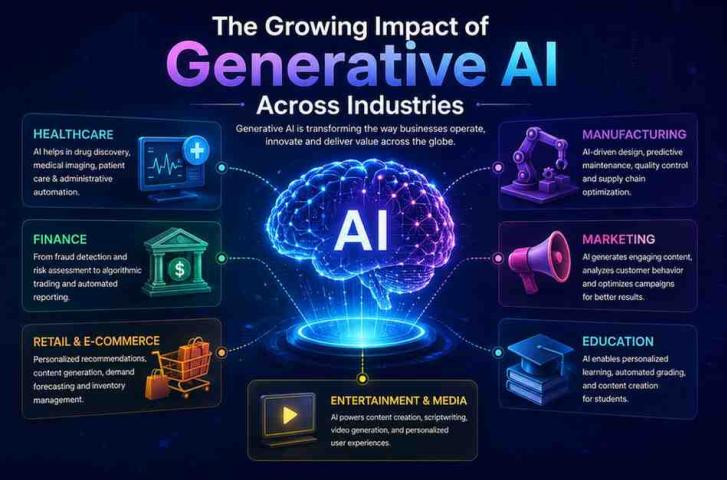
Generative AI is finding practical uses in several departments. In customer service, it can help answer common questions and summarize support requests. In human resources, it can assist with job descriptions and employee queries. Finance teams can use it to review reports and organize financial information.
According to McKinsey's 2025 State of AI survey, 88% of respondents reported regular AI use in at least one business function. However, only about one-third said their organizations had started scaling AI programs across the enterprise. This shows that adoption is growing while many businesses are still working to turn experiments into wider operational improvements.
Source: McKinsey's State of AI 2025
Improving Speed and Employee Productivity
One of the biggest benefits of generative AI is its ability to reduce the time employees spend on routine work. Instead of manually reviewing long documents or preparing reports from multiple sources, teams can use AI to create summaries and organize information.
This does not mean every task should run without human involvement. Employees still need to check important outputs and make decisions that require business knowledge. The real advantage comes from combining AI capabilities with employee experience.
Businesses exploring Generative AI Development Services can also connect AI models with existing software and internal knowledge sources. This helps teams access relevant information without switching between multiple tools. With the right setup, employees can spend less time searching for information and more time solving business problems.
Making Automation More Intelligent
Generative AI can also work alongside robotic process automation (RPA) and existing business software. RPA handles structured tasks while generative AI interprets documents and natural language. Together, these technologies can support workflows that previously required more manual effort.
For example, an order management process could use AI to understand a customer email and identify the requested items. An automation tool can then update the order system and notify the relevant team. Human approval can remain part of the process for unusual requests or high-value transactions.
This approach helps businesses improve efficiency without replacing every system they already use.
Challenges Businesses Should Consider
Despite its benefits, generative AI requires careful planning. AI-generated information can be incorrect or incomplete. Sensitive business data also needs suitable access controls and protection. Companies must consider integration costs and employee training before introducing AI into critical workflows.
A practical starting point is to choose one repetitive process with clear performance measures. Businesses can track processing time and error rates before and after implementation. The results help decision-makers understand whether the solution delivers measurable value.
Conclusion
Generative AI is making business process automation more flexible by helping organizations work with information and manage tasks that once required significant manual effort. Success depends on choosing suitable workflows and maintaining proper human oversight.
At Tech.us, businesses can explore AI-driven solutions that connect intelligent automation with their operational goals. A focused approach can help organizations improve productivity and build a stronger foundation for future growth.