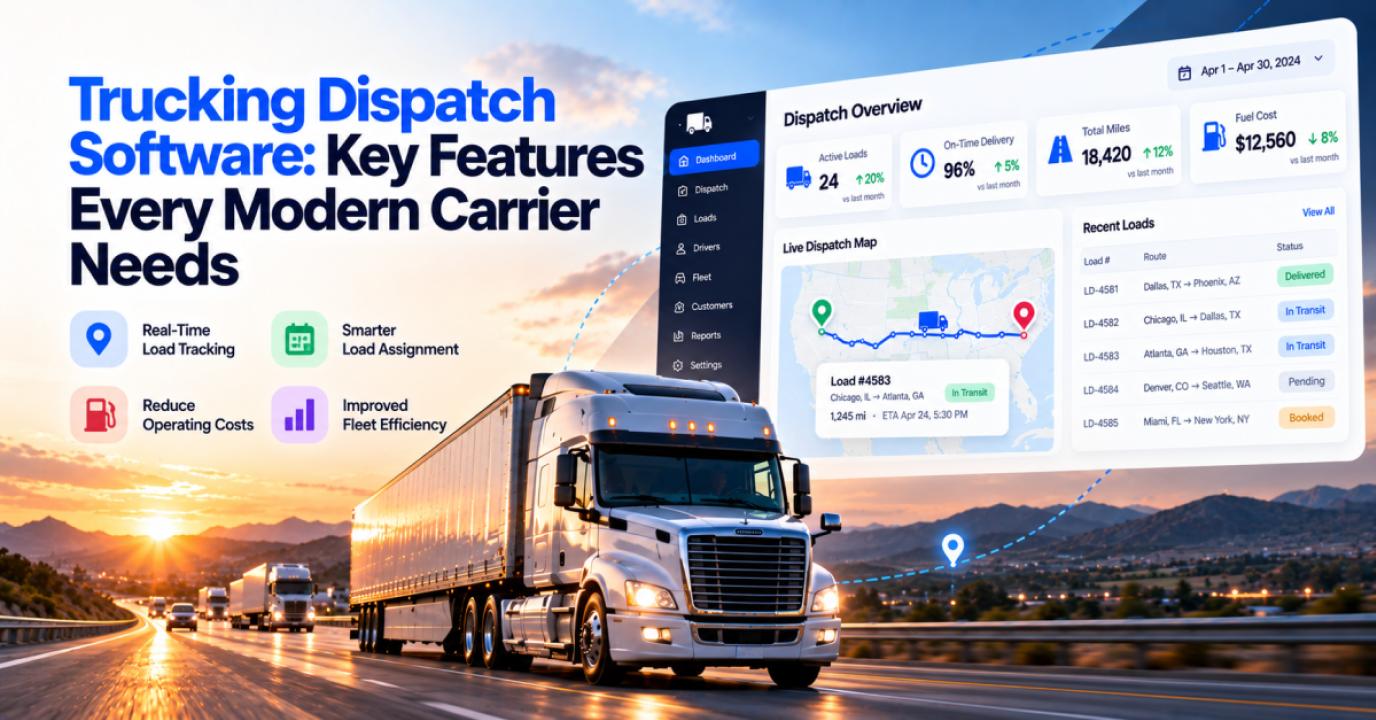
For modern carriers, efficient dispatching is about more than assigning loads to drivers. It requires real-time coordination between trucks, drivers, routes, shipments, customers, and dispatch teams. truck dispatch software can bring these activities together in one centralized platform, helping carriers improve visibility, reduce manual coordination, and respond faster to changing transportation requirements.
As fleets become more connected and operational workflows become increasingly digital, choosing the right trucking dispatch software has become an important technology decision. The right solution should support day-to-day dispatch operations while also providing the visibility, automation, integrations, and scalability needed to manage a growing fleet.
What Is Trucking Dispatch Software?
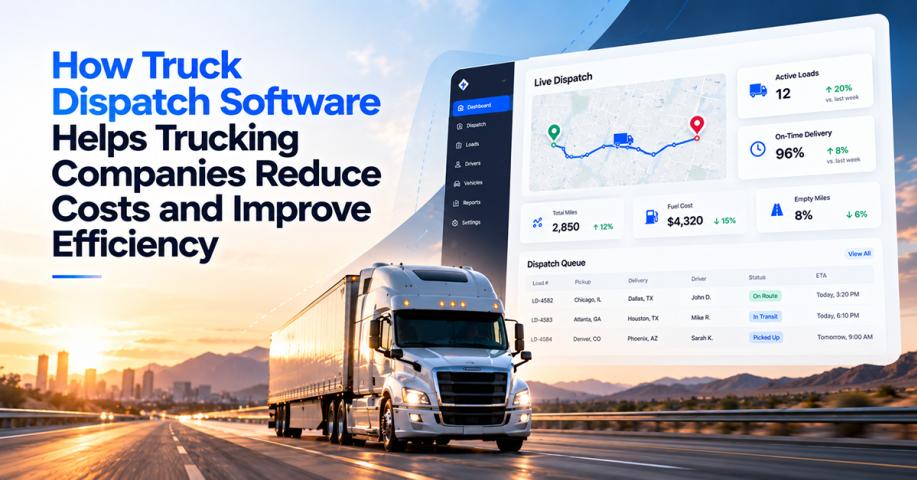
Trucking dispatch software is a digital platform that helps carriers manage loads, drivers, vehicles, routes, schedules, and delivery activities from a centralized system.
Instead of relying on spreadsheets, phone calls, emails, and disconnected applications, dispatchers can use a truck dispatch system to coordinate transportation activities and monitor trip progress.
Depending on the platform, common capabilities include:
Load creation and assignment
Driver and vehicle management
Route planning
GPS tracking
Dispatch scheduling
Driver communication
Shipment status updates
Digital documentation
Proof of delivery
Reporting and analytics
Integration with fleet and transportation systems
The objective is to create a connected dispatch workflow where the right information reaches dispatchers, drivers, and fleet managers at the right time.
Why Modern Carriers Need Advanced Dispatch Capabilities
Manual dispatching becomes increasingly difficult as a carrier adds more trucks, drivers, loads, customers, and routes.
A dispatcher may need to determine which truck is available, check a driver's current location, review the assigned load, confirm delivery requirements, communicate with the driver, and monitor the trip—all while handling other active shipments.
Without centralized information, these activities can create delays and unnecessary administrative work.
Modern truck dispatch management software helps address these challenges by providing a shared operational view. Instead of managing every activity separately, dispatch teams can coordinate loads, drivers, vehicles, and deliveries through connected workflows.
10 Key Features Every Modern Trucking Dispatch System Needs
1. Centralized Load Management
Load management should be at the core of any dispatch platform.
A carrier should be able to create loads, capture shipment details, assign drivers and vehicles, update statuses, and monitor progress from one interface.
Dispatchers should quickly see which loads are available, assigned, in transit, delayed, or completed.
This reduces the need to search through multiple systems and helps dispatchers make faster assignment decisions.
2. Real-Time GPS and Fleet Tracking
Real-time vehicle visibility is essential for modern dispatch operations.
GPS tracking allows dispatchers to understand where vehicles are during active trips. This makes it easier to monitor delivery progress, identify delays, communicate accurate ETAs, and respond to unexpected changes.
The value increases when tracking data connects directly with dispatch workflows.
For example, knowing that a truck is approaching its destination can help a dispatcher prepare for the next assignment rather than waiting for a manual driver update.
3. Driver Management and Mobile Access
Drivers are an essential part of the dispatch workflow, so the technology they use should be simple and accessible.
A driver-facing application can allow drivers to receive assignments, view trip details, update shipment statuses, communicate with dispatchers, and submit documents directly from the road.
A mobile workflow also reduces the need for repeated phone calls and manual status updates.
For carriers, the goal should be to give drivers the information they need without creating additional administrative work.
4. Route Planning and Optimization
Route planning directly influences fuel consumption, driver productivity, delivery schedules, and vehicle utilization.
Modern dispatch software for trucking companies should help dispatchers evaluate routes based on factors such as:
Vehicle location
Driver availability
Delivery windows
Load requirements
Route distance
Current assignments
Vehicle capacity
The best route is not always the shortest route. Effective dispatch planning considers the complete operational situation and helps carriers make practical decisions based on current information.
5. ELD and HOS Data Integration
Compliance-related data should also be considered when evaluating dispatch technology.
For carriers subject to the Federal Motor Carrier Safety Administration's ELD requirements, electronic logging devices help record and manage hours-of-service information. FMCSA states that ELDs synchronize with vehicle engines to automatically record driving time and support accurate records of duty status.
A modern dispatch platform should therefore be capable of working with the carrier's existing ELD and telematics environment.
Carriers should verify the specific integrations available instead of assuming that every dispatch platform supports the same devices or data.
6. Automated Driver-Dispatcher Communication
Communication is central to successful dispatch operations.
Dispatchers regularly need to send load details, pickup instructions, route information, schedule changes, and delivery updates to drivers.
A centralized communication workflow can reduce dependence on scattered phone calls, texts, and emails.
7. Digital Documentation and Proof of Delivery
Paper-based documentation can slow down transportation workflows and increase the possibility of misplaced information.
A modern system should allow drivers to upload documents electronically, including delivery confirmations, bills of lading, signatures, photos, and other relevant records.
When dispatch information connects with Delivery Management Software, carriers can create a more connected workflow between dispatch, delivery execution, shipment tracking, and proof of delivery.
8. Fleet Management Integration
Dispatching and fleet management are closely connected.
Dispatchers need information about vehicle availability, location, utilization, and status when assigning loads. Fleet managers may need dispatch information to understand how vehicles are being used.
Connecting dispatch with Fleet Management Software can create a broader operational view across vehicles, drivers, maintenance, tracking, and fleet activity.
9. Reporting and Operational Analytics
A trucking management software platform should not only help teams execute daily operations. It should also help management understand performance.
A modern platform can provide reports and dashboards covering areas such as:
Vehicle utilization
Driver activity
Load performance
Empty miles
Delivery performance
Dispatch activity
Trip status
Operational delays
These insights can help fleet managers identify recurring bottlenecks and make decisions based on actual operational data.
The most useful analytics are those that connect directly to business decisions rather than simply displaying large volumes of information.
10. Integrations and Scalability
Your dispatch system should fit into your existing technology environment.
Carriers may already use ELDs, GPS platforms, accounting software, customer management systems, maintenance applications, freight platforms, and other transportation technologies.
API and integration capabilities can help these systems exchange information and reduce duplicate data entry.
How These Features Work Together
The real value of a trucking management system comes from connecting individual features into one operational workflow.
For example, a new load can enter the system, be assigned to an available truck and driver, and then be monitored through GPS tracking. The driver can receive the assignment through a mobile application, update shipment progress, and submit proof of delivery electronically.
What Carriers Should Consider Before Choosing a Solution
Feature count should not be the only factor when evaluating trucking dispatch software.
Carriers should consider whether the platform fits their actual workflows and future requirements.
Ask potential vendors:
Can the system support our current fleet size?
Can it scale as our fleet grows?
Which ELD and telematics platforms does it support?
Does it provide real-time vehicle visibility?
Can drivers manage assignments through mobile devices?
Can we customize workflows and reports?
Which systems can be integrated through APIs?
How are documents and operational data stored?
What implementation and training support is available?
What are the complete ongoing costs?
A product demonstration is also valuable. Instead of reviewing features individually, ask the vendor to demonstrate a complete workflow from load creation through dispatch, delivery, documentation, and reporting.
The Future of Trucking Dispatch Is Connected
Modern carriers increasingly need technology that connects operational data rather than simply digitizing individual tasks.
A capable truck dispatch system can serve as a central operational layer connecting loads, drivers, vehicles, routes, communications, documents, and performance data.
As fleets adopt more connected technologies, dispatch platforms will also need to work effectively with telematics, ELDs, mobile applications, analytics, and other transportation systems.
Conclusion
The right trucking dispatch software can transform dispatching from a collection of manual tasks into a connected and data-driven operation.
Before choosing a platform, evaluate these features against your current operational challenges and future growth plans. A dispatch solution that fits your workflows can help your team improve visibility, coordinate drivers more effectively, reduce administrative effort, and manage transportation operations with greater control.
With the right technology foundation, carriers can move beyond reactive dispatching and build a more connected, responsive, and scalable transportation operation.