Right triangles are an essential part of mathematics, appearing in geometry, trigonometry, engineering, architecture, construction, and everyday measurement. Whether you are solving a school assignment, calculating the height of a building, or determining the length of a ladder, knowing how to find missing sides and angles can make the task much easier.
Today, online calculators simplify these calculations by providing quick answers without requiring lengthy manual work. Many tools allow users to enter two known sides, one side and an angle, or other combinations of measurements to calculate the remaining values.
Understanding how these tools work helps you choose the right solution for your needs, verify your results, and learn the mathematical principles behind each calculation.
What Is a Right Triangle?
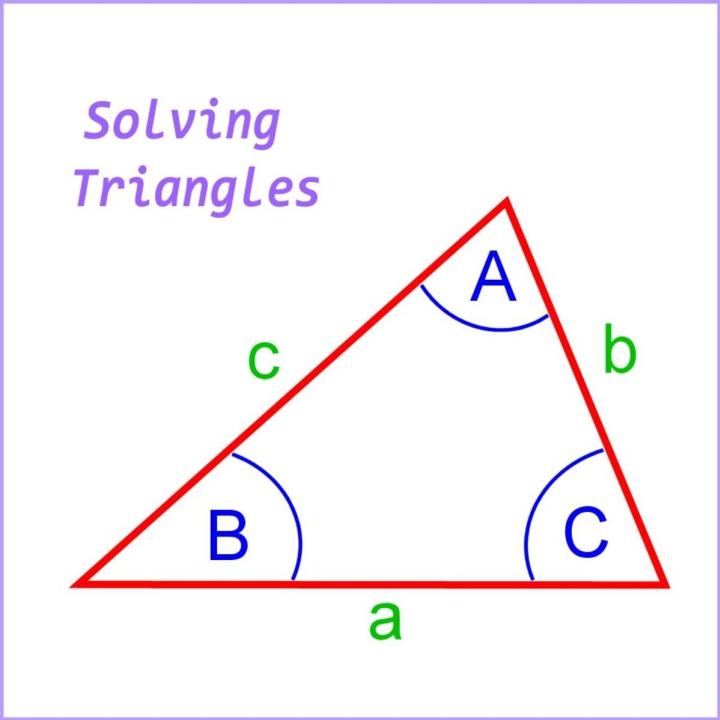
A right triangle is a triangle with one angle measuring exactly 90 degrees. The side opposite this right angle is called the hypotenuse, while the other two sides are known as the legs.
These three sides have a specific mathematical relationship that makes right triangles easier to solve than many other triangles.
The main components are:
Hypotenuse: The longest side, opposite the 90-degree angle.
Opposite side: The side directly across from a selected reference angle.
Adjacent side: The leg next to the reference angle, excluding the hypotenuse.
Right angle: The angle measuring 90 degrees.
Identifying these parts correctly is the first step toward solving a triangle. The opposite and adjacent sides depend on which acute angle you use as your reference, but the hypotenuse always remains the same.
Why Use an Online Right Triangle Calculator?
Manual calculations are useful for learning mathematical concepts, but they can become time-consuming when several values are missing or when you need to solve multiple problems.
An online right angle triangle calculator can automate the calculations and display the missing measurements within seconds. Depending on the tool, it may calculate side lengths, acute angles, area, perimeter, and other geometric properties.
Here are some common benefits.
Faster Calculations
Instead of repeatedly applying formulas, you can enter the known measurements and let the calculator solve for the unknown values. This is especially helpful when working with decimal measurements or multiple assignments.
Fewer Arithmetic Errors
Online tools reduce the risk of mistakes during multiplication, division, square-root calculations, and trigonometric operations. However, accurate results still depend on entering the correct values and selecting appropriate units.
Better Understanding of Geometry
Many calculators display diagrams alongside their answers. Seeing the calculated sides and angles can help students understand how the measurements relate to one another.
Practical Applications
Professionals and hobbyists can use these tools for estimating heights, checking dimensions, measuring slopes, and planning projects that involve perpendicular structures.
Method 1: Use the Pythagorean Theorem
The Pythagorean theorem is one of the most important formulas for solving right triangles. It describes the relationship between the two legs and the hypotenuse.
The formula is:
[
a^2+b^2=c^2
]
Here, (a) and (b) represent the legs, while (c) represents the hypotenuse.
If you know both legs, you can calculate the hypotenuse by taking the square root of the sum of their squares.
For example, suppose a right triangle has legs measuring 6 units and 8 units.
[
c=\sqrt{6^2+8^2}
]
[
c=\sqrt{36+64}=\sqrt{100}=10
]
The hypotenuse is 10 units long.
If you know the hypotenuse and one leg, you can rearrange the formula to calculate the missing leg:
[
a=\sqrt{c^2-b^2}
]
This method is particularly useful for construction projects, coordinate geometry, and problems involving diagonal distances.
An online calculator can perform these operations automatically, but understanding the formula makes it easier to check whether the result is reasonable.
Method 2: Apply Trigonometric Ratios
When you know an angle and one side, trigonometry is often the easiest way to calculate the remaining measurements.
The three fundamental trigonometric ratios are sine, cosine, and tangent.
[
\sin(\theta)=\frac{\text{opposite}}{\text{hypotenuse}}
]
[
\cos(\theta)=\frac{\text{adjacent}}{\text{hypotenuse}}
]
[
\tan(\theta)=\frac{\text{opposite}}{\text{adjacent}}
]
These ratios connect an acute angle to the lengths of the triangle's sides.
For example, imagine a right triangle with a 30-degree angle and a hypotenuse measuring 12 units.
To calculate the opposite side, use sine:
[
\text{Opposite}=12\sin(30^\circ)
]
Since (\sin(30^\circ)=0.5), the opposite side measures 6 units.
To calculate the adjacent side, use cosine:
[
\text{Adjacent}=12\cos(30^\circ)
]
The result is approximately 10.39 units.
Online calculators are especially useful for these problems because they handle trigonometric functions and decimal precision automatically.
Method 3: Calculate Missing Angles
Finding the angles of a right triangle is straightforward when one acute angle is known.
The interior angles of every triangle add up to 180 degrees. Because a right triangle contains one 90-degree angle, its two remaining angles must add up to another 90 degrees.
Therefore, if one acute angle is (\theta), the other angle is:
[
90^\circ-\theta
]
For example, if one acute angle measures 35 degrees, the remaining acute angle measures 55 degrees.
When two sides are known instead of an angle, inverse trigonometric functions can help determine the missing angles.
These functions include:
Inverse sine, written as (\sin^{-1}).
Inverse cosine, written as (\cos^{-1}).
Inverse tangent, written as (\tan^{-1}).
For example, if the opposite and adjacent sides are 3 and 4 units, respectively, the reference angle can be calculated using:
[
\theta=\tan^{-1}\left(\frac{3}{4}\right)
]
The angle is approximately 36.87 degrees, and the other acute angle is approximately 53.13 degrees.
Always check whether your calculator is set to degrees or radians. Using the wrong angle mode can produce confusing results.
How to Choose the Best Online Calculator
Not every calculator offers the same features. Some focus exclusively on side lengths, while others provide complete triangle solutions and additional geometric measurements.
When choosing a tool, consider the following factors.
Input Flexibility
A good calculator should accept common combinations of known measurements. Depending on the tool, these might include two legs, a leg and the hypotenuse, or an acute angle and a side.
Clear Visual Results
A labeled diagram makes it easier to identify which side corresponds to each calculated value. This is especially helpful when working with opposite and adjacent sides.
Unit Support
If you work with centimeters, meters, inches, or feet, check whether the calculator supports your preferred units. Keep all measurements consistent when performing manual calculations.
Angle Precision
Some problems require only whole-number angles, while others need several decimal places. Choose a calculator that displays enough precision for your task.
Additional Features
Depending on your needs, useful extras may include area, perimeter, step-by-step explanations, and the ability to solve several different triangle configurations.
For students, explanations can be more valuable than a calculator that provides answers alone. For practical measurements, a simple and accurate interface may be sufficient.
Common Mistakes When Solving Right Triangles
Even with an online calculator, a few common errors can affect the accuracy of your results.
Confusing the hypotenuse with a leg: The hypotenuse is always opposite the right angle and is the longest side.
Using the wrong trigonometric ratio: Identify the reference angle and label the opposite and adjacent sides before selecting sine, cosine, or tangent.
Mixing measurement units: Convert measurements into consistent units before calculating.
Selecting the wrong angle mode: Check whether your calculator uses degrees or radians.
Rounding too early: Keep additional decimal places during intermediate calculations and round only the final result when possible.
Entering impossible measurements: The hypotenuse must be longer than either leg. If the two legs are known, their lengths must also satisfy the Pythagorean theorem.
Checking these details helps you identify incorrect inputs before relying on the final answer.
Real-World Uses of Right Triangle Calculations
Right triangle calculations are useful far beyond classroom exercises.
Construction and Architecture
Builders use right triangles to check perpendicular corners, estimate roof dimensions, and calculate diagonal measurements. The Pythagorean theorem can help verify whether a layout follows the intended geometry.
Navigation and Surveying
Surveyors can use right triangle relationships to calculate distances and heights when combined with appropriate measurements and methods.
Ladders and Ramps
A ladder leaning against a wall forms a right triangle with the ground and wall, assuming the wall and ground meet at a right angle. Calculating the side lengths helps estimate the ladder's position and reach.
Education and Examinations
Students can use online calculators to check homework, verify trigonometric answers, and understand how changing one side affects the other measurements.
In all these applications, the calculator is most useful when the user understands the assumptions behind the geometry and enters reliable measurements.
Conclusion
Calculating the sides and angles of a right triangle becomes much easier when you understand the Pythagorean theorem, trigonometric ratios, and the relationship between the triangle's angles.
Online calculators simplify the process by handling formulas and displaying results quickly. Whether you are completing a mathematics assignment, checking construction measurements, or solving a practical geometry problem, the right tool can save time and reduce arithmetic errors.
For the best results, choose a calculator that accepts your known measurements, provides clear outputs, and supports the precision your task requires. Combine its convenience with an understanding of the underlying formulas, and you will be better equipped to solve right triangle problems accurately and confidently.