
Market Overview
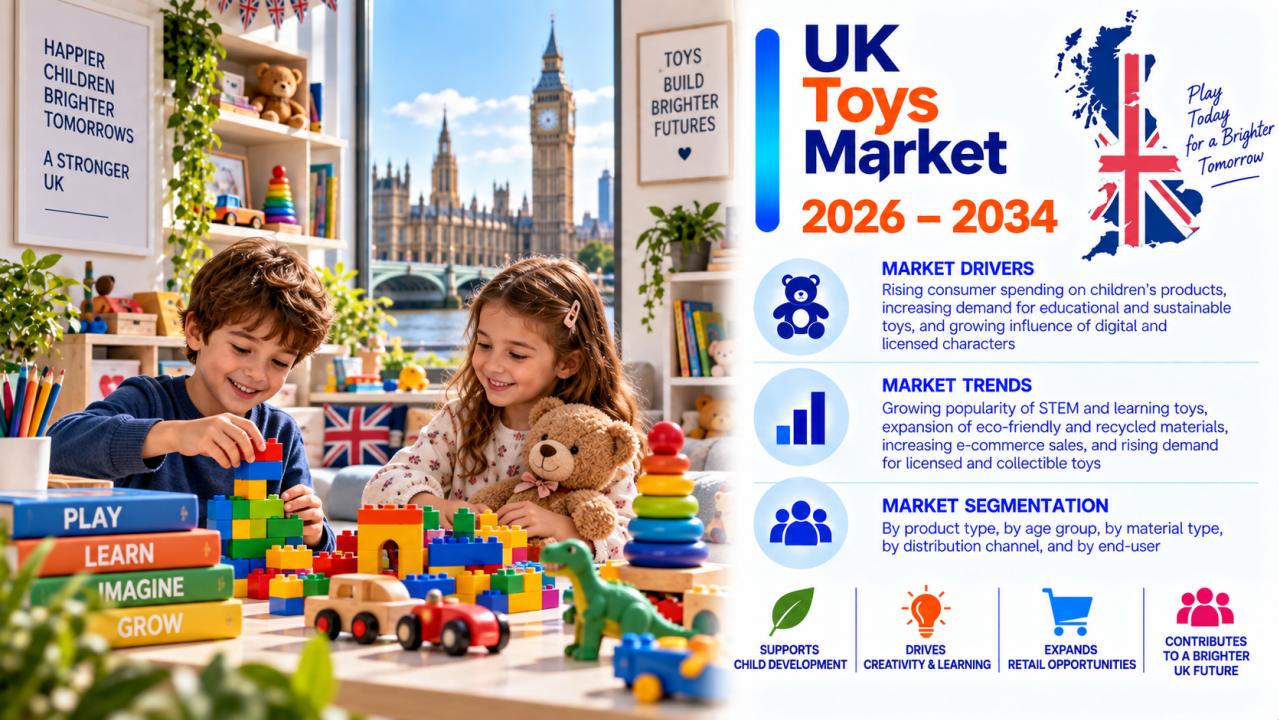
The UK toys market size increased from USD 4.0 Billion in 2025 to USD 4.5 Billion in 2026 and is projected to reach USD 7.8 Billion by 2034, growing at a compound annual growth rate (CAGR) of 7.25% from 2026 to 2034. The market is driven by the expansion of omnichannel retail and shop-in-shop models and the popularity of licensed and franchise-based products, supported by rising demand for educational, sustainable, and tech-integrated toys.
UK Toys Market Summary
- The market covers action figures, building sets, dolls, games and puzzles, sports and outdoor toys, plush, and others.
- These toys are valued for entertainment, learning, and play across age groups, with growing demand for educational, sustainable, and tech-integrated products.
- The ecosystem includes toy manufacturers, licensors, distributors, specialty and supermarket retailers, online stores, and consumers across the UK.
- Major segments include product type, age group (up to 5 years, 5 to 10 years, above 10 years), sales channel, and region (London, South East, North West, and others).
- In April 2025, The Entertainer announced plans to roll out its leading toy products across more than 2,000 Tesco Express outlets.
Porter’s Five Forces Analysis
- Competitive Rivalry: High, with global toy brands, specialty retailers, supermarkets, and online stores competing on licensed ranges, pricing, and availability. Business implication: Companies must differentiate through strong licenses and omnichannel reach.
- Supplier Power: Moderate. Entertainment franchise licensors such as Marvel, Disney, Pokémon, and Harry Potter hold leverage over popular character rights. Business implication: Manufacturers should build diversified licensing portfolios and own-brand ranges.
- Buyer Power: High. Consumers and large retailers can compare prices and switch across stores and online platforms. Business implication: Brands must focus on seasonal promotions, convenience, and personalized experiences.
- Threat of Substitutes: Moderate. Digital entertainment and video games compete for children’s leisure time. Business implication: Toy makers should integrate technology and educational features into products.
- Threat of New Entrants: Moderate. Licensing access, retailer partnerships, and brand recognition create barriers, while e-commerce lowers entry barriers. Business implication: Established players should strengthen distribution agreements and brand loyalty.
Request a Sample Report for In-Depth Market Insights: https://www.imarcgroup.com/uk-toys-market/requestsample
Market Growth Drivers
Expansion of Omnichannel Retail and Shop-in-Shop Models
The rise of omnichannel shopping, combining in-store, online, and mobile platforms, is offering consumers greater flexibility and convenience. Retailers such as The Entertainer and WHSmith are partnering with supermarkets and introducing shop-in-shop formats, making toys more accessible in everyday shopping environments. Robust e-commerce platforms, seasonal promotions, home delivery, and click-and-collect services further enhance appeal. In January 2025, Plum Play named Nikko Toys’ official distributor for the UK and Ireland, extending its product lineup with radio-controlled vehicles. These innovative distribution strategies are boosting sales and expanding the UK toys market.
Popularity of Licensed and Franchise-Based Products
Licensed toys based on popular entertainment franchises like Marvel, Disney, Pokémon, and Harry Potter continue to captivate children and collectors across the UK. These toys benefit from strong brand recognition, boosted by movies and TV series, and manufacturers time releases alongside major film premieres and holiday seasons. Retailers rely on licensed products to drive traffic and increase basket sizes, encouraging repeat purchases and brand loyalty. In August 2024, Moose Toys appointed Click Distribution (UK) to oversee its UK distribution, strengthening a partnership in place since 2019 and supporting consistent demand.
UK Toys Market Segmentation
Product Type Insights:
- Action Figures
- Building Sets
- Dolls
- Games and Puzzles
- Sports and Outdoor Toys
- Plush
- Others
Age Group Insights:
- Up to 5 Years
- 5 to 10 Years
- Above 10 Years
Sales Channel Insights:
- Supermarkets and Hypermarkets
- Specialty Stores
- Department Stores
- Online Stores
- Others
Regional Insights:
- London
- South East
- North West
- East of England
- South West
- Scotland
- West Midlands
- Yorkshire and The Humber
- East Midlands
- Others
Competitive Landscape
- The market features global toy brands, specialty retailers, supermarkets, and distributors competing on licensed products, distribution reach, and omnichannel capabilities.
Key players mentioned in the report context include:
- The Entertainer is a leading UK toy retailer. In April 2025, it announced plans to roll out a range of its leading toy products across more than 2,000 Tesco Express outlets.
- WHSmith is a UK high street retailer. In April 2024, it signed a licensing deal with WHP Global, parent of Toys “R” Us, for exclusive Toys “R” Us shop-in-shops, with 30 new outlets planned.
- Moose Toys is a toy manufacturer. In August 2024, it appointed Click Distribution (UK) to oversee its UK distribution.
- Plum Play is a children’s play products company. In January 2025, it named Nikko Toys’ official UK and Ireland distributor.
Regional Analysis
- London, South East, and East of England: Dense retail networks and strong e-commerce adoption are supporting toy demand.
- North West, West Midlands, and Yorkshire and The Humber: Supermarket and shop-in-shop availability is widening access to toys.
- Scotland, South West, East Midlands, and Others: Online stores and click-and-collect services are extending market reach.
Recent Industry Developments
October 2026: UK toy sales increased 13% in value and 19% in volume through August, supported by growing demand for affordable sensory toys and collectible products. Retailers Hamleys and The Entertainer highlighted squishy toys, including a £10 squeezy banana, among emerging trends ahead of the Christmas shopping season.
October 2026: Brand Licensing Europe returned to London with a record 325 exhibitors, up 20% year-on-year. The event attracted more than 1,000 retailers, while pre-booked meetings reached 7,200, a 14% increase from 2025, strengthening opportunities for toy companies to connect with entertainment franchises and licensed-product partners.
October 2026: UK product-safety authorities issued multiple toy alerts, including reports involving plush caterpillar toys, needle-containing pimple-popping squishies and children’s play products. Actions included removing online listings, rejecting imports and recalling products, highlighting regulatory pressure on toy manufacturers, importers and online marketplaces to improve product safety.
Key Aspects Required for the UK Toys Market
- Market Performance: USD 4.0 Billion in 2025, increasing to USD 4.5 Billion in 2026, with a projected trajectory to USD 7.8 Billion by 2034.
- Market Outlook: A 7.25% CAGR through 2034 indicates steady growth across product types, age groups, sales channels, and regions.
- Growth Drivers: Expansion of omnichannel retail and shop-in-shop models and the popularity of licensed and franchise-based products.
- Competitive Landscape: Brands, retailers, and distributors compete on licensed ranges, distribution reach, and omnichannel capabilities.
- Value Chain Analysis: From toy design and manufacturing and licensing through distribution and retail to consumers across supermarkets, specialty stores, and online channels.
- Industry Trends: Tech-integrated toys, eco-friendly and educational products, e-commerce growth, and strong holiday seasonal sales.
- Strategic Recommendations: Secure strong licensing partnerships, expand omnichannel and supermarket presence, develop sustainable and educational toys, and time launches with film releases and holidays.
Note: If you need any specific information that is not currently covered within the scope of the report, we will provide the same as a part of customization.
Speak to an analyst: https://www.imarcgroup.com/request?type=report&id=37438&flag=C
Report Format, Delivery, and Customization Details
- Report Format Mode: PDF and Excel (Editable version in PPT/Word format available on special request)
- Report Delivery Mode: Online Delivery, Physical Delivery
- Report Delivery Time: The report is delivered over email within 24 to 48 hours. If requested by the client, a physical copy will be delivered within three to ten days.
- Report Confirmation Mode: Yes, via email
- Report Customization Mode: Yes, via Email / Call
- Report Table of Content: Yes
- Report List of Figures: Yes
- Report Methodology Mode: Yes
- Request For Sample Report: Yes