How AI Turns Two Photos Into a Cinematic Zombie Couple Video
What if you could turn an ordinary photo of yourself and your partner into a scene from a zombie romance movie?
Imagine standing in an abandoned railway station, surrounded by the remains of a world that has fallen apart. Across the platform, someone familiar appears. Even though everything has changed, the connection between you remains.
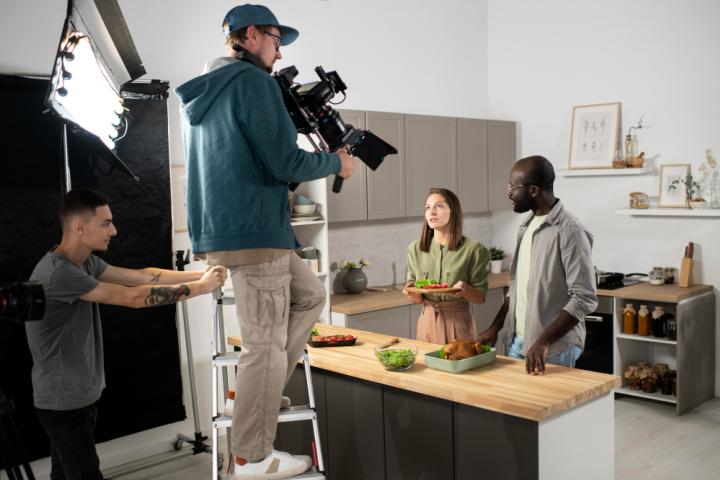
A few years ago, creating a scene like this would have required actors, costumes, filming locations, editing software, and considerable production time.
Today, AI is making personalized cinematic experiences much more accessible. Instead of producing an entire movie, people can transform their portraits into short fictional video stories.
One example of this approach is Zombie Couple Video, an AI-powered tool designed to turn two portraits into a personalized zombie-themed love story.
Why Zombie Romance Works So Well in Short Videos
Zombie stories traditionally focus on survival, fear, and the collapse of civilization. But some of their most memorable moments are surprisingly emotional.
A person recognizing someone they love, despite their transformation, can communicate an entire story without much dialogue.
This contrast between horror and romance makes zombie-themed videos particularly interesting for couples.
Rather than showing a conventional romantic scene, a zombie couple video explores a different question: What would love look like if the world had already ended?
The answer might involve a final embrace, an unexpected reunion, or a memory of happier times.
These ideas work especially well in short-form video because viewers can understand the emotional situation through visual storytelling.
From Two Portraits to a Personalized Movie Scene
Traditional photo-to-video AI tools often require users to describe the scene they want, experiment with prompts, and repeat generations until the results look acceptable.
A template-based approach offers a different experience.
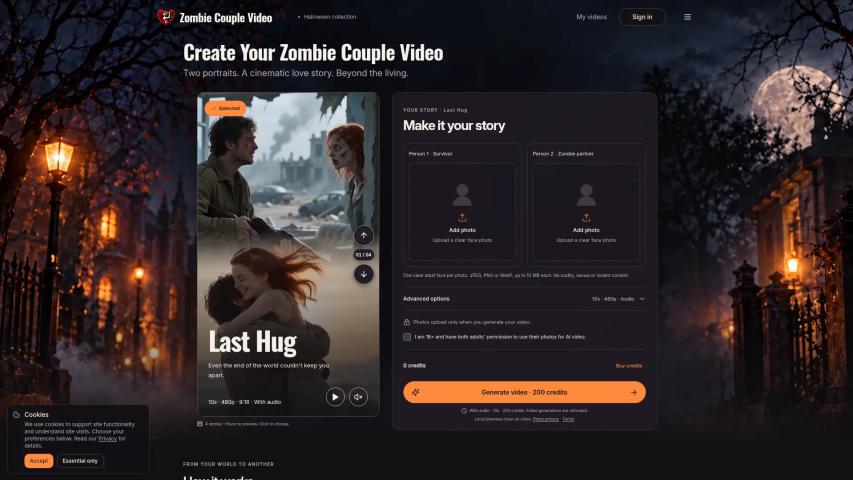
With Zombie Couple Video, users choose an existing cinematic story and personalize it with two portraits.
The process involves three main steps.
1. Choose a Cinematic Story
Users begin by selecting a video template.
Each template includes a predefined setting, camera movement, character actions, and original soundtrack.
This allows users to preview the overall story before generating their personalized version.
2. Upload Two Portraits
Next, users upload a clear portrait of each person.
One person appears as the human survivor, while the other takes the role of the zombie partner.
The images should show well-lit faces with minimal obstruction. Both people must be adults and must have given permission for their images to be used.
3. Generate and Download
After confirming the portraits and reviewing the credit cost, users can generate their personalized video.
The AI face replacement process adapts the uploaded faces to the selected cinematic template while retaining its original story, clothing, movement, and soundtrack.
Once the video is ready, users can watch and download the result.
Unlike a completely open-ended AI video generator, this workflow focuses on personalizing existing scenes rather than creating new environments or actions from scratch.
Four Different Ways to Tell a Zombie Love Story
Not every zombie romance needs to feel frightening. Some stories are melancholic, others nostalgic, and some are surprisingly warm.
Zombie Couple Video currently offers four distinct cinematic templates.
Last Hug
A survivor encounters an infected partner, while memories of a peaceful beach embrace contrast with the present.
The story captures the emotional difference between a world falling apart and a relationship that once felt safe.
The Last Train
Set around a railway station, this template moves between a zombie-themed encounter and a sunlit reunion.
It is particularly suitable for couples who like stories about finding each other again.
Until the End
This story centers on commitment, using a wedding memory as its emotional foundation.
It offers an unconventional way to express the idea of staying together through difficult times.
Our Winter
A snowy environment and a warm embrace create a quieter, more intimate atmosphere.
This template can work as a seasonal greeting or a personalized romantic keepsake.
Each story is designed as a 10-second cinematic sequence with its own soundtrack.
The available stories can be compared on the zombie couple video templates page.
Why Templates Can Be Better Than Complicated AI Prompts
Text-to-video technology gives creators considerable freedom, but that flexibility can also introduce uncertainty.
A prompt might generate unexpected characters, inconsistent clothing, or camera movements that do not match the intended scene.
For someone who simply wants a short romantic video featuring themselves and their partner, learning prompt engineering may not be particularly appealing.
Pre-designed cinematic templates solve part of that problem.
Users already know the setting, soundtrack, and general story before they begin.
Instead of describing every visual detail, they can focus on choosing a story that matches the feeling they want to express.
There is still an important limitation: AI face replacement is not always perfect.
Lighting changes, head movements, partial facial obstruction, and the quality of the uploaded portraits can affect how closely the generated characters resemble the original people.
For this reason, personalized AI videos should be understood as creative fictional interpretations rather than exact photographic reproductions.
Creative Ways to Use a Zombie Couple Video
A personalized zombie love story can serve several purposes beyond being a novelty.
Halloween surprises: Couples can create an unusual seasonal video that combines romantic storytelling with a zombie atmosphere.
Anniversary keepsakes: A story about commitment or reunion can provide a creative alternative to conventional anniversary slideshows.
Social media posts: Short vertical cinematic videos offer a distinctive format for personal storytelling.
Long-distance relationships: A fictional reunion scene can become a playful way to express the feeling of missing someone.
Personal collections: Some couples may simply enjoy seeing themselves as characters in an imaginary cinematic universe.
In each case, the value comes less from technical complexity and more from the personal connection to the characters.
The Growing Appeal of Personalized AI Entertainment
AI video generation is opening up a new category of digital entertainment.
Previously, most people consumed cinematic content created by studios, professional filmmakers, or experienced content creators.
Personalized AI tools allow individuals to become recognizable characters within fictional stories.
This changes the relationship between viewers and content.
Instead of only watching a romantic scene, people can see a creative interpretation of themselves participating in it.
Template-based tools are especially interesting because they lower the barrier to participation. Users do not necessarily need filmmaking knowledge, video editing experience, or carefully engineered prompts.
They only need an idea, suitable photographs, and a story that fits their imagination.
Final Thoughts
A memorable video does not always need elaborate effects or a long running time. Sometimes, a simple emotional moment can communicate an entire story.
Zombie Couple Video demonstrates how AI face replacement and pre-designed cinematic storytelling can turn two ordinary portraits into a personalized fictional experience.
It is not intended to replace professional video production or offer unlimited scene editing. Instead, it provides a focused way to create short zombie-themed romance videos through a straightforward workflow.
For couples who enjoy creative storytelling, Halloween themes, or unusual digital keepsakes, it offers a different way to imagine their own love story.
Explore the available stories and create your own cinematic experience at Zombie Couple Video.