Introduction
In today’s fast-paced digital world, automation is no longer optional it’s essential. With the rise of agile development and continuous integration, manual testing just can't keep up. This is where Selenium testing steps in. But how do you know if learning Selenium or enrolling in a Selenium certification course is right for you?
Whether you’re a manual tester aiming to level up or a developer looking to automate your test cases, understanding Selenium’s relevance can help you make an informed career decision. In this blog, we’ll explore what Selenium is, who should learn it, its real-world applications, and how a Selenium certification can impact your career.
What is Selenium Testing?
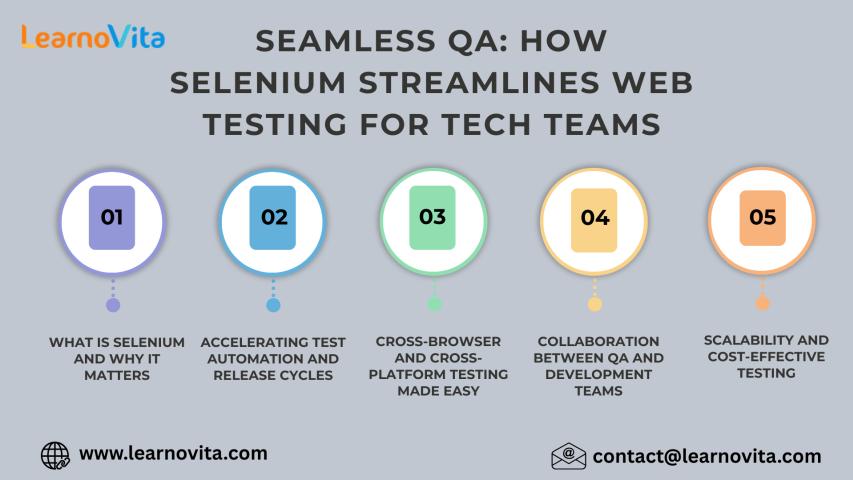
Selenium is an open-source automation testing tool used to validate web applications across different browsers and platforms. Unlike other tools, Selenium supports multiple programming languages such as Java, Python, and C#. It allows testers to write test scripts that mimic real user interactions.
Key Features:
Cross-browser compatibility
Support for multiple programming languages
Large community support
Integration with tools like TestNG, Maven, Jenkins, and Docker
Who Should Consider Selenium Testing?
1. Manual Testers Looking to Automate
If you’ve been doing manual testing and feel the pressure of faster release cycles, Selenium can help you automate repetitive tasks.
2. Developers Who Want to Automate Testing
Selenium allows developers to write tests during the development process, which helps in identifying bugs early.
3. QA Engineers Aiming for Better Career Opportunities
Many QA roles now require experience with test automation tools. A Selenium certification course can make your resume stand out.
4. Freshers Entering the Testing World
Learning Selenium as a fresher gives you an edge, especially when job listings often mention automation as a required skill.
Why Selenium? Real-World Applications
1. Web App Testing at Scale
E-commerce platforms like Amazon and Flipkart rely heavily on Selenium to ensure their websites work across browsers and devices.
2. Continuous Integration/Continuous Deployment (CI/CD)
Selenium integrates with Jenkins, making it ideal for automated pipelines.
3. Regression Testing
Whenever new features are added, Selenium scripts help ensure that existing features remain unaffected.
4. Cross-Browser Testing
Test once and run across Chrome, Firefox, Safari, and more.
Case Study: LinkedIn
LinkedIn reportedly uses Selenium for automating UI testing. This has reduced their testing time significantly, allowing faster release cycles.
Signs Selenium Testing Is Right for You
You Enjoy Logical Thinking
Automation testing requires writing scripts that simulate real-world scenarios. If problem-solving excites you, Selenium is a great fit.
You Want Career Growth
According to a report by Global Market Insights, the automation testing market size is expected to exceed $40 billion by 2027. Having Selenium certification gives you a competitive edge.
You Work in an Agile Environment
If your team follows agile or DevOps practices, automation becomes essential. Selenium can streamline your testing process.
You’re Interested in Open-Source Tools
Being free and open-source, Selenium has a large support community and frequent updates, making it a reliable long-term choice.
Benefits of Taking a Selenium Course
1. Structured Learning
Online Selenium courses offer structured content that is beginner-friendly and project-oriented.
2. Hands-On Projects
Courses often include real-life projects where you create and run your own test scripts.
3. Certification
A Selenium certification validates your skills and makes your resume more attractive to employers.
4. Industry-Relevant Tools
You’ll also get familiar with related tools like TestNG, Maven, Jenkins, and Docker.
What You Learn in a Selenium Certification Course
Syllabus Snapshot:
Basics of Web Technologies: HTML, CSS, JavaScript
Core Java or Python
Selenium WebDriver
TestNG Framework
Page Object Model (POM)
Maven & Jenkins Integration
Real-World Projects
Example Code Snippet:
WebDriver driver = new ChromeDriver();
driver.get("https://example.com");
WebElement searchBox = driver.findElement(By.name("q"));
searchBox.sendKeys("Selenium testing");
searchBox.submit();
Challenges of Selenium Testing (And How to Overcome Them)
Selenium testing offers flexibility and open-source advantages, but it comes with challenges. Test script maintenance can be time-consuming due to frequent UI changes. Cross-browser testing is complex, requiring detailed configurations. Selenium testing also lacks built-in reporting and test management tools. Synchronization issues may arise with dynamic content, causing flaky tests. To overcome these, use frameworks like TestNG or JUnit for better structure and reporting, and implement Page Object Model (POM) for easier maintenance. Leverage cloud-based testing platforms for seamless cross-browser support. Incorporate explicit waits to handle dynamic content effectively. With the right strategies, Selenium testing can be made robust and efficient.
1. Steep Learning Curve
Solution: Start with a beginner-friendly Selenium course that covers basics before diving into frameworks.
2. Limited to Web Applications
Solution: Pair Selenium with other tools if you need to test mobile or desktop apps.
3. Dynamic Web Elements
Solution: Use advanced locators like XPath and CSS selectors, and practice regularly.
Tools That Complement Selenium
TestNG: For assertions and test case management.
Maven: For managing project dependencies.
Jenkins: For CI/CD pipeline integration.
Docker: For running tests in containers.
These tools are usually included in advanced Selenium certification courses.
Selenium Career Paths and Salaries
Automation Test Engineer: $75,000 - $100,000/year
SDET (Software Development Engineer in Test): $90,000 - $120,000/year
QA Automation Lead: $110,000 - $140,000/year
With a Selenium certification, these roles become more accessible.
Step-by-Step: How to Start With Selenium
Step 1: Learn Basic Programming (Java or Python preferred)
Step 2: Understand Web Technologies (HTML, CSS, JS)
Step 3: Take a Selenium Course
Step 4: Practice with Real-World Projects
Step 5: Earn a Selenium Certification
Step 6: Apply for Automation Testing Roles
Key Takeaways
Selenium is a powerful tool for web application testing.
It’s suitable for manual testers, developers, and freshers alike.
Real-world demand for automation testers is growing rapidly.
A Selenium certification course can accelerate your learning and job prospects.
Conclusion
If you want to future-proof your testing career and gain hands-on skills, Selenium testing is a smart investment. Start learning today with a comprehensive Selenium course and earn your Selenium certification.
Ready to become a certified Selenium tester? Enroll in a Selenium certification course today!