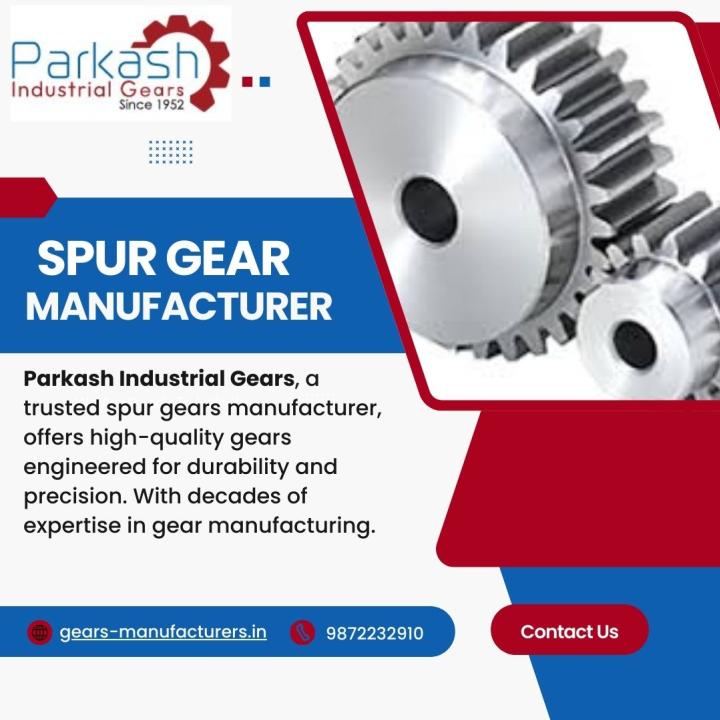

Spur gears serve as fundamental components across numerous industrial and automotive applications, prized for their straightforward design and operational efficiency. However, their performance and longevity depend heavily on manufacturing precision. When these gears fail prematurely, the consequences can range from costly downtime to complete system breakdowns. This makes understanding failure mechanisms and prevention methods essential for any operation relying on gear-driven systems.
The Primary Causes of Spur Gear Failure
Several critical factors contribute to spur gear failures, each presenting unique challenges for equipment operators and maintenance teams. Material selection stands as one of the most fundamental considerations, where substandard or inappropriate materials inevitably lead to premature wear, surface pitting, and eventual tooth fracture. Reputable manufacturers understand that material choice must align perfectly with application demands, typically opting for hardened steels, specialized alloys, or case-hardened materials to ensure optimal performance under stress.
Lubrication issues represent another common failure point. Inadequate lubrication creates excessive friction, generating heat that accelerates wear patterns. The problem compounds when lubricants become contaminated with environmental particulates or metal shavings, creating an abrasive mixture that actively damages gear surfaces. Proper lubrication protocols and contamination control measures become essential for long-term gear health.
Installation precision plays an equally critical role. Even minor misalignments during assembly create uneven stress distribution across gear teeth, leading to abnormal wear patterns, increased operational noise, and eventual mechanical failure. These alignment issues often stem from improper installation techniques or inadequate quality control during the assembly process.
Operational stresses frequently push gears beyond their designed capacity. Overloading conditions create microscopic fractures in gear teeth that propagate over time through metal fatigue, ultimately resulting in catastrophic tooth failure. This type of damage proves particularly common in applications with variable or unpredictable load demands.
Manufacturing defects remain perhaps the most preventable yet impactful failure source. Imperfections in machining accuracy, inconsistencies in heat treatment processes, or surface finishing flaws all compromise gear integrity from the outset. These manufacturing shortcomings create weak points that inevitably fail under operational stresses.
How Quality Manufacturers Prevent Gear Failures
Leading spur gear manufacturers implement comprehensive quality assurance protocols to address these failure modes systematically. Their approach begins with precision engineering, where advanced CAD/CAM software models optimize gear tooth geometry for smooth meshing and even load distribution. This digital design phase allows engineers to simulate performance under various conditions before physical production begins.
Material selection receives meticulous attention, with manufacturers conducting rigorous testing of hardness, tensile strength, and fatigue resistance before approving materials for production. The application of specialized heat treatments and surface hardening techniques further enhances material properties, tailoring them to specific operational environments and stress profiles.
Modern gear manufacturing companies employ state-of-the-art CNC grinding equipment to achieve micron-level accuracy in tooth dimensions. Complementary processes like shot peening introduce beneficial compressive stresses that dramatically improve fatigue resistance. Surface treatments including carburizing and nitriding create hardened exterior layers that resist wear while maintaining tough, fracture-resistant cores.
Quality verification represents a critical phase in premium gear production. Coordinate measuring machines (CMM) perform exhaustive dimensional inspections, while specialized test rigs subject prototype gears to simulated operational conditions. Vibration analysis and acoustic testing identify potential performance issues before gears enter service.
Beyond physical manufacturing, reputable providers offer comprehensive support in lubrication selection and maintenance planning. Their technical teams provide application-specific guidance on proper installation techniques, alignment verification methods, and preventive maintenance schedules that maximize service life.
Industry-Leading Manufacturing Practices
Prakash Industrial Gears exemplifies this quality-focused approach through its vertically integrated manufacturing process. The company's engineering team begins each project with thorough application analysis, ensuring gear designs precisely match operational requirements. Their production facilities maintain ISO-certified quality systems that govern every manufacturing step, from raw material inspection to final product testing.
The company's testing protocols include accelerated life testing that subjects gears to extreme conditions far beyond normal operating parameters. This rigorous validation process ensures real-world reliability and helps identify potential failure modes before production scaling. Custom engineering solutions allow for performance optimization in specialized applications, from high-speed automotive systems to heavy industrial machinery.
Ensuring Long-Term Gear Performance
The prevention of spur gear failures requires a holistic approach that begins with quality manufacturing and extends through proper application and maintenance. By partnering with manufacturers who prioritize precision engineering, material excellence, and rigorous testing, industrial and automotive operators can significantly reduce failure risks. This proactive approach to gear selection and maintenance translates to improved system reliability, reduced downtime, and lower total cost of operation across the equipment lifecycle.
For operations demanding the highest levels of reliability, investing in quality-manufactured spur gears from reputable suppliers represents the most effective strategy for preventing failures and optimizing mechanical system performance. The combination of advanced manufacturing techniques, thorough testing protocols, and application-specific engineering support provides the foundation for durable, high-performance gear solutions.