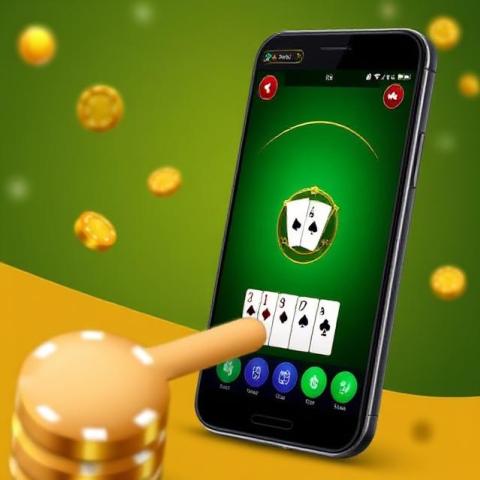

The landscape of online gaming has undergone a revolutionary transformation in recent years, driven by technological advancements such as artificial intelligence (AI) and machine learning (ML). Among the many genres of online gaming, poker holds a unique place due to its blend of skill, psychology, and chance. Today, the integration of AI and ML in poker game development is not just a trend—it's a fundamental shift redefining player experiences. From enhancing opponent intelligence to offering personalized gaming journeys, AI is pushing the boundaries of what’s possible in digital card games.
As the demand for more challenging and realistic gameplay rises, Poker App Developers and Poker Game Developers are harnessing AI to craft opponents that learn, adapt, and play like seasoned human players. This article delves deep into how AI and ML are reshaping poker game app development, the benefits for developers and players, and how companies—especially Poker Game Development Companies in India—are leading the charge in this innovative domain.
The Evolution of Poker Game Development
Historically, poker video games relied on predefined logic trees or basic algorithms to simulate opponents. These virtual players lacked depth and adaptability, making the experience predictable and often dull. However, with the evolution of poker game development services, there’s been a conscious effort to mirror the unpredictability and depth of real-world poker.
Modern Poker Game Developers now leverage AI and ML to simulate human-like decision-making. These technologies allow digital opponents to "read" the table, calculate odds, adapt to player behavior, and even bluff—just like a human would. This level of sophistication has raised the standard for poker game app development, making AI-powered opponents a benchmark of quality in the industry.
How AI Enhances Poker Opponents
AI in poker does more than follow a rulebook. It evolves. AI-driven poker opponents are programmed using complex neural networks and reinforcement learning models. These systems can:
- Analyze Historical Data: AI algorithms study thousands—if not millions—of hands to learn optimal strategies.
- Predict Opponent Behavior: By observing betting patterns, AI can predict what a human player is likely to do next.
- Adapt in Real-Time: Unlike static bots, AI opponents adjust their strategy on-the-fly based on ongoing gameplay.
- Bluff and Trap: With enough data, AI can effectively employ strategies like bluffing, making it more human-like and harder to beat.
This level of intelligence transforms the game from a routine match into a dynamic, evolving challenge, offering a more immersive experience for players.
Machine Learning: The Backbone of Smart Opponents
Machine learning is the core driver of intelligent behavior in poker bots. ML models are trained using reinforcement learning—where the system learns optimal actions by receiving rewards or penalties. In the context of poker, the AI is rewarded for winning hands or making statistically sound decisions, and penalized for poor choices.
One of the most notable advancements in this area was the development of Libratus and Pluribus, poker-playing AIs that defeated professional human players in heads-up and multiplayer formats, respectively. These milestones showcased the raw potential of ML in mastering the nuances of poker, a game previously thought too complex for machines to dominate.
Incorporating similar models, Poker Game Development Companies are creating commercial-grade AI that doesn't just follow rules—it learns, evolves, and surprises.
Benefits for Players and Developers
For Players:
- Challenging Gameplay: No more beating static bots; AI offers a realistic challenge.
- Skill Development: Facing smart opponents helps players improve their own strategies.
- Personalized Experiences: AI can tailor gameplay difficulty to match player skill levels.
For Developers:
- Increased Engagement: Smart opponents keep players returning, boosting retention metrics.
- Scalability: AI can power thousands of games simultaneously, without human oversight.
- Monetization: Premium AI opponents can be monetized via subscriptions or in-game purchases.
Poker App Developers understand that engagement is directly tied to the quality of gameplay. AI-driven experiences lead to higher user satisfaction, which in turn drives revenue and growth.
The Role of Poker Game Development Companies
The creation of intelligent poker opponents requires a multidisciplinary approach combining game design, data science, and behavioral psychology. This is where a seasoned Poker Game Development Company plays a crucial role. They bring together expert developers, data analysts, and UI/UX designers to craft seamless AI-integrated poker experiences.
Moreover, top-tier companies also offer robust poker game development services that include:
- AI strategy integration
- Backend architecture for real-time gameplay
- Advanced analytics and player tracking
- Cloud deployment for scalability
- Security modules to prevent cheating
By leveraging such comprehensive services, Poker Game Developers can ensure that their AI-driven games not only perform optimally but also remain fair and engaging.
Why India is a Global Hub for AI-Powered Poker Game Development
India has emerged as a powerhouse in software development, and the gaming sector is no exception. A growing number of Poker Game Development Companies in India are now specializing in AI-infused gaming platforms. These companies offer cost-effective yet high-quality development services, making them ideal partners for international clients.
India’s strengths in this domain include:
- Technical Expertise: A large talent pool proficient in AI, ML, and full-stack development.
- Cost Efficiency: Competitive pricing without compromising on quality.
- Time Zone Advantage: Convenient for global collaboration.
- Innovative Mindset: Startups and enterprises alike are pushing the boundaries of what’s possible in AI gaming.
- Many global Poker Game App Development projects are now outsourced to India, benefiting from rapid delivery timelines and state-of-the-art tech stacks.
Use Cases of AI in Commercial Poker Apps
Several real-world applications demonstrate how AI is being used to enrich the poker gaming experience:
- Dynamic Difficulty Adjustment: The AI adjusts the game difficulty based on player performance.
- Player Behavior Analysis: AI tracks behavioral patterns and suggests improvements.
- Cheat Detection: AI can identify suspicious patterns that indicate potential cheating.
- Real-Time Coaching: Some apps provide live tips and analysis to help users refine their play.
- Game Personalization: Based on preferences and habits, AI curates a unique experience for each user.
Such features not only elevate user satisfaction but also foster a more ethical and competitive gaming environment.
Challenges and Ethical Considerations
Despite the numerous advantages, AI in poker game development is not without challenges:
- Over-optimization: Super-intelligent bots might make the game too hard for casual players.
- Fairness: Ensuring AI doesn’t gain an unfair advantage through data access.
- Transparency: Players need to know when they are playing against an AI and how it works.
- Security: AI systems must be secured to prevent manipulation or exploitation.
Responsible Poker App Developers must strike a balance between challenge and accessibility. This includes integrating explainability features into AI, such as displaying why certain moves were made, or offering player control over difficulty levels.
Future Trends in AI and Poker Game Development
Looking ahead, several trends are poised to redefine the AI-poker nexus:
- Emotion AI: Future bots might detect player frustration or excitement and adjust strategies accordingly.
- Natural Language Processing: AI could eventually interpret chat interactions to inform gameplay decisions.
- Multiplayer AI Integration: AI that can function effectively in multiplayer settings, adapting to various personalities and >
- Cross-Platform Intelligence: Unified AI that learns across web, mobile, and console platforms.
As these innovations become mainstream, Poker Game Developers must evolve rapidly to keep up, offering more immersive and personalized experiences than ever before.
Choosing the Right Poker Game Development Partner
For entrepreneurs and companies looking to launch AI-powered poker platforms, choosing the right development partner is crucial. Here’s what to look for in a Poker Game Development Company:
- AI/ML Expertise: Proven experience in integrating machine learning models into gaming systems.
- Comprehensive Services: End-to-end development including design, testing, deployment, and post-launch support.
- Customization: Ability to tailor AI strategies based on your game’s target audience.
- Scalability: Infrastructure that supports millions of concurrent users.
- Security Protocols: Encryption, anti-cheat measures, and data protection.
India remains a highly attractive destination for such partnerships due to its strong IT ecosystem and an abundance of skilled Poker Game Developers.
Conclusion
AI and machine learning are ushering in a golden era for poker game development. They’re not just making opponents smarter—they’re redefining the very way poker is played online. With smarter, more adaptive virtual players, the experience becomes more thrilling, challenging, and rewarding.
As Poker App Developers continue to push the envelope, the collaboration with seasoned Poker Game Development Companies—especially those in India—will be instrumental in creating next-gen poker platforms. Whether you're a gaming startup or an established brand, embracing AI-powered poker solutions is no longer optional—it's essential for staying competitive in today’s fast-evolving digital landscape.
FAQs
1. How does AI improve the quality of poker gameplay?
AI enhances gameplay by creating adaptive, realistic opponents who can learn, bluff, and adjust strategies in real-time, offering players a more engaging and challenging experience.
2. Are AI-powered poker games fair for casual players?
Yes, most AI systems are designed to match the skill level of players and adjust difficulty accordingly, ensuring fair and enjoyable gameplay for beginners and pros alike.
3. Why are Poker Game Development Companies in India gaining popularity?
India offers a combination of technical expertise, cost-efficiency, and innovation, making its development companies highly sought-after for AI-driven poker game projects.
4. Can AI help detect cheating in poker games?
Absolutely. AI systems can analyze player behavior and identify suspicious patterns that indicate potential cheating or unfair gameplay tactics.
5. What should I look for in a Poker Game Development Company?
Look for AI/ML capabilities, comprehensive services, scalability, security protocols, and customization options that align with your game’s vision and audience.