India’s digital payment ecosystem has rapidly evolved, with mobile recharge software playing a vital role in transforming how services are delivered to end-users. As digital retail grows, the demand for secure and scalable mobile recharge software continues to rise. These platforms not only ensure smooth and real-time transactions but also boost operational efficiency for retailers, agents, and distributors in both urban and rural areas.
In this article, we’ll explore how security and scalability in mobile recharge software improve transaction efficiency and support the expansion of digital financial services across India.
What Is Mobile Recharge Software?
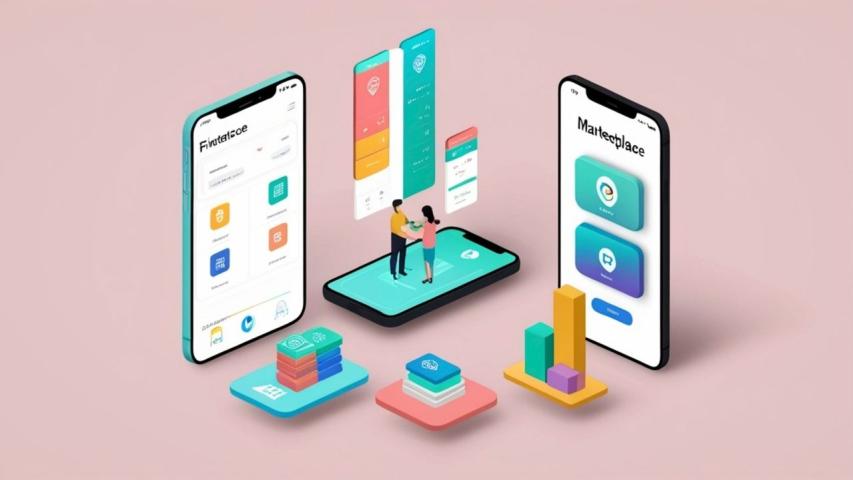
Mobile recharge software is a web-based or app-based platform that enables digital retailers to perform mobile recharges, DTH recharges, data top-ups, and utility bill payments for customers. These platforms are commonly integrated with multi-operator APIs, offering services from all major telecom providers through a single dashboard.
Retailers use this software to deliver real-time services, while earning commissions for each successful transaction. For fintech companies and developers, this software becomes a foundation for offering multiple services—making it a core tool in India’s digital financial network.
Why Security Is Non-Negotiable in Recharge Platforms
With rising cyber threats and digital frauds, security is the first priority in any fintech platform. A mobile recharge software handles thousands of transactions daily, involving customer data, payment information, and wallet balances. Without proper protection, this data becomes vulnerable.
Here’s how a secure mobile recharge platform protects users and builds trust:
1. End-to-End Encryption
Modern recharge software ensures that all data is encrypted during transmission. This prevents unauthorized access, especially during wallet loading, payment processing, or user login.
2. Two-Factor Authentication (2FA)
Retailers and distributors often log in to their software using OTPs or security pins. This two-step process makes it harder for unauthorized users to access accounts even if credentials are leaked.
3. Role-Based Access Control
Admins, retailers, and agents have different permissions within the platform. This limits access to sensitive information and reduces misuse.
4. Regular Data Backups
Top mobile recharge platforms take regular data backups, ensuring that transaction history and financial records are never lost due to technical failures.
5. Secure Wallet Management
Digital wallets within the software are equipped with fraud monitoring systems that flag suspicious activity and prevent misuse.
Together, these features make mobile recharge software reliable and trustworthy for digital retailers and their customers.
Scalability: The Power to Grow Without Disruption
Scalability refers to the software’s ability to handle increasing loads more users, more transactions, and more services without performance issues.
Here’s why scalability is a game-changer in mobile recharge software:
1. Supports Expanding Retail Networks
As fintech businesses add more agents, distributors, and B2B partners, the software must support hundreds or thousands of concurrent users. Scalable software maintains fast response times and smooth performance even during peak hours.
2. Adds New Services Easily
A scalable recharge platform can easily integrate new APIs for additional services like AEPS, DMT, BBPS, and micro ATM. This ensures business growth without requiring a system overhaul.
3. Handles Transaction Spikes
During festivals, salary dates, or national recharges, the volume of transactions can spike dramatically. Scalable systems handle these loads seamlessly, avoiding downtime or failed recharges.
4. Improves Agent Performance
Scalable platforms run without lag, allowing agents and retailers to serve more customers in less time. This directly improves business efficiency and profitability.
Efficiency Through Automation and Real-Time Processing
Mobile recharge software is designed to streamline daily tasks for digital retailers. Real-time processing and automation are key features that contribute to fast, error-free services.
-
Instant Recharge Confirmation: As soon as a recharge is processed, the customer gets a confirmation SMS, and the retailer sees it updated on their dashboard.
-
Automated Commission Credit: Retailers receive their commission instantly after a successful transaction, eliminating delays and increasing transparency.
-
Bulk Recharge Options: For distributors managing multiple agents, bulk recharge features save time and effort by automating the process.
-
Detailed Reporting Tools: The software provides transaction history, ledger reports, and wallet balances in a single view, simplifying account management.
All these features enhance transaction efficiency while ensuring smooth customer service delivery.
Why Mobile Recharge Software Is a Cornerstone of India’s Fintech Growth
In today’s digital era, financial inclusion means providing digital services even in the remotest parts of India. Mobile recharge software has become a key enabler for this transformation.
By empowering local shopkeepers to offer prepaid recharges and bill payments, the software turns them into digital service providers. It reduces dependence on physical recharge coupons or travel to far-off service centers. For customers, this means faster access, more convenience, and digital confidence.
Moreover, such platforms often integrate other services like AEPS banking software, money transfer software, PAN card service insurance, and utility billing under one roof. This makes the software a multi-service fintech engine.
Conclusion
Secure and scalable mobile recharge software plays a vital role in ensuring that digital transactions are fast, safe, and reliable. As fintech continues to expand in India, the software must keep up with evolving user demands, security requirements, and transaction volumes. With the right platform, digital retailers can deliver excellent service, earn better commissions, and contribute to the country’s digital mission.