The rise of digital payments has significantly altered the landscape of business transactions, particularly in India, where a rapidly growing economy is increasingly moving toward a cashless, digital-first approach. Among the most influential technologies in this transition is AEPS B2B software, which is revolutionizing business-to-business (B2B) payments and settlements. AEPS, or Aadhaar Enabled Payment System, has already transformed the way businesses in India manage their financial transactions. As the digital economy continues to expand, AEPS B2B software is poised to play an even more pivotal role in shaping the future of India’s financial ecosystem.
In this article, we’ll explore key trends and insights into the future of AEPS B2B software, focusing on its impact on India’s digital economy and the opportunities it offers for businesses.
What is AEPS B2B Software?
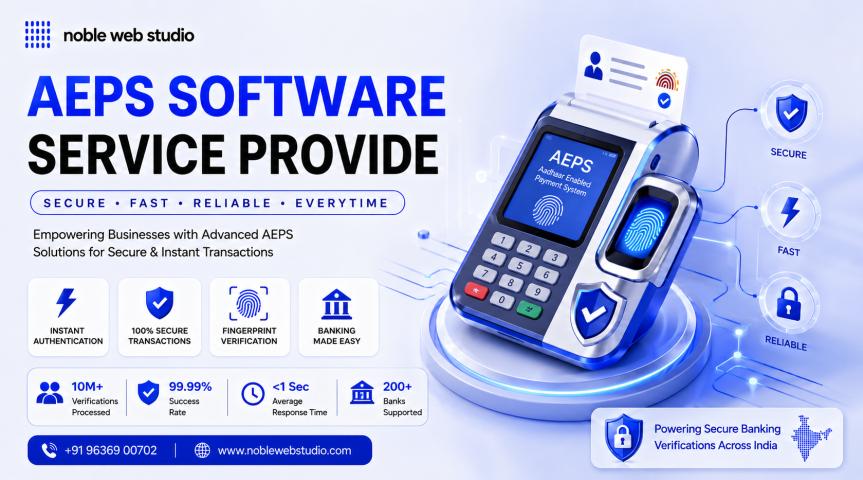
AEPS B2B software is an advanced financial technology solution that uses Aadhaar, India's unique identification system, to facilitate secure and efficient digital transactions between businesses. AEPS allows transactions to be verified and authorized using biometric data (such as fingerprints or iris scans) linked to an individual's Aadhaar number, ensuring a high level of security. This system allows businesses to process payments, fund transfers, and other financial transactions without the need for traditional banking infrastructure.
By integrating AEPS with B2B software, businesses can streamline their financial operations, reduce the time and cost associated with transactions, and enhance security, making it an essential tool for the future of India’s digital economy.
Key Trends Shaping the Future of AEPS B2B Software
1. Expansion of Digital Payments Across Industries
As India’s economy continues to shift toward digitalization, more sectors and industries are adopting AEPS B2B software to facilitate payments and financial transactions. The government’s push toward a cashless economy, combined with initiatives like Digital India, has accelerated the adoption of digital payment methods in both urban and rural areas.
In industries such as logistics, manufacturing, retail, and e-commerce, AEPS B2B software is enabling seamless transactions between suppliers, distributors, and vendors. As businesses realize the benefits of AEPS, including reduced transaction costs and faster processing times, the demand for AEPS B2B solutions is set to grow rapidly in the coming years.
2. Increased Financial Inclusion for Small and Medium Enterprises (SMEs)
One of the most significant advantages of AEPS B2B software is its ability to promote financial inclusion, especially for small and medium enterprises (SMEs) in India. SMEs, which make up a substantial portion of the Indian economy, often struggle with access to formal financial services due to a lack of infrastructure, particularly in rural areas.
AEPS B2B software addresses this challenge by enabling SMEs to perform digital transactions securely using just their Aadhaar card and biometric data, even in areas where traditional banking facilities are scarce. As more SMEs adopt AEPS, this technology will play a crucial role in bridging the gap between India’s urban and rural economies and fostering greater participation in the digital economy.
3. Biometric Security and Enhanced Fraud Prevention
Security remains a top concern in digital transactions, particularly for B2B payments where large sums of money are exchanged. AEPS B2B software offers a high level of security by using biometric authentication methods, such as fingerprints or iris scans, to verify the identity of the person initiating the transaction. This is far more secure than traditional PINs or passwords, which are vulnerable to hacking.
As fraud prevention continues to be a critical issue for businesses, the adoption of AEPS B2B software will help reduce instances of unauthorized access and fraudulent transactions. With India’s growing focus on secure digital payments, AEPS is set to become an even more trusted and essential tool for businesses.
4. Integration with Emerging Technologies
As technology continues to evolve, AEPS B2B software is expected to integrate with emerging technologies like Artificial Intelligence (AI) and Blockchain. AI can enhance the capabilities of AEPS B2B software by analyzing transaction data in real time, detecting fraudulent activity, and offering predictive insights that can improve decision-making for businesses.
On the other hand, blockchain technology can further improve transparency, security, and efficiency in B2B transactions. By integrating blockchain with AEPS B2B software, businesses can enjoy greater accountability and reliability in their financial transactions, making it more difficult for fraudsters to tamper with transaction records.
5. Real-Time Transaction Processing
In today’s fast-paced business environment, real-time processing of payments and transactions is crucial. AEPS B2B software offers businesses the advantage of real-time transaction processing, enabling immediate settlement of payments. This reduces delays in business operations, which is particularly beneficial for industries that rely on quick payments, such as retail and logistics.
As businesses become more accustomed to faster, real-time payments, AEPS will continue to evolve to meet the growing demand for speed and efficiency in B2B transactions. This trend is likely to expand as more industries embrace digital payments and move away from traditional payment methods that take longer to process.
6. Government Support and Policy Initiatives
The Indian government has been a strong advocate for the adoption of digital payments and the financial inclusion of underserved communities. Policies such as the promotion of the Aadhaar system and the implementation of Digital India initiatives are critical in ensuring the widespread acceptance of AEPS B2B software.
The government’s continued support for AEPS and its integration into the financial ecosystem will drive its growth in the B2B sector. Furthermore, regulations that encourage the adoption of secure digital payment systems will help businesses transition to AEPS B2B software with greater confidence.
Opportunities for Businesses with AEPS B2B Software
1. Cost Savings
AEPS B2B software allows businesses to reduce transaction costs by eliminating the need for intermediaries and traditional banking infrastructure. By moving to digital transactions, businesses can avoid hefty processing fees and reduce their overall operational costs, making AEPS an attractive option for companies looking to improve their bottom line.
2. Competitive Advantage
As AEPS B2B software continues to gain traction, businesses that adopt this technology early on will have a competitive edge over those that rely on outdated payment methods. By adopting AEPS, businesses can offer faster, more secure, and cost-effective transaction options, which can help attract new clients and strengthen relationships with existing ones.
3. Improved Customer Experience
The seamless integration of AEPS B2B software into business operations enhances the overall customer experience. Clients and partners can benefit from quicker payments and reduced transaction-related errors, fostering stronger business relationships and increasing customer satisfaction.
Conclusion
The future of AEPS B2B software in India’s digital economy is bright, with emerging trends such as real-time processing, enhanced security, and government support driving its growth. As businesses increasingly embrace digital payments, AEPS will play a critical role in transforming business-to-business transactions, improving financial inclusion, and streamlining operations across industries.
For businesses looking to stay ahead in the digital age, adopting AEPS B2B software is essential. Noblewebstudio offers cutting-edge AEPS solutions that empower businesses to thrive in a secure and efficient digital environment. By leveraging AEPS technology, businesses can position themselves for success in India’s rapidly growing digital economy.