
Python has a rich ecosystem of libraries that simplify development in areas like data science, web development, machine learning, and more. Below is a categorized guide to the most commonly used libraries and what they are best known for.
1. Data Manipulation and Analysis
Pandas
A powerful library for data manipulation using DataFrames (similar to Excel tables). Great for cleaning, analyzing, and visualizing structured data.NumPy
Supports large, multi-dimensional arrays and matrices, along with mathematical functions. It’s the foundation for most numerical computing in Python.
2. Data Visualization
Matplotlib
A basic plotting library for line graphs, bar charts, histograms, and more.Seaborn
Built on top of Matplotlib, it provides a high-level interface for attractive statistical graphics.
3. Machine Learning
Scikit-learn
Offers simple tools for data mining and machine learning. Perfect for classification, regression, clustering, etc.TensorFlow / PyTorch
Deep learning frameworks used for building neural networks. PyTorch is preferred for research and ease of use; TensorFlow is widely used in production environments.
4. Web Development
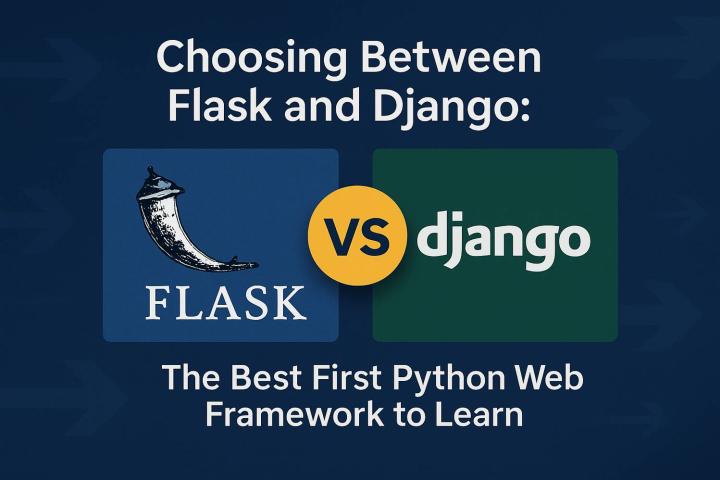
Flask
A lightweight web framework ideal for small applications and APIs.Django
A full-featured framework for building large web applications with built-in admin, ORM, and user authentication.
5. Automation and Scripting
Requests
Simplifies HTTP requests. Ideal for APIs and web scraping.BeautifulSoup
Parses HTML and XML documents. Used with Requests for scraping websites.
6. Development Tools
Virtualenv / venv
For creating isolated Python environments.pytest
A popular testing framework for writing simple or complex unit tests.