Whether you're an architect, designer, contractor, or sales consultant, explaining the benefits of Acoustic Spray to clients can be a game-changer — if done right. While the product is packed with technical advantages, clients often need more than data sheets to be truly convinced. They need relevance. They need stories. They need solutions to their problems.
This article walks you through dynamic and practical ways to effectively position Acoustic Spray as the sound solution your clients didn't know they needed.
Start with a Sound Problem They Can Relate To
Instead of diving into technical jargon, begin your conversation with an experience:
“Have you ever been in a restaurant where you could barely hear the person next to you?”
This approach sets the tone for why Acoustic Spray matters. By making clients feel the discomfort caused by poor acoustics — in offices, cafes, schools, or even their homes — you’re connecting emotionally before introducing the solution.
From there, position Acoustic Spray as the remedy for echoey environments, noisy distractions, and communication hurdles.
Show, Don’t Just Tell — Use Demonstrations
Telling someone that Acoustic Spray reduces reverberation and improves speech clarity is one thing. Showing them the results is another.
Share video walkthroughs of before-and-after acoustic treatments.
Bring sound meters to meetings.
Conduct live demonstrations in a treated vs untreated space.
Visual and auditory proofs create stronger impact than PDFs. Clients are more likely to be convinced when they see and hear the difference Acoustic Spray makes.
Use the Language of Their Industry
Each industry has its own set of pain points. Speak to them directly.
For educational institutions: emphasize how Acoustic Spray creates quieter classrooms, which boosts student focus and teacher audibility.
For corporate spaces: highlight how it enhances speech privacy in open-plan offices and conference rooms.
For hospitality: explain how better acoustics improve guest satisfaction and increase repeat visits.
The versatility of Acoustic Spray is one of its biggest strengths. Make sure your clients know it can be tailored to their world.
Break the Misconceptions with Facts and Comparisons
Some clients may already have assumptions:
“Isn’t Acoustic Spray just like regular insulation?”
“Won’t it ruin the aesthetics of my ceiling?”
This is your opportunity to shine with clarity. Explain how Acoustic Spray is not conventional insulation — it’s a high-performance finish that absorbs sound rather than simply blocking it.
Use side-by-side comparisons:
Application:
Acoustic Spray: Seamless, spray-on application that bonds directly to most surfaces.
Traditional Panels: Require mounting or suspension systems, increasing installation time and complexity.
Aesthetics:
Acoustic Spray: Offers smooth or textured finishes that maintain visual harmony.
Traditional Panels: Often visible and boxy, potentially disrupting the design aesthetic.
Maintenance:
Acoustic Spray: Low-maintenance and easy to clean.
Traditional Panels: Tend to collect dust and require more regular upkeep.
Design Freedom:
Acoustic Spray: Highly adaptable to complex surfaces such as curves, vaults, and irregular shapes.
Traditional Panels: Limited flexibility and not ideal for unconventional geometries.
Facts, delivered in a visually compelling format, help eliminate doubt.
Lean on Certifications and Green Credentials
In today’s market, sustainability sells. Emphasize that Acoustic Spray solutions are often made from recycled or low-VOC materials and contribute to LEED or WELL building certifications.
This can be particularly persuasive for clients with ESG targets or green building mandates. When you show that Acoustic Spray aligns with their larger mission — not just their walls — you elevate the product from a “nice-to-have” to a “must-have.”
Tell Success Stories, Not Just Features
Humanize the product. Case studies and testimonials carry more weight than specification sheets.
"After applying Acoustic Spray in our co-working space, complaints about noise dropped by 80%."
"Our luxury hotel lobby maintained its minimalist design while drastically reducing sound bounce, thanks to Acoustic Spray."
Such stories showcase real-world benefits in a relatable format. Include project images, quotes from happy clients, and acoustic performance stats to seal the deal.
Address the Aesthetic Advantage
One common fear? A belief that soundproofing = ugly.
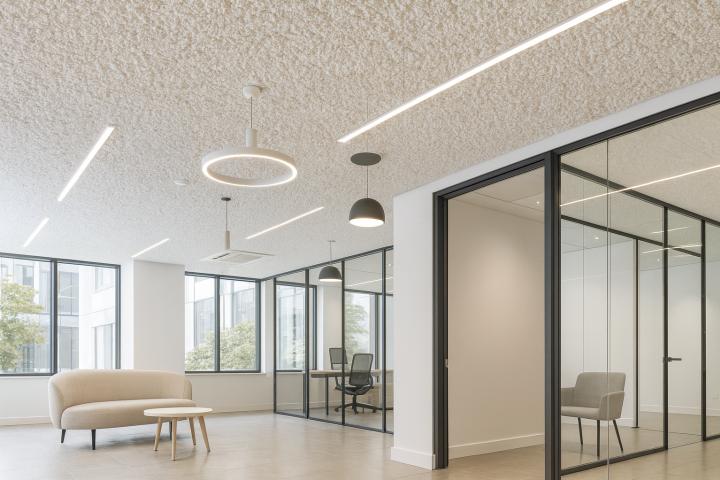
Dispel that myth by showing how Acoustic Spray doesn’t just work well — it looks good. Whether your client wants an industrial raw finish, a subtle smooth texture, or a fully painted custom look, Acoustic Spray adapts.
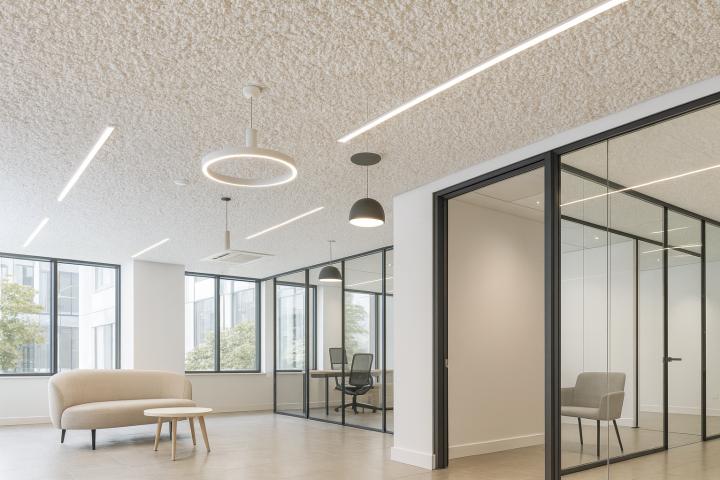
It can follow contours, coat domes, vaults, metal decking, and other irregular surfaces — all without breaking the visual harmony. In fact, for many modern design trends (minimalist, exposed ceiling, Scandi-industrial), Acoustic Spray is a natural fit.
Highlight the Cost-Efficiency Over Time
While some clients may balk at the upfront investment, it’s crucial to paint the long-term picture.
No need for costly suspended ceilings.
Minimal maintenance and high durability.
Reduced noise-related complaints and operational inefficiencies.
You can even break it down:
“Over 5 years, your cost of ownership with Acoustic Spray will be significantly lower than conventional solutions.”
When clients see the bigger financial picture, the conversation shifts from "Why should I pay this much?" to "How soon can we start?"
Personalize the Pitch with Interactive Tools
Use 3D rendering tools or augmented reality apps to simulate how Acoustic Spray will look and perform in their actual space. This makes the product feel tangible, not theoretical.
Let them pick a texture. Choose a color. Hear the sound difference.
Customization breeds connection. And connection closes deals.
Final Tip: Be a Consultant, Not a Salesperson
Your goal isn’t just to sell Acoustic Spray — it’s to solve a problem creatively, sustainably, and effectively. Shift from product-focused talk to client-focused solutions.
When you approach with empathy, data, and design intelligence, clients don’t feel like they’re being pitched. They feel like they’re being heard.
In Conclusion
The key to convincing clients of Acoustic Spray benefits lies in relevance, evidence, and confidence. Tailor your approach to the client’s industry, dispel myths with data and stories, and always tie the solution back to their core needs — aesthetics, performance, and ROI.
With these tools in hand, you won’t just sell Acoustic Spray — you’ll make clients wonder why they didn’t ask for it sooner.