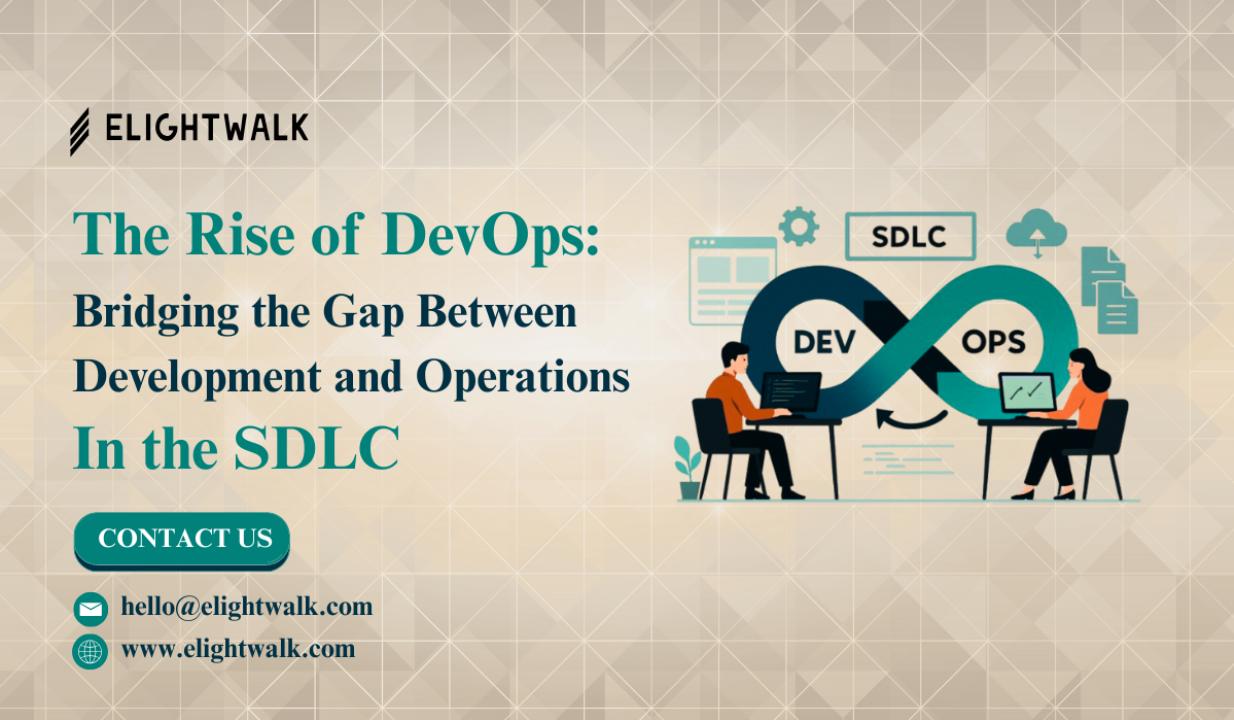

The Software Development Life Cycle has indeed evolved over the years, albeit in a very spectacular way. These days, rigid Waterfall models have given way to flexible Agile methodologies, which are designed to cope with the complexities and the need for rapid development processes in present-day software. DevOps is now establishing new industry standards for how teams and organizations approach the software development life cycle, with a focus on collaboration, automation, and continuous improvement.
Understanding DevOps in the Context of SDLC
DevOps is more than just a set of tools or practices; it's a cultural and organizational shift that unites software development and IT operations teams throughout the full Software Development Life Cycle (SDLC). By breaking down silos, DevOps enables teams to collaborate seamlessly from planning and coding through to testing, deployment, and maintenance.
Why DevOps Matters for Modern SDLC Methodologies
Traditional SDLC methodologies often separated development and operations, leading to communication gaps, slower releases, and increased risk of errors and time delays. DevOps bridges this gap by:
- Encouraging Collaboration: Teams share responsibility for building, testing, and deploying software, resulting in higher quality and faster delivery.
- Automating involves going through the often routine testing, building, and deploying software, thereby eliminating manual tasks and freeing up time to focus on innovation.
- Continuous Feedback and Improvement: Facilitate the back loops, foster the rapid identification and resolution of deviations, and ensure that users' needs align with business objectives.
Core Principles of DevOps in the SDLC
The following are some of the key principles that drive DevOps adoption within the SDLC:
- Shared Ownership: Developers and operations professionals are considered joint owners of the outcome. They tend to develop a sense of accountability and focus on the product together.
- Workflow Automation: Automated pipelines for building, testing, and accelerating software development, and improving consistency.
- Rapid Feedback: Continuous integration and delivery (CI/CD) practices ensure that feedback is immediate, enabling teams to adapt quickly and efficiently.
- Security Integration: Security is embedded throughout the Software Development Life Cycle (SDLC), ensuring robust and secure applications throughout the SDLC, often referred to as DevSecOps.
How DevOps Enhances SDLC Methodologies
DevOps builds on the strengths of Agile and Lean SDLC methodologies by introducing:
- Faster Time to Market: Automation in the pipelines, coupled with a collaborative workflow, encourages more rapid releases, allowing updates that enable one to keep pace with market demands.
- Improved Quality: Continuous testing and monitoring catch issues early, reducing bugs and downtime.
- Greater Flexibility: Teams become more responsive to requirement changes and user feedback phases, supporting iterative development.
Real-World Impact: DevOps in Action
Organizations adopting DevOps within their SDLC report significant benefits, including:
- Increased deployment frequency
- Faster recovery from failures
- Higher customer satisfaction due to rapid delivery of features and fixes
For example, Microservices architectures and integrated DevOps toolchains have achieved unprecedented agility and scalability, positioning themselves ahead of their competitors.
Integrating DevOps into Your SDLC
To put DevOps into action in your SDL, C, think about these steps:
- Build a culture where teams work together and share responsibility.
- Put money into tools that automate CI/CD, testing, and keeping an eye on things.
- Make ongoing learning and making processes a top priority.
- Integrate security practices early throughout the Software Development Life Cycle (SDLC).
Summary:
DevOps is the next step in software development. It brings together development and operations. This approach helps deliver software faster and more reliably. It also aligns better with user needs. By adopting DevOps principles, organizations can reshape their software development life cycle (SDLC). This approach fosters innovation and helps achieve long-term business success.
Find the best development team and SDLC-related guidance from Elightwalk Technology. Elightwalk is a leading team connecting the new AI era with your vision to make it fast, scalable, and a perfect match with today's industries