
Choosing the right web hosting plan can feel overwhelming, especially if you're launching your first website or upgrading an existing one. Among the most common types of hosting are Shared, VPS (Virtual Private Server), and Dedicated Hosting. Each has its own benefits, drawbacks, and ideal use cases. In this guide, we’ll break down what each hosting type means and help you decide which is best for your needs. Discover the Top Shared Hosting Providers of 2025. Comparing pricing, feature, reviews
🔹 What Is Shared Hosting?
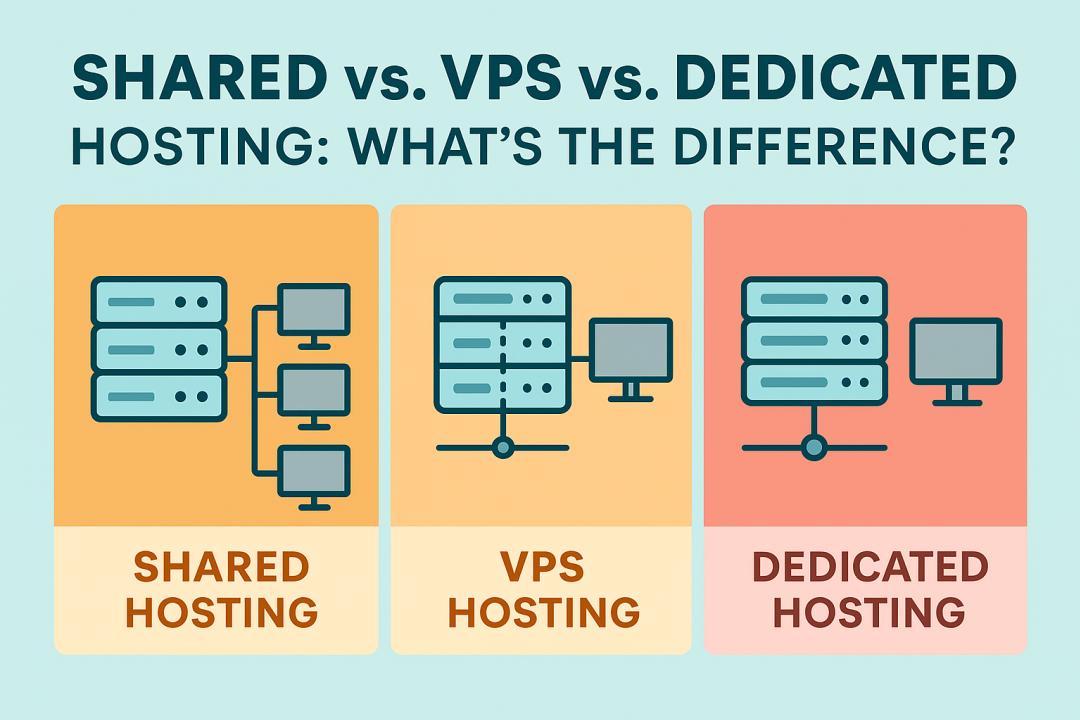
Shared hosting is the most basic and affordable type of hosting. As the name suggests, your website shares server resources—such as disk space, RAM, and CPU—with many other websites.
✅ Best For:
-
Beginners
-
Personal blogs
-
Small business websites
-
Low-traffic sites
⭐ Pros:
-
Cost-Effective: Shared hosting plans are usually the cheapest option.
-
Beginner-Friendly: Comes with an easy-to-use control panel like cPanel.
-
No Server Management Needed: The hosting provider handles all maintenance.
❌ Cons:
-
Limited Resources: All users share the same pool of server resources.
-
Performance Issues: High traffic on other sites can slow down yours.
-
Less Secure: Vulnerabilities in one site could affect others on the same server.
🔸 What Is VPS Hosting?
VPS, or Virtual Private Server hosting, is a step up from shared hosting. It uses virtualization technology to divide a single physical server into multiple virtual servers. Each VPS operates independently and gets a dedicated portion of the server’s resources.
✅ Best For:
-
Medium-sized websites
-
Growing eCommerce stores
-
Developers and web professionals
⭐ Pros:
-
More Control: Root access allows you to customize server settings.
-
Better Performance: More consistent resources mean better speed and uptime.
-
Scalable: Easily upgrade resources as your site grows.
❌ Cons:
-
Higher Cost: More expensive than shared hosting.
-
Technical Knowledge Required: Especially if it's unmanaged VPS.
-
Still Shares a Physical Server: But far less impact from other users than in shared hosting.
🔺 What Is Dedicated Hosting?
Dedicated hosting gives you an entire physical server exclusively for your website. You have full access to all resources and complete control over the environment.
✅ Best For:
-
High-traffic websites
-
Large-scale web applications
-
Enterprises requiring maximum security and performance
⭐ Pros:
-
Maximum Performance: All server resources are dedicated to your website.
-
Full Customization: You control everything from OS to security settings.
-
Highest Security: No other sites share your server. For the best services, read Profvds.com review
❌ Cons:
-
Expensive: Significantly higher cost than shared or VPS hosting.
-
Technical Expertise Needed: Requires managing the server unless you opt for managed services.
-
Overkill for Small Sites: Not ideal if you don’t need the extra power. If you want the best website service, check out wix customer service
🔁 Quick Comparison Table
Feature Shared Hosting VPS Hosting Dedicated Hosting Cost 💲 (Lowest) 💲💲 (Moderate) 💲💲💲 (Highest) Performance Low Medium High Security Basic Strong Strongest Customization Limited Moderate–High Full Scalability Low High Very High Ease of Use Very Easy Intermediate Advanced (or Managed) 📝 Which Hosting Is Right for You?
Still unsure? Here’s a quick guide:
-
Choose Shared Hosting if you’re just starting out and want a simple, budget-friendly option.
-
Choose VPS Hosting if your site is growing and needs more resources and flexibility. Forthe best services, read Profvds.com review
-
Choose Dedicated Hosting if you run a large site or application that demands full control, speed, and security.
🛠️ Final Thoughts
Your hosting choice plays a crucial role in your website’s performance, scalability, and security. While shared hosting is great for beginners, VPS and dedicated hosting offer increased power and customization for those who need it. Assess your current needs and long-term goals, and choose the plan that best aligns with them.
-