
Introduction
In the fast-paced world of software development, the demand for reliable, error-free applications is higher than ever. Every app you use whether it’s your favorite shopping platform or a banking app goes through rounds of testing before reaching your hands. But have you ever wondered how testers manage to keep up with tight deadlines while ensuring quality?
That’s where functional testing and automation testing come in. Both play crucial roles, but they serve different purposes and use different methods. If you’re new to software testing or considering a Selenium course online for beginners, understanding the difference between these two approaches can help you make smarter career decisions.
In this blog, we’ll break down what functional and automation testing really mean, when to use them, and how tools like Selenium make automation testing easier and more efficient.
What Is Functional Testing?
Functional testing checks if the software performs and behaves according to its specified requirements. It focuses on verifying the functionality of an application against defined business needs.
Key Characteristics of Functional Testing:
Tests individual functions or features.
Based on user requirements.
Focuses on outputs based on given inputs.
Does not concern itself with the internal structure of code.
Example:
Imagine a login form with username and password fields. In functional testing, you’d verify that:
The form accepts valid credentials.
It rejects invalid credentials.
It displays the correct error message when necessary.
The password is hidden while typing.
This testing ensures that each function of the application behaves as expected for the end-user.
Types of Functional Testing
Here are some common types of functional testing:
Unit Testing: Tests individual units or components of software.
Smoke Testing: A quick test to ensure basic functionalities work before detailed testing begins.
Sanity Testing: Checks specific functionalities after minor changes or bug fixes.
Integration Testing: Ensures different modules work together.
System Testing: Validates the complete system’s functionality.
User Acceptance Testing (UAT): Performed by end-users to confirm the system meets their expectations.
What Is Automation Testing?
Automation testing uses specialized tools and scripts to execute tests automatically without human involvement. The main goal is to increase test coverage, save time, and improve accuracy.
Key Characteristics of Automation Testing:
Involves writing test scripts using tools like Selenium.
Reduces manual intervention and human error.
Speeds up repetitive test cases.
Ideal for regression and performance testing.
Example:
Returning to our login form scenario instead of manually checking every input, you’d write a Selenium script that automatically inputs different credential combinations, verifies responses, and generates a report.
Types of Automation Testing
Some widely used types of automation testing include:
Regression Testing: Checks that new updates haven’t broken existing features.
Performance Testing: Evaluates system behavior under stress or high load.
Load Testing: Measures system performance when multiple users access it simultaneously.
Data-Driven Testing: Uses multiple data sets to check software behavior.
API Testing: Validates APIs through automated scripts.
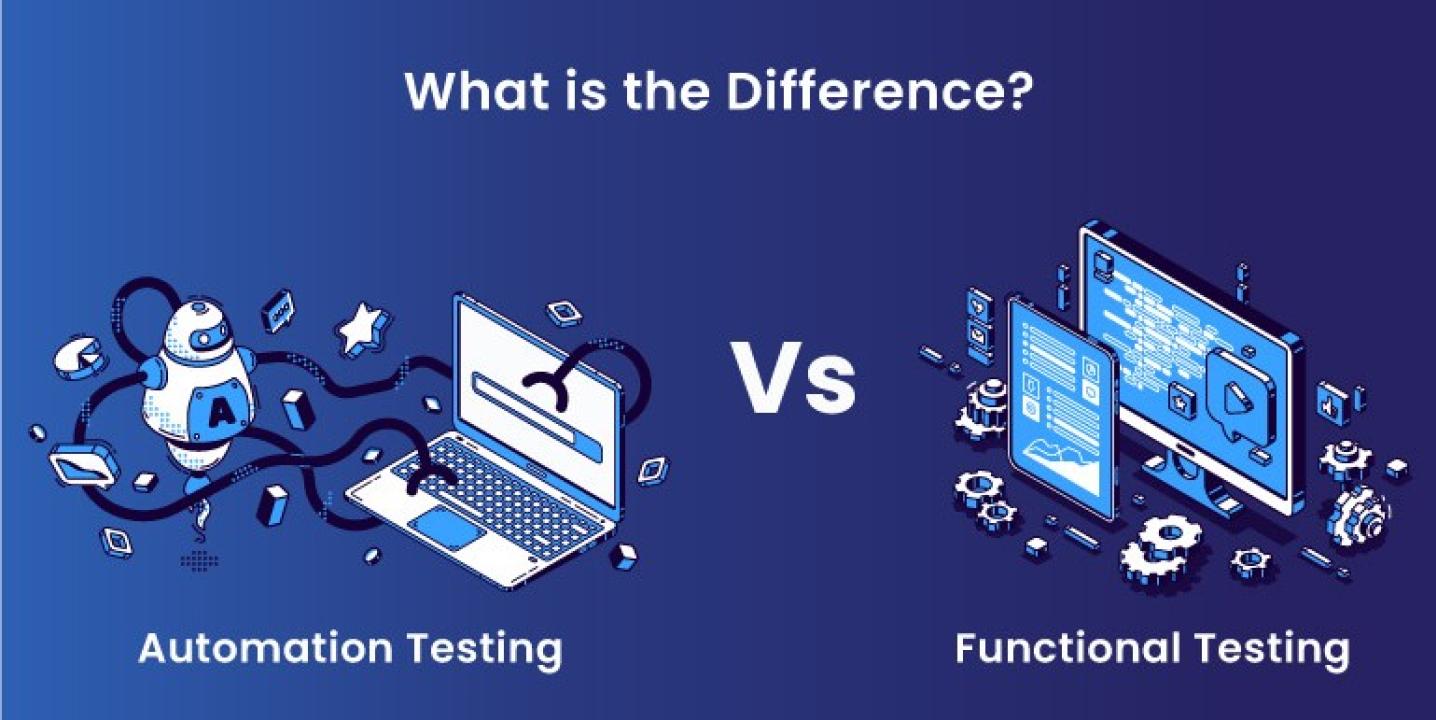
Functional Testing vs Automation Testing: Head-to-Head Comparison
Aspect | Functional Testing | Automation Testing |
Approach | Manual or automated testing of features | Primarily automated using tools like Selenium |
Purpose | To verify software behaves as expected | To automate repetitive, large-scale, or complex tests |
Tools Used | Test plans, checklists, manual test cases | Selenium, QTP, Appium, TestComplete |
Time & Cost | Time-consuming and labor-intensive | Faster and cost-effective over time |
Accuracy | Prone to human error | High accuracy with consistent results |
Scope | Focuses on individual features and business logic | Focuses on speed, efficiency, and regression coverage |
Best Suited For | Small projects, new features, or initial validation | Large projects, frequent releases, performance testing |
Why Automation Testing Has Gained Popularity
A recent World Quality Report stated that over 75% of organizations have adopted test automation to speed up delivery cycles and improve product quality. Tools like Selenium make automation testing accessible, flexible, and powerful, which is why Selenium courses online are now in high demand.
What Is Selenium and Why Should You Learn It?
Selenium is one of the most widely-used open-source tools for automating web browsers. It supports multiple programming languages like Java, Python, and C#, making it highly flexible for testers.
Key Features of Selenium:
Cross-browser compatibility (Chrome, Firefox, Edge)
Integration with test frameworks like TestNG and JUnit
Supports parallel and remote execution
Open-source and free to use
If you’re considering enrolling in a Selenium course online, you’re choosing a tool that’s recognized and valued in the software testing industry worldwide.
Real-World Use Case: Functional vs Automation Testing
Let’s consider an e-commerce website with these functionalities:
User login
Product search
Shopping cart
Payment gateway
Functional Testing Tasks:
Verify user login accepts valid details.
Confirm search returns correct products.
Check that adding products to the cart works properly.
Test payment gateway for successful and failed transactions.
Automation Testing Tasks:
Automate login with multiple user accounts.
Run product search with various keywords.
Validate cart functionality with large data sets.
Test payment gateway under heavy traffic scenarios.
This example highlights how both testing types are necessary and complementary.
Step-by-Step Guide: Automating a Simple Functional Test Using Selenium
If you’re taking a Selenium course online for beginners, this step-by-step example will give you a taste of what you can achieve.
Scenario: Automate login functionality test on a website.
Steps:
Set Up Selenium WebDriver
Install Selenium package using pip:
python
pip install selenium
Import Required Modules
python
from selenium import webdriver
from selenium.webdriver.common.by import By
Launch Browser
python
driver = webdriver.Chrome()
driver.get("http://example.com/login")
Locate Elements and Send Data
python
driver.find_element(By.ID, "username").send_keys("testuser")
driver.find_element(By.ID, "password").send_keys("password123")
driver.find_element(By.ID, "loginButton").click()
Verify Login
python
assert "Dashboard" in driver.titleClose Browser
python
driver.quit()
This example showcases how Selenium can transform a manual test case into an efficient automated process in minutes.
Why Enroll in a Selenium Course Online?
Choosing a Selenium course online equips you with hands-on skills, making you job-ready for positions like Test Automation Engineer or QA Analyst.
Key Benefits:
Learn from industry experts.
Access real-world projects and case studies.
Flexible schedules for working professionals.
Certification to validate your skills.
If you’re a beginner, a Selenium course online for beginners will guide you from setting up Selenium to mastering frameworks like TestNG and Page Object Model (POM).
Conclusion
Both functional and automation testing have distinct, valuable roles in software development. Use functional testing when you need to validate new features or check business logic. Turn to automation testing for repetitive, data-heavy, or time-sensitive test cases.
If you aim to build a career in automation testing, enrolling in an Online Selenium course is a smart, future-proof investment.
Key Takeaways
Functional testing ensures software meets business requirements.
Automation testing accelerates testing processes using tools like Selenium.
Both testing types complement each other in professional environments.
Selenium is a top choice for web automation due to its flexibility and open-source nature.
A Selenium course online for beginners can help launch your career in software testing.
Ready to automate your testing skills? Join a Selenium course online today and start building your automation testing career.