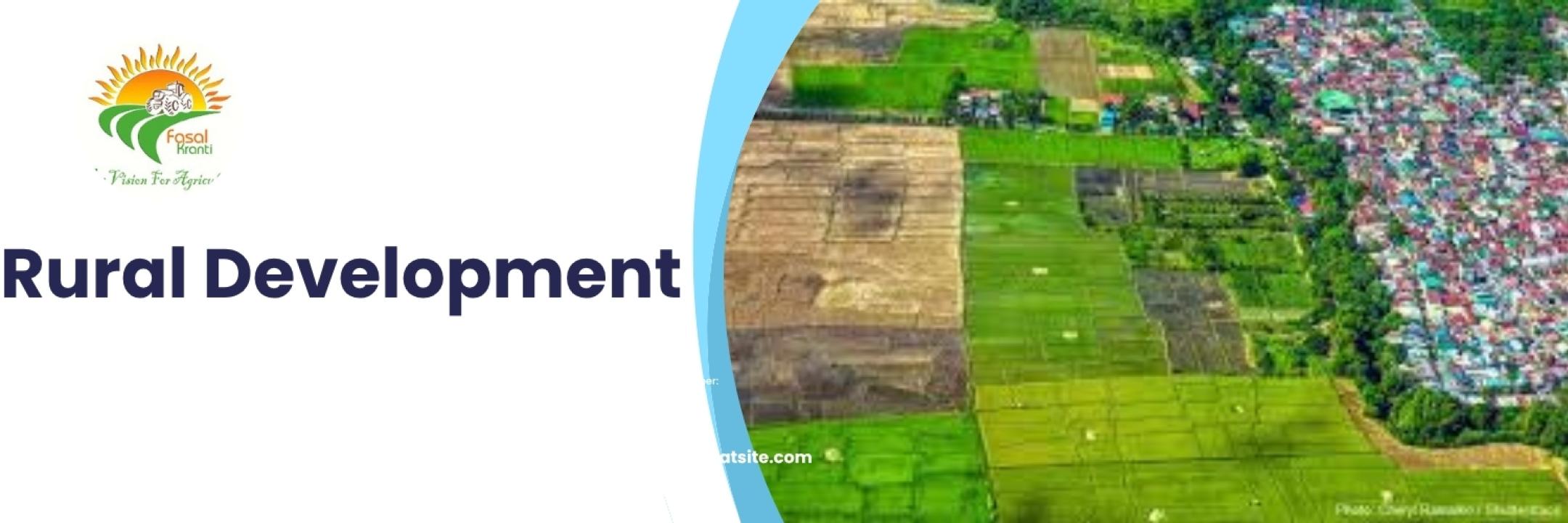

Rural development is more than building roads or installing electricity in villages it is about transforming the lives of millions living in rural areas. It is a multidimensional approach that includes economic upliftment, social empowerment, infrastructure development, and access to essential services like education, healthcare, and clean water.
In a country like India, where 65-70%
of the population lives in rural areas, the progress of the nation largely
depends on how empowered and self-sufficient its villages are. True inclusive
growth cannot happen without the upliftment of rural communities.
What
is Rural Development?
Rural development refers to the overall
improvement in the quality of life and economic well-being of people living in
relatively isolated and sparsely populated areas. It involves:
- Development of agriculture and allied sectors
- Promotion of rural industries and small-scale
enterprises
- Improved access to health and education
- Creation of sustainable livelihood opportunities
- Building physical and digital infrastructure
It focuses on ensuring that rural
populations have equitable access to resources, opportunities, and benefits
of economic growth.
Importance
of Rural Development
1. Population
Distribution
Since the majority of India’s
population resides in rural areas, neglecting their development results in unbalanced
growth and rural-urban migration, putting pressure on cities.
2. Economic
Backbone
Agriculture and rural industries are
primary contributors to India’s GDP and employment. Without
strengthening rural sectors, the country’s overall economic development is
incomplete.
3. Food
Security and Resource Supply
Rural India supplies food, water,
raw materials, and labour to urban centers. A strong rural base
ensures national food security and stable supply chains.
4. Social
Equity and Justice
Rural development promotes inclusive
growth by addressing inequalities in income, health, education, and
employment.
Key
Challenges in Rural Development
1. Poor
Infrastructure
Many villages still lack all-weather
roads, electricity, internet, and sanitation facilities, making growth and
connectivity difficult.
2. Limited
Access to Education and Healthcare
Inadequate schools and health
centers result in poor literacy, skill development, and high
mortality rates.
3. Unemployment
and Underemployment
Rural youth face a lack of job
opportunities beyond agriculture, leading to disguised unemployment.
4. Climate
Change and Resource Depletion
Changes in rainfall patterns, soil
degradation, and water scarcity directly impact rural livelihoods.
5. Digital
Divide
A majority of rural areas lack
proper digital infrastructure, limiting access to information,
government schemes, and markets.
Smart
Strategies for Empowering Rural Development
1. Integrated
Rural Development Programmes
Schemes like MGNREGA, PMGSY,
NRLM, PMAY-G and Rurban Mission aim to create assets, generate jobs,
and build infrastructure.
Impact:
- Employment during lean seasons
- Rural connectivity and mobility
- Improved housing and sanitation
2. Skill
Development and Vocational Training
Government initiatives like Skill
India and DDU-GKY focus on equipping rural youth with industry-relevant
skills to boost employment in non-agricultural sectors.
3. Agriculture
and Allied Sector Support
a.
Sustainable Farming Techniques
Promoting organic farming, carbon
farming, and regenerative agriculture can boost income and soil health.
b.
Agri-Marketing Innovations
Linking farmers to markets via eNAM,
Farmer Producer Organizations (FPOs), and cold chain infrastructure
ensures better prices.
c.
Diversification
Encouraging livestock rearing,
aquaculture, and horticulture reduces dependence on seasonal crops.
4. Healthcare
and Nutrition Interventions
Schemes like Ayushman Bharat
and POSHAN Abhiyaan improve rural health indicators through insurance
coverage, health centers, and nutrition programs.
Key Focus:
- Maternal and child health
- Immunization and disease control
- Sanitation and hygiene awareness
5. Education
and Digital Literacy
Establishing model schools,
digital classrooms, and mobile education units can revolutionize rural
learning.
Steps Forward:
- Local language e-learning
- Digital literacy for farmers and women
- Vocational and STEM education
6. Empowerment
of Women and Marginalized Groups
Self-Help Groups (SHGs), microfinance institutions, and training programs help women
become entrepreneurs and decision-makers in their communities.
Results:
- Higher family income
- Reduced gender inequality
- Enhanced community participation
7. Digital
Rural India
The Digital India programme
aims to bridge the gap between urban and rural technology access.
Tools Used:
- Wi-Fi-enabled Gram Panchayats
- Digital service delivery (e-governance)
- Rural BPOs and telemedicine services
Role
of Panchayati Raj Institutions
Decentralization through Panchayati
Raj gives power to local self-governments. This ensures:
- Community participation in decision-making
- Efficient use of local funds and resources
- Tailored development plans based on local needs
Village-level governance makes
development more inclusive, transparent, and sustainable.
Rural
Development and Environmental Sustainability
Sustainable rural development
balances growth with environmental conservation.
Key practices include:
- Watershed management
- Afforestation and biodiversity conservation
- Renewable energy projects
- Waste management and recycling
Green energy and natural farming
reduce rural carbon footprints while generating green jobs.
Success
Stories in Rural Development
1. Hiware
Bazar, Maharashtra
From a drought-prone village to a
model of water conservation and collective farming, Hiware Bazar's
transformation was driven by local leadership and community participation.
2. Punsari,
Gujarat
A small village turned into a smart
village with CCTV, solar panels, Wi-Fi, and RO drinking water—all funded
through government schemes and managed locally.
3. Self-Help
Groups in Tamil Nadu
Women SHGs in Tamil Nadu are engaged
in small businesses like pickle making, tailoring, and dairy farming,
making them economically self-reliant.
Future
of Rural Development: Vision for 2047
As India moves toward its 100th
year of independence in 2047, rural development goals include:
- 100% digital and financial inclusion
- Self-sufficient village economies
- Universal access to health, education, and sanitation
- Environmentally resilient farming
- Gender-balanced rural leadership
These goals will ensure that no
one is left behind in India’s development journey.
Conclusion
Empowering rural development is not
a one-time activity; it is a long-term investment in the nation’s progress.
It requires visionary policies, community engagement, technological
integration, and sustained efforts across sectors.
Inclusive growth can only be
achieved when the benefits of economic development reach the last person in
the last village. With proper implementation of smart strategies and
collective participation, rural India can emerge as the engine of growth and
sustainability.