The late 1960s were a defining period in American automotive history, a time when muscle cars embodied the spirit of rebellion, freedom, and raw horsepower. Among the standout vehicles of this era, the 1969 Ford Mustang Mach 1 emerged as a perfect blend of >Learn more about the fastest muscle cars of the 60s here.
Origins: Elevating the Mustang Legacy
The Ford Mustang, launched in 1964, created the pony car segment, offering affordable performance and >
Named after the speed of sound, the Mach 1 was introduced in 1969 as part of the Mustang’s first major redesign since its debut. Built on the larger, more muscular 1969 Mustang platform, the Mach 1 was positioned as a sporty, high-performance option that offered a range of powerful engines and distinctive styling. It quickly became a favorite among buyers, outselling other Mustang variants and solidifying Ford’s dominance in the pony car market.
Design: Aggressive and Iconic
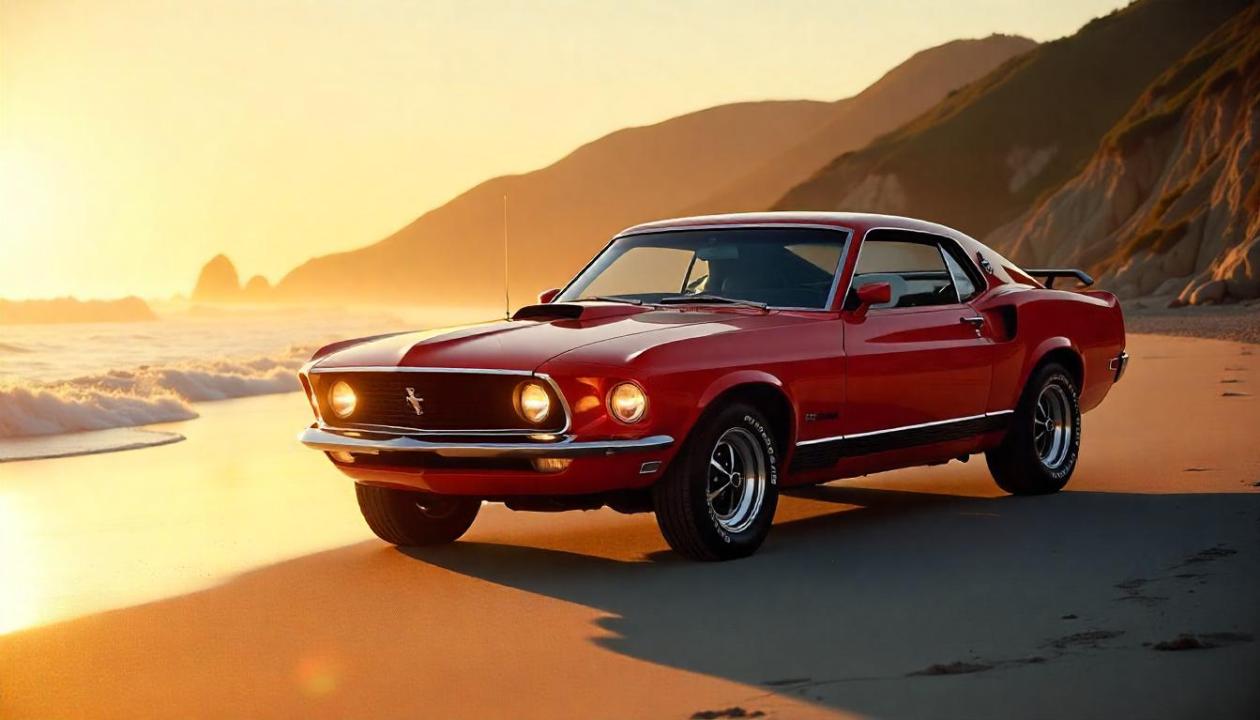
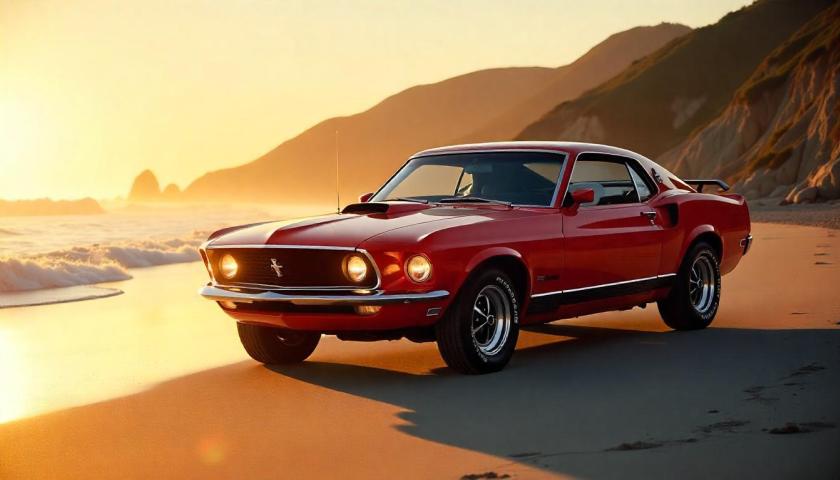
The 1969 Ford Mustang Mach 1 was a visual tour de force, combining the Mustang’s classic lines with aggressive styling cues that screamed performance. Based on the fastback “SportsRoof” body >
The Mach 1’s design was further enhanced by optional racing stripes, reflective side stripes, and 15-inch Magnum 500 wheels, which gave it a purposeful, race-inspired look. Available in vibrant colors like Candy Apple Red, Acapulco Blue, and Calypso Coral, the Mach 1 was a head-turner that commanded attention wherever it went. Its compact dimensions—approximately 187 inches long and weighing around 3,500 pounds—gave it a balanced, agile feel, ideal for both cruising and performance driving.
Inside, the Mach 1 offered a sporty yet comfortable cabin that reflected its performance pedigree. High-back bucket seats, a wood-rimmed steering wheel, and a center console created a driver-focused environment. The dashboard featured a clean layout with optional gauges, including a tachometer and clock, while upgrades like a premium sound system and air conditioning added a touch of luxury. The Mach 1’s interior struck a balance between functionality and >
Performance: Power for Every Enthusiast
The 1969 Ford Mustang Mach 1 was a performance powerhouse, offering a range of V8 engines to suit different levels of enthusiasm. The standard engine was a 351-cubic-inch V8, available in two versions: 250 horsepower or 290 horsepower with a four-barrel carburetor. For those seeking more power, Ford offered the 390-cubic-inch V8 (320 horsepower) and the top-tier 428-cubic-inch Cobra Jet V8, producing 335 horsepower and 440 lb-ft of torque (though actual output was likely higher). The rare 428 Super Cobra Jet, equipped with a beefier drivetrain, was designed for drag racing and added even more performance potential.
Transmission options included a three-speed or four-speed manual, or a three-speed automatic, paired with a heavy-duty rear axle. The Mach 1’s performance was impressive: the 351 V8 version could hit 0-60 mph in about 6.5 seconds and run the quarter-mile in the mid-14-second range, while the 428 Cobra Jet shaved those times to around 5.5 seconds and low 13 seconds, respectively. With a top speed exceeding 130 mph, the Mach 1 was among the fastest pony cars of its era, capable of holding its own against rivals like the Camaro SS and Road Runner.
The Mach 1’s handling was enhanced by a performance-tuned suspension, featuring stiffer springs, heavy-duty shocks, and optional sway bars. While not as nimble as smaller sports cars, the Mach 1 offered respectable road-holding for a muscle car, with upgrades like a limited-slip differential and power disc brakes improving control and stopping power. The 428 Cobra Jet models, in particular, were drag strip legends, delivering explosive acceleration and a visceral driving experience that defined the muscle car era.
Cultural Impact: A Symbol of American Muscle
The 1969 Ford Mustang Mach 1 was a cultural icon, embodying the rebellious spirit of the 1960s. Its bold design and blistering performance made it a favorite among car enthusiasts, who flocked to car shows, cruise nights, and drag strips to showcase their Mach 1s. The car’s affordability—starting at around $3,100—made it accessible to a wide audience, from young gearheads to weekend racers. Owners customized their Mach 1s with aftermarket parts, wild paint jobs, and performance upgrades, contributing to the vibrant car culture of the era.
The Mach 1 also made its mark in motorsports, with Ford-backed Mustangs competing in events like the SCCA Trans-Am series. Its appearances in automotive magazines, films, and TV shows further cemented its status as a symbol of American muscle. The Mach 1’s legacy was later amplified by its revival in the 2003–2004 Mustang lineup, which paid homage to the 1969 model’s iconic design and performance.
Challenges and Collectibility
Owning a 1969 Ford Mustang Mach 1 came with challenges. Its powerful V8 engines were fuel-thirsty, often achieving less than 12 mpg, which became a liability during the 1970s fuel crises. Maintenance could be demanding, especially for high-performance models like the 428 Cobra Jet, which required specialized parts and expertise. The Mach 1’s lightweight construction, while beneficial for performance, offered limited crash protection by modern standards, and its popularity made it a target for theft.
Today, the 1969 Mach 1 is a collector’s dream, with well-preserved or restored examples commanding premium prices. Models equipped with the 428 Cobra Jetcomplementary to the 1969 Ford Mustang Mach 1, a car that defined an era and continues to captivate enthusiasts. The Mach 1’s combination of raw power, iconic design, and cultural significance ensures its place as a cornerstone of the muscle car era, a car that continues to inspire passion and awe among enthusiasts worldwide.