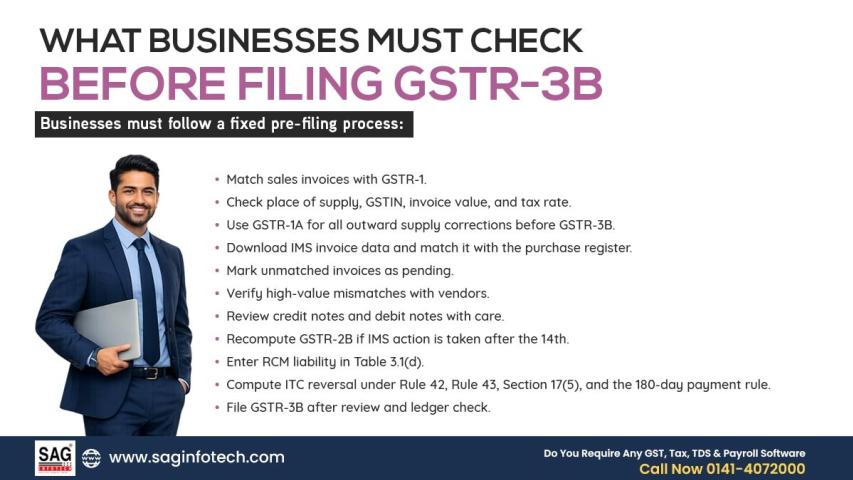

Goods and Services Tax (GST), implemented on July 1, 2017, has revolutionized the Indian indirect tax system by replacing multiple taxes with one unified tax. One of the cornerstones of the GST regime is GST return filing, a mandatory compliance activity for registered businesses. Filing GST returns ensures proper tax reporting, input tax credit claims, and legal compliance.
This article provides a
comprehensive guide to GST return filing in India, including its types, filing
process, due dates, penalties, and compliance best practices.
What is a GST Return?
A GST return is a document
that a registered taxpayer under GST must file with the Goods and Services Tax
Network (GSTN). It contains information about:
- Sales (outward supplies)
- Purchases (inward supplies)
- Output GST (on sales)
- Input GST (on purchases)
These returns help the
government track tax liabilities and input tax credit (ITC) claims and detect
evasion.
Who Should File GST Returns?
Every person registered under
the GST Act is required to file returns. This includes:
- Regular taxpayers
- Composition dealers
- Input Service Distributors (ISD)
- E-commerce operators
- Non-resident taxable persons
- TDS/TCS deductors under GST
Even if there is no business
activity (nil return), filing is mandatory.
Types of GST Returns
Below are the key GST returns
to be filed under the GST regime:
1. GSTR-1: Outward Supplies
Return
- Filed by: Regular taxpayers
- Frequency: Monthly or Quarterly (under
QRMP)
- Details: Invoice-wise details of outward
supplies/sales
- Due Date:
- 11th of the following month (Monthly)
- 13th of the month after the quarter (QRMP
scheme)
2. GSTR-3B: Summary Return
- Filed by: Regular taxpayers
- Frequency: Monthly or Quarterly
- Details: Summary of outward and inward
supplies, tax liability, and ITC
- Due Date: 20th of the following month (or
22nd/24th for QRMP)
3. GSTR-4: Composition Scheme
Return
- Filed by: Composition scheme dealers
- Frequency: Annually
- Due Date: 30th April of the next financial
year
4. GSTR-5: Non-Resident
Taxpayer Return
- Filed by: Non-resident taxable persons
- Frequency: Monthly
- Due Date: 20th of the following month
5. GSTR-6: Input Service
Distributor Return
- Filed by: ISDs distributing input tax
credit
- Frequency: Monthly
- Due Date: 13th of the following month
6. GSTR-7: TDS Return under
GST
- Filed by: Tax deductors under GST
- Frequency: Monthly
- Due Date: 10th of the following month
7. GSTR-8: TCS Return for
E-Commerce Operators
- Filed by: E-commerce operators collecting
TCS
- Frequency: Monthly
- Due Date: 10th of the following month
8. GSTR-9: Annual Return
- Filed by: Regular taxpayers (turnover
above ₹2 crore mandatorily)
- Frequency: Annually
- Due Date: 31st December of the following
financial year
9. GSTR-9C: Reconciliation
Statement
- Filed by: Taxpayers with turnover
exceeding ₹5 crore
- Certified by: Chartered Accountant or Cost
Accountant
GST Return Filing Process
(Step-by-Step)
Here’s a step-by-step guide to
file a GST return online:
Step 1: Login to GST Portal
Visit www.gst.gov.in and
log in with your credentials (GSTIN, username, and password).
Step 2: Navigate to Returns
Dashboard
Go to ‘Services’ → ‘Returns’ →
‘Returns Dashboard’. Choose the financial year and month.
Step 3: Select the Return Form
Choose the applicable return
(e.g., GSTR-1, GSTR-3B). Click on 'Prepare Online'.
Step 4: Enter Relevant Details
- For GSTR-1: Add invoice-wise details of
B2B and B2C sales
- For GSTR-3B: Enter outward supply summary,
ITC claim, and tax payable
Step 5: Preview and Validate
Review the data thoroughly and
validate to check for any errors.
Step 6: Submit the Return
Click ‘Submit’ to lock the
data. No changes can be made after submission.
Step 7: File with DSC/EVC
Use Digital Signature
Certificate (DSC) or Electronic Verification Code (EVC) to complete filing.
Step 8: Download
Acknowledgment
Save and download the
Acknowledgment Reference Number (ARN) for future reference.
Due Dates for GST Returns
|
Return Type |
Frequency |
Due Date |
|
GSTR-1 |
Monthly |
11th of next month |
|
GSTR-3B |
Monthly |
20th of next month |
|
GSTR-4 |
Annual |
30th April |
|
GSTR-9 |
Annual |
31st December |
For quarterly filers under
QRMP:
- GSTR-1: 13th of the month after the
quarter
- GSTR-3B: 22nd or 24th depending on state
Penalty for Late Filing of GST
Returns
Failure to file GST returns on
time leads to:
1. Late Fees
- GSTR-1 & 3B:
₹50 per day (₹25 CGST + ₹25 SGST)
- Nil return:
₹20 per day (₹10 CGST + ₹10 SGST)
- Maximum Cap:
₹5,000 per return
2. Interest on Late Payment
Interest at 18% per annum is
applicable on outstanding tax liabilities from the due date till the date of
payment.
Input Tax Credit and GST
Returns
Claiming Input Tax Credit
(ITC) is closely linked with GST returns. ITC is allowed only when:
- Supplier has uploaded the invoice in
GSTR-1
- Buyer reflects the same in GSTR-3B
- Supplier has paid the tax to the
government
Hence, timely and accurate
return filing by both supplier and buyer is crucial.
GST Return Filing under QRMP
Scheme
The Quarterly Return Monthly
Payment (QRMP) scheme is for taxpayers with annual turnover up to ₹5 crore.
Features:
- GSTR-1 is filed quarterly
- GSTR-3B is filed quarterly
- Tax is paid monthly using PMT-06 challan
- Optional Invoice Furnishing Facility (IFF)
allows monthly B2B invoice uploads
Common Mistakes to Avoid
- Mismatched
invoices
- Always
reconcile GSTR-1 and GSTR-3B with books of accounts.
- Missing
Nil Returns
- Even
if there are no transactions, file nil returns to avoid penalties.
- Wrong
GSTIN usage
- Double-check
recipient GSTIN while issuing invoices.
- Skipping
ITC reconciliation
- Reconcile
ITC with GSTR-2B before claiming.
- Delay
in return filing
- Leads
to interest, late fee, and blockage of ITC.
Importance of Timely GST
Return Filing
Timely filing of GST returns:
- Ensures smooth ITC flow
- Avoids penalties and interest
- Maintains compliance rating
- Builds credibility for loans and tenders
- Keeps business records up-to-date
Tools and Services for GST
Return Filing
Businesses can use:
- GSTN Portal
- GST Suvidha Providers (GSPs)
- ERP and Accounting Software (like Tally,
Zoho, Marg)
- Chartered Accountants or GST Practitioners
- Third-party platforms like Compliance
Calendar, ClearTax, etc.
Conclusion
GST return filing is a vital
compliance activity for every GST-registered business in India. While the
process may seem complex initially, understanding the types of returns, due
dates, and filing steps helps ensure timely and accurate compliance. With digital
tools and expert assistance, businesses can simplify GST filing and focus more
on core operations.
Staying compliant not only avoids penalties but also builds a robust credit and tax history an asset in today's competitive marketplace.