In today’s digital world, data is the new fuel, and data centers are the engines that power almost everything—websites, mobile apps, cloud services, and enterprise systems. For any network engineer, understanding data center technologies is not just an option—it’s essential.
If you're thinking about leveling up your skills, certifications like the CCNP Data Center are great ways to start your journey and gain structured knowledge in this domain.
This beginner-friendly guide will help you understand the basics of data center technologies and how they relate to the career path of a network engineer.
What is a Data Center?
A data center is a facility that houses computer systems and networking equipment to store, manage, and deliver data. These centers support IT operations and critical business applications for companies of all sizes.
A typical data center includes:
Servers for processing data
Storage systems like SAN and NAS
Networking equipment such as switches and routers
Cooling systems to manage heat
Security systems to protect data and infrastructure
Why Do Network Engineers Need to Understand Data Centers?
Network engineers play a key role in building and maintaining the data center’s network infrastructure. This includes connecting servers, managing traffic, ensuring uptime, and keeping data secure.
Here’s why it matters:
Data centers are becoming more software-driven (Software-Defined Data Centers)
The rise of cloud computing means engineers must know how data centers connect to public clouds
Technologies like virtualization, storage networking, and automation are key to modern infrastructure
Key Data Center Technologies You Should Know
1. Networking Hardware
Understanding the role of Cisco Nexus switches, routers, and firewalls is crucial. These devices form the backbone of the data center.
Cisco technologies are widely used, and that’s why certifications like the CCNP Data Center focus heavily on these tools.
2. Virtualization
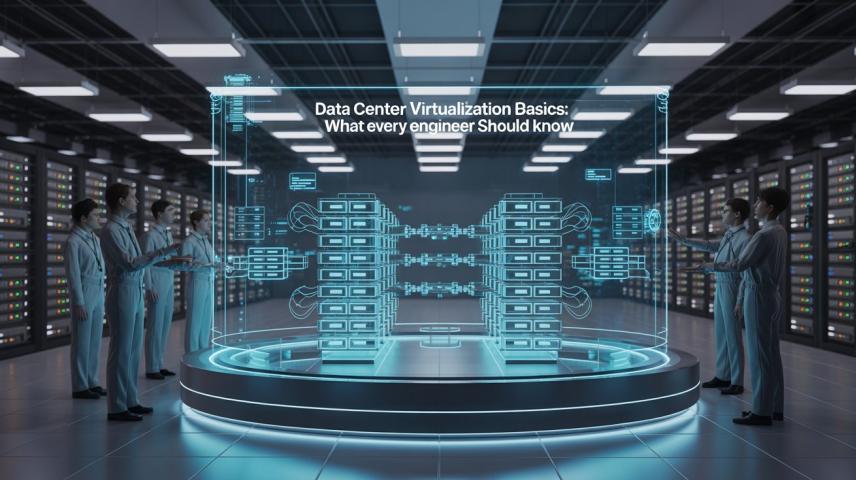
Virtualization allows multiple virtual machines (VMs) to run on a single physical server. This increases efficiency and lowers costs. Technologies like VMware vSphere, KVM, and Hyper-V are popular in enterprise environments.
3. Storage Networking
Network engineers must understand SAN (Storage Area Network) and NAS (Network Attached Storage). These are systems used to store and retrieve massive amounts of data quickly.
4. Data Center Automation
Manual configurations are slowly being replaced by automation tools. Python scripting, Ansible, and Cisco DCNM (Data Center Network Manager) are becoming critical skills for network engineers.
5. Security and High Availability
Data center security includes both physical and cyber elements. Engineers must design networks that offer redundancy, load balancing, and failover systems to ensure data is always accessible and protected.
6. Cloud Integration
Modern data centers often work alongside public cloud services like AWS, Azure, or Google Cloud. Engineers should understand hybrid cloud, multi-cloud, and cloud networking concepts.
How to Learn Data Center Technologies?
If you’re just starting out, there are many learning paths available. However, taking a structured and hands-on course like the CCNP Data Center Course is one of the best ways to gain deep knowledge and real-world skills.
With this course, you'll:
Learn from certified instructors
Get hands-on practice with Cisco equipment
Build a solid foundation in routing, switching, storage, and automation
Prepare for the CCNP Data Center Certification, which is highly respected by employers
Conclusion
Data center technologies are complex but incredibly rewarding to learn. As the world moves toward digital transformation, skilled network engineers are in high demand.
Whether you’re starting your career or looking to upgrade your skills, investing in a CCNP Data Center Training program can open up excellent job opportunities and help you stay ahead in the tech industry.
Start exploring today and take your first step towards becoming a data center expert!