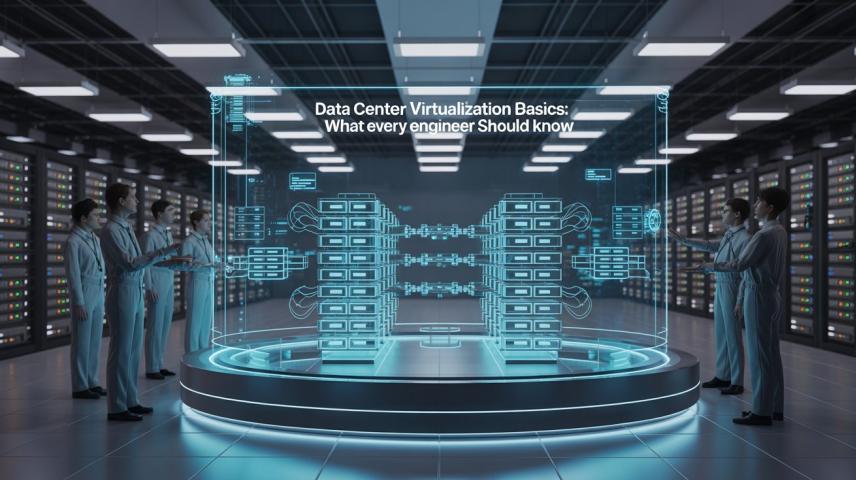
In today's fast-changing IT world, data center virtualization has become a key technology. It allows organizations to do more with less—less hardware, less space, and less energy. For network engineers and IT professionals aiming to build or manage modern data centers, understanding the basics of virtualization is essential. If you're preparing for the CCNP Data Center certification, mastering virtualization is one of the core topics that you need to be familiar with.
Let’s break it down in simple terms.
What is Data Center Virtualization?
Data center virtualization is the process of creating a virtual version of physical components such as servers, storage devices, and network resources. Instead of using a separate physical machine for each service, virtualization lets multiple services run on a single physical server using virtual machines (VMs).
This makes the entire system more efficient, scalable, and easier to manage.
Why is Virtualization Important?
Virtualization is important for several reasons:
Better Resource Utilization: Instead of using one server for one job, you can run multiple virtual servers on a single machine. This reduces hardware costs.
Flexibility and Scalability: It’s easier to add or remove resources as your business needs grow or change.
Disaster Recovery: Virtual machines can be quickly backed up, moved, or restored, helping ensure continuity in case of a failure.
Isolation: Each VM runs independently, which improves security and reduces the risk of system-wide crashes.
Types of Virtualization in Data Centers
Understanding the different types of virtualization is key for any network or systems engineer. Here are the main ones:
1. Server Virtualization
This is the most common form. It allows one physical server to run multiple virtual servers (VMs). Each VM acts like a separate physical device.
2. Network Virtualization
This involves combining hardware (like switches and routers) with software-based resources. Engineers can create multiple virtual networks on the same physical hardware. This is crucial for cloud services and large-scale data centers.
3. Storage Virtualization
This combines physical storage from multiple devices into a single virtual storage pool. It makes it easier to manage and allocate space as needed.
4. Desktop Virtualization
In this model, a user’s desktop environment runs on a centralized server instead of a local machine. It helps organizations manage updates, security, and access control more easily.
Key Virtualization Tools and Technologies
While studying the CCNP Data Center Course, you’ll come across many tools that support virtualization. Some common ones include:
VMware vSphere: A widely used server virtualization platform.
Microsoft Hyper-V: Another popular hypervisor for creating and managing VMs.
Cisco ACI (Application Centric Infrastructure): Helps manage network virtualization and policy-based automation.
Cisco Nexus Switches with VXLAN: Allow Layer 2 and Layer 3 network virtualization over IP networks.
Learning how these tools work will help you in both practical scenarios and in your CCNP Data Center Certification preparation.
How Virtualization Affects Networking
In a virtualized data center, the network layer must be able to handle dynamic and scalable workloads. Here are a few networking concepts you’ll likely deal with:
VXLAN (Virtual Extensible LAN): Used to extend Layer 2 networks over Layer 3 infrastructure.
Overlay Networks: Logical networks built on top of physical infrastructure.
Virtual Switches: Software-based switches that connect VMs within a hypervisor.
Networking in virtual environments can be complex, so having a good grasp on these terms is important.
Challenges of Data Center Virtualization
While virtualization offers many benefits, it also brings challenges:
Performance Monitoring: Virtual environments can be harder to troubleshoot.
Security Risks: Virtual networks must be protected just like physical ones.
Complexity: Managing a highly virtualized environment requires new skills and tools.
This is why training and certification are critical for engineers who want to stay ahead.
Conclusion
Understanding the basics of data center virtualization is no longer optional—it's a must-have skill for modern network engineers. From server and storage virtualization to virtual networks and cloud integration, these technologies are shaping the future of IT infrastructure.
For those pursuing a deeper understanding, enrolling in a CCNP Data Center Training program can be a valuable step. Not only will you learn virtualization in depth, but you'll also prepare for one of the most respected certifications in the networking world.
Whether you are just starting your journey or already working in data centers, the CCNP Data Center Course will equip you with the knowledge to manage virtual environments effectively and securely.