
The Australian FinTech industry is growing exponentially, fueled by rising digital consumption, regulatory changes, and consumer appetite for hassle-free financial services. Organizations—ranging from startups to traditional banks—are embracing bespoke FinTech software solutions in Australia to enhance competitiveness, security, and one-to-one financial experiences.
This post discusses the cost implications, development cycle, and industry best practices to get your FinTech project right in Australia's competitive market.
Why Custom FinTech Software is Picking Up Momentum in Australia
The FinTech ecosystem in Australia is growing at a very high rate. Industry reports say more than 800 FinTech firms have set up shop in the country, with high growth being experienced in segments such as digital banking, payments, wealth management, and blockchain-based solutions.
Custom software has a number of benefits over off-the-shelf software:
Custom functionality to address specific business requirements.
Architecture that can scale as your business expands.
Compliance with Australian regulations such as ASIC and APRA standards.
Data security on a higher level complying with the Privacy Act 1988.
Cost of Custom FinTech Software Services in Australia
The cost of developing a FinTech solution in Australia varies based on several factors:
Factor Description Impact on Cost
Complexity of Features Basic payment systems versus AI-based wealth management features Talkative
Technology Stack Frameworks, APIs, and cloud stacks to use High
Integration Needs Integrating with pre-existing banking systems or third-party applications Talkative
Security Requirements Data encryption, fraud protection, compliance frameworks Talkative
Design Quality UI/UX complexity and personalization Medium
Development Team Size & Expertise Local talent rates vs. offshore development High
Estimated Costs
MVP (Minimum Viable Product): AUD 50,000 – AUD 100,000
Full-featured Platform: AUD 150,000 – AUD 500,000+
Though the investment is significant, the ROI will usually reward the investment through higher customer engagement, automation, and revenue streams.
The Process of Developing Custom FinTech Software in Australia
A strong development process is critical to developing secure and high-performing solutions.
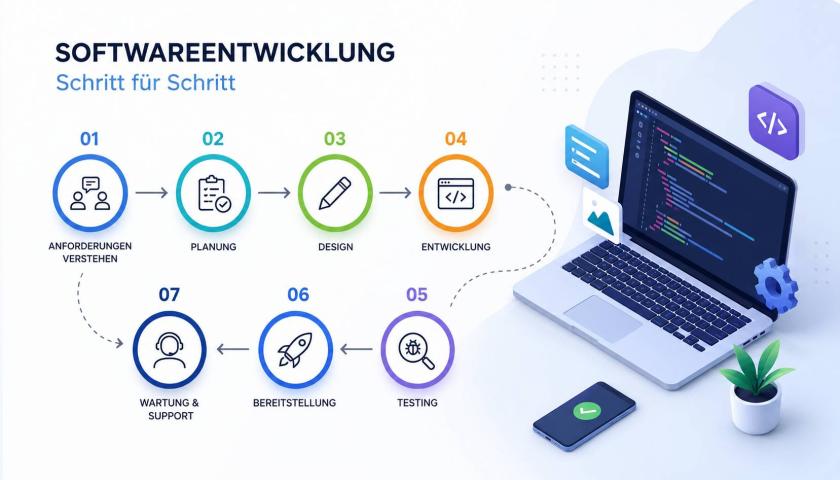
1. Requirement Analysis & Discovery
Clarify the target audience, compliance requirements, and essential features. Market research plays an important role in meeting Australian consumer expectations.
2. UI/UX Design
Develop intuitive, easy-to-use interfaces that guarantee seamless navigation and building trust for financial services.
3. Architecture & Technology Selection
Select scalable, secure tech stacks (e.g., Python, Java, Node.js, cloud services such as AWS or Azure) suited to your business objectives.
4. Development
Construct functionality like payment gateways, account management, KYC verification, loan processing, or investment tracking.
5. Security Implementation
Implement encryption, two-factor authentication, AML (Anti-Money Laundering) checks, and fraud detection algorithms.
6. Testing & QA
Perform extensive functional, performance, and security testing in accordance with industry and regulation standards.
7. Deployment & Integration
Deploy the product with seamless integration into banking systems, APIs, and customer platforms.
8. Post-launch Support & Updates
Offer continuous maintenance, compliance updates, and performance optimization.
Best Practices for Custom FinTech Development in Australia
- Prioritize Regulatory Compliance
- Keep up-to-date with ASIC, APRA, and AUSTRAC requirements to prevent fines and establish credibility.
- Invest in Security Early
- Incorporate security into each development phase instead of making it an afterthought.
- Adopt Agile Methodology
- Utilize iterative development to respond rapidly to changing markets and customer input.
- Ensure Scalability
- Design architecture that facilitates expansion in the future without extensive redevelopment.
- Leverage API-First Approach
- Enable smooth integration with third-party services, banks, and payment gateways.
- User Experience Matters
- Efficient, quick, and clear-cut processes are required to hold on to customers in competitive markets.
The Bottom Line
The need for bespoke FinTech software services in Australia will keep on increasing as the financial industry adopts innovation and digital-first approaches. Understanding the cost drivers, using a structured development process, and sticking to best practices help companies develop safe, scalable, and easy-to-use financial solutions that differentiate themselves in Australia's competitive FinTech market.
Whether you are a startup looking to shake up traditional banking or an old economy financial institution looking to bring services into the digital age, working with the proper development team can make your vision a reality, a successful market-ready product.