
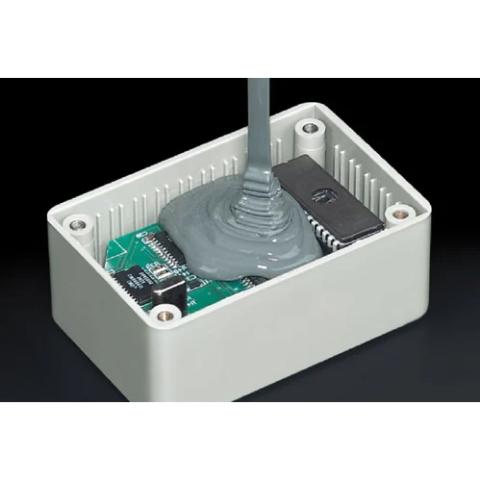
Silicone potting compounds are integral to modern electronics and industrial applications, serving as protective encapsulants that safeguard sensitive components from environmental damage, mechanical shock, and electrical interference. Their unique properties—including thermal stability, electrical insulation, and flexibility—make them indispensable in sectors ranging from consumer electronics to aerospace and automotive industries. In 2025, innovations in formulation and application techniques have extended the versatility and performance of silicone potting compounds, driving their adoption in advanced electronic assemblies and harsh environment equipment.
According to Straits Research, the global silicone potting compounds segment was valued at USD 1.13 billion in 2024 and is projected to grow from USD 1.18 billion in 2025 to USD 16.3 billion by 2033, growing at a CAGR of 4.1% during the forecast period (2025-2033). This rising valuation mirrors expanding electronics production, increased demand for durable and high-performance encapsulants, and the ongoing trend towards miniaturization and system integration in multiple industries.
Technological Advancements and Application Trends
Enhanced Formulations for Extreme Conditions
Recent developments in silicone compound chemistry have produced formulations exhibiting improved resistance to thermal cycling, humidity, UV radiation, and chemical corrosion. These advances extend potting to components operating in aerospace, automotive powertrains, and renewable energy sectors, where reliability under harsh environmental stress is paramount.
Fast Curing and Low-Emission Variants
Environmentally conscious manufacturing drives demand for low volatile organic compound (VOC) emissions and fast-curing potting compounds. New silicone potting formulations enable room temperature curing and rapid polymerization, reducing production cycle times and energy consumption while meeting stringent environmental regulations.
Miniaturization and Precision Dispensing
As electronic devices shrink with increasing performance demands, potting compounds have adapted to enable precision dispensing in microelectronics and sensor packaging. Controlled rheology and tailored viscosity ensure uniform coverage in complex packaging geometries and sensitive MEMS devices.
Integration with Smart and IoT Devices
The internet of things (IoT) proliferation drives adoption of silicone potting compounds in smart sensors, wearable electronics, and connected automotive components. Their electrical insulation properties combined with flexibility accommodate device motion and vibration while protecting delicate circuitry and antennas.
Key Players and Regional Insights
Dow Inc.
A global leader in silicones, Dow offers advanced potting solutions with patented chemistries emphasizing environmental safety and superior electrical performance. Dow's investments in Asia-Pacific manufacturing and R&D align with regional electronics growth.
Wacker Chemie AG
Wacker focuses on innovative silicone elastomers for potting, emphasizing high durability, thermal conductivity, and adhesion. The company’s product lines support aerospace, automotive, and electronics sectors in Europe and North America.
Momentive Performance Materials Inc.
Momentive delivers custom silicone formulations optimized for aerospace and industrial applications, enabling high-temperature resistance and mechanical robustness in critical assemblies.
Shin-Etsu Chemical Co., Ltd.
Japan-based Shin-Etsu dominates the Asian market, supplying silicone potting compounds with exceptional purity and tailored properties for semiconductor packaging and consumer electronics.
Other Notables
Silicone Specialty Products, Nusil Technology LLC, and Bluestar Silicones are also key players known for niche expertise in custom potting formulations catering to emerging high-performance applications.
Regional Growth Drivers
-
Asia-Pacific leads growth driven by electronics manufacturing hubs in China, Taiwan, Japan, and South Korea. Increasing production of consumer electronics, automotive components, and renewables fuels demand.
-
North America features strong aerospace, medical device, and automotive sectors adopting silicone potting for reliability in critical applications.
-
Europe emphasizes sustainability and stringent environmental regulations encouraging low-emission and recyclable compound technologies.
-
Latin America and Middle East are emerging markets focusing on industrial and automotive sectors requiring durable encapsulation solutions.
Recent Developments and Strategic Initiatives
-
Dow launched new low-VOC silicone potting resin series in 2024 offering rapid curing and enhanced thermal management designed for electric vehicle charging stations and 5G telecom equipment.
-
Wacker unveiled silicone compounds with improved flame retardancy and thermal conductivity in 2025 aimed at aerospace avionics and defense electronics.
-
Momentive expanded global production capacity in North America and Europe, enhancing supply chain resilience amid rising global demand.
-
Collaboration between Shin-Etsu and semiconductor manufacturers introduced precision-dispensed potting solutions for next-generation microelectronic packaging.
-
Emerging research focuses on hybrid potting compounds combining silicone with nanomaterials for superior mechanical strength and thermal dissipation.
-
Industry players increased investments in digital formulation platforms leveraging AI to accelerate new compound development and performance optimization.
Conclusion
Silicone potting compounds continue to be vital to safeguarding and enhancing electronic and industrial devices operating in challenging environments. Their evolving chemistries and application techniques align closely with the dynamic technological demands of 2025, enabling greater device longevity, performance, and sustainability.