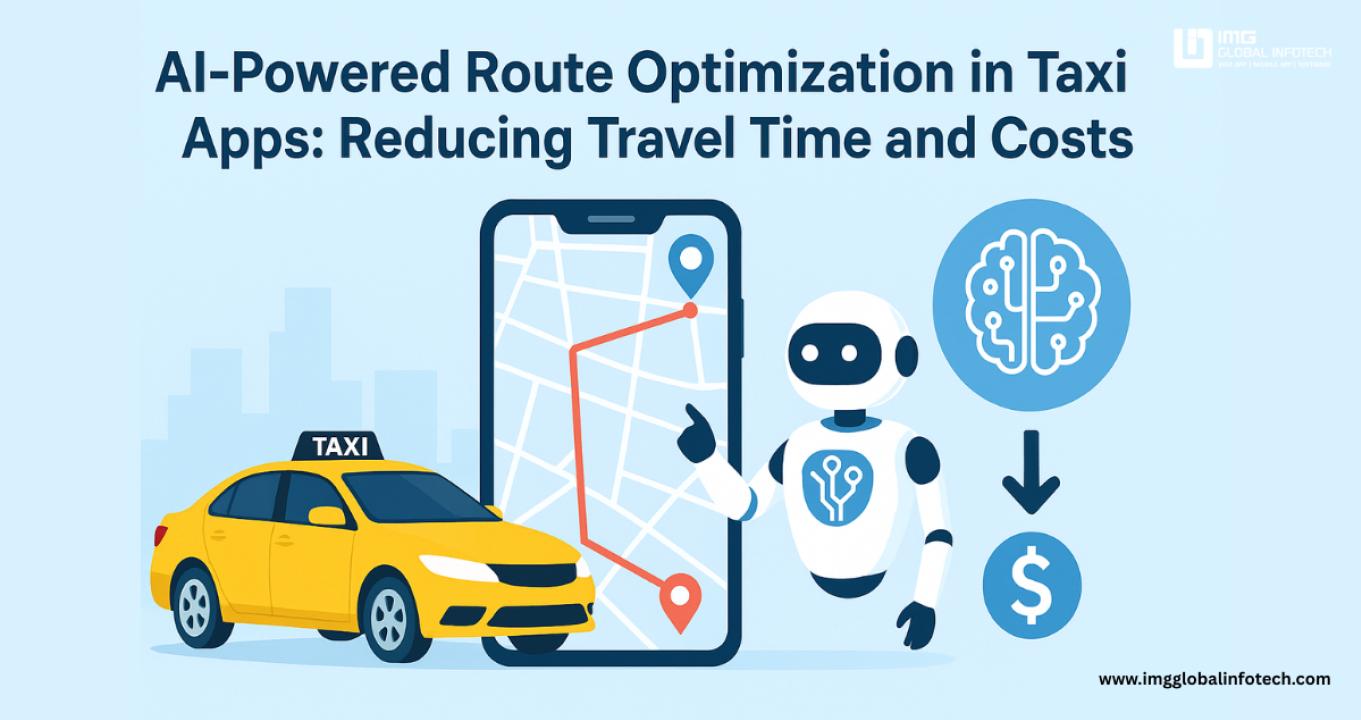
The ride-hailing industry has grown exponentially over the past decade, and with increasing competition, companies are looking for innovative ways to improve efficiency and enhance user experience. One such innovation is AI-powered route optimization, a technology that not only minimizes travel time but also reduces operational costs for taxi service providers. In this article, we will explore how AI is transforming route optimization, its benefits, and its impact on the future of taxi apps.
What is AI-Powered Route Optimization?
AI-powered route optimization uses machine learning algorithms and real-time data analysis to determine the most efficient routes for drivers. Unlike traditional GPS-based navigation, which relies on static maps, AI development continuously analyze traffic patterns, road conditions, weather, and even historical data to suggest the best possible route at any given moment.
How Does AI Route Optimization Work in Taxi Apps?
AI-powered systems go beyond basic navigation by integrating multiple data sources and applying predictive analytics. Here’s how it works:
Real-Time Traffic Analysis
AI continuously monitors live traffic data, road closures, and accidents to reroute drivers instantly.
Predictive Modeling
Based on historical traffic trends, AI can forecast congestion and suggest alternative routes ahead of time.
Dynamic Pricing Integration
Route optimization algorithms can also work with dynamic pricing models, ensuring faster rides during peak hours.
Machine Learning for Continuous Improvement
Every ride completed adds more data, enabling the system to learn and refine its route suggestions over time.
Benefits of AI-Powered Route Optimization
Reduced Travel Time
By avoiding traffic congestion and selecting the fastest route, passengers reach their destination quicker.
Lower Fuel Costs
Shorter routes mean reduced fuel consumption, helping taxi operators save money and promote sustainability.
Improved Driver Efficiency
AI ensures that drivers spend less time stuck in traffic and more time completing rides, increasing their earnings.
Enhanced Customer Satisfaction
Passengers appreciate timely rides, which improves ratings and customer loyalty.
Real-World Applications
- Uber & Lyft use AI-driven route optimization to minimize wait times and travel duration.
- Bolt and Ola are investing in AI-powered predictive models to improve user experience.
- Smaller taxi service startups are adopting AI-based mapping APIs for cost-effective solutions.
Challenges and Considerations
- Data Accuracy: Route optimization heavily relies on accurate real-time and historical data
- Implementation Cost: AI integration can be costly for small taxi businesses initially.
- Privacy Concerns: Collecting location and usage data must comply with data protection laws.
The Future of Route Optimization in Taxi Apps
As autonomous vehicles and IoT-enabled traffic systems become mainstream, AI will play an even greater role in route optimization. Future taxi apps may leverage AI + 5G for ultra-fast data processing, real-time traffic signals integration, and smart city infrastructure to deliver zero-delay rides.
Final Thoughts
AI-powered route optimization is no longer a futuristic concept, it’s a game-changing technology that is reshaping the taxi app development industry. By reducing travel time, cutting operational costs, and enhancing customer satisfaction, AI is helping ride-hailing companies stay competitive in a highly dynamic market.