Blockchain has literally transformed the way information is stored, shared, and verified. But as these networks become more popular, concerns are growing about data privacy, scalability, and security. This is where zero-knowledge proofs (ZKP) come in, offering a revolutionary approach. If you’re just getting into the blockchain world or trying to understand ZKP, this guide will explain it to you in simple terms.
What is a zero-knowledge proof?
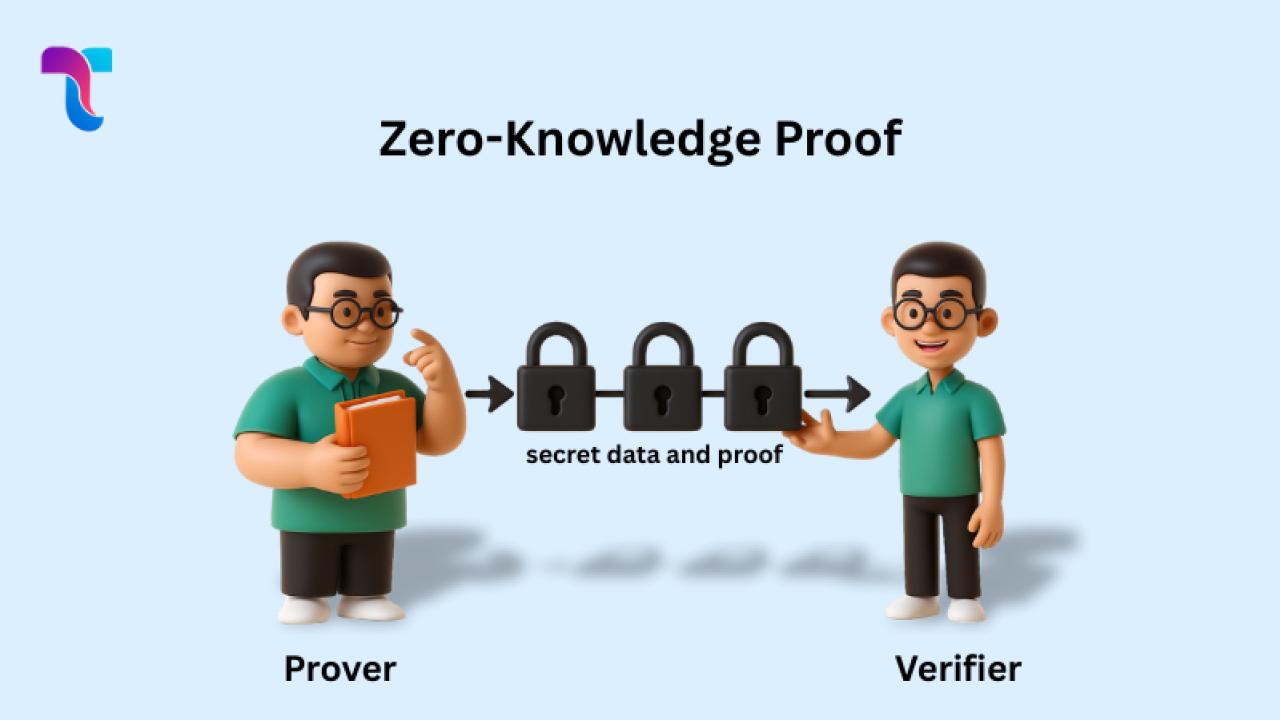
Zero-knowledge proofs (ZKP) are a clever cryptographic technique that allows one party (the verifier) to show another party (the verifier) that they have a certain piece of information, without revealing what that information is.
Imagine this: you want to show your friend that you know the password to a locked door, but you don’t want to reveal the password. ZKP lets you prove that you know the password without revealing the secret.
In the world of blockchain, this is extremely useful as it makes transactions and verification possible without exposing sensitive information.
Why Zero-Knowledge Proofs are Important in Blockchain
Blockchains are built to be transparent, meaning everyone on the network can see transactions. This openness promotes trust, while also allaying some fears related to privacy.
For example:
In Bitcoin, anyone can track how much money is transferred between wallets.
In Ethereum, interactions with smart contracts happen openly.
ZKPs help blockchain networks strike a balanced balance between transparency and privacy. These allow transaction verification without revealing personal or financial information.
Here are some of the key reasons why ZKPs are important:
- Improved privacy – Protection of user identity and transaction specifics.
- Improved scalability – ZK-rollups enable batching of transactions for faster processing.
- Security - Keep data secure while allowing verification.
Types of Zero-Knowledge Proofs
When it comes to blockchain, there are two main types of zero-knowledge proofs (ZKP):
1. Interactive Zero-Knowledge Proofs
In this method, the verifier and the verifier communicate in multiple steps. Each step helps the verifier gain confidence that the verifier has the necessary information. Although this method is effective, it can be a bit cumbersome for blockchains as it involves a lot of transactions.
2. Non-Interactive Zero-Knowledge Proofs (NIZKP)
Here, the verifier needs to send only one message to the verifier. This simplicity makes NIZKP better suited for blockchain networks. Examples of NIZKP include zk-SNARK and zk-STARK, which are used in Ethereum’s scaling solutions.
Real-World Applications of ZKP in Blockchain
Zero-knowledge proofs have moved beyond theory and are now driving some of the most exciting projects in the blockchain space.
Privacy Coins
Take Zcash, for example; it uses zk-SNARKs to ensure that transactions remain completely private as well as valid.
Scalability Solutions
On Ethereum, zk-Rollups leverage ZKPs to merge hundreds of transactions into one, thereby reducing gas fees and increasing speed.
Identity Verification
ZKPs enable users to verify their age, nationality, or credentials without revealing their full identity.
Voting System
With ZKPs, secure and anonymous voting becomes possible, as well as ensuring that the votes cast are valid.
Implementing such real-world ZKP solutions often requires expertise in custom blockchain architectures. That’s why many businesses collaborate with a professional blockchain development firm to build privacy-focused and scalable applications.
Benefits of Zero-Knowledge Proofs
- Privacy Protection – Security of your personal and financial information.
- Data Minimization – Share only what is necessary.
- Security – A strong cryptographic foundation that prevents data leaks.
- Scalability – Improve blockchain performance through zk-rollups.
Challenges of implementing ZKP
Despite their potential, ZKPs come with their own challenges:
- Complex computations – generating proofs can be quite resource-intensive.
- Scalability compromises – although proofs are smaller than raw data, they still bring complexity.
- Barriers to adoption – many blockchains require upgrades to fully adopt ZKPs.
Still, ongoing research and development is quickly resolving these challenges, making ZKPs more practical year after year.
The Future of Zero-Knowledge Proof in Blockchain
Zero-Knowledge Proofs (ZKPs) are set to become a cornerstone in the world of Web3 and the broader adoption of blockchain technology. As the demand for privacy-focused DeFi applications, decentralized identity systems, and scalable blockchain networks continues to rise, ZKPs are right at the forefront of this innovation.
Tech giants, blockchain startups, and developers from all corners of the globe are diving into ZKP-based solutions, all aiming to create a more secure and private digital landscape.
Final Thoughts
For those just starting out in the blockchain space, Zero-Knowledge Proofs might seem a bit daunting at first. But really, it’s all about establishing trust without having to reveal sensitive information. As blockchain technology becomes more mainstream, ZKPs will be crucial in balancing privacy, security, and scalability.
Whether you’re delving into cryptocurrency, smart contracts, or decentralized applications, grasping the concept of ZKPs will keep you ahead of the curve in the blockchain revolution. If you’re considering implementing Zero-Knowledge Proof solutions in your blockchain projects, partnering with a reliable blockchain development company like Technoloader can help you create secure, scalable, and future-ready applications powered by ZKP.